 Language
 简体中文

- On the 2018 National Day holiday, Lifet completed six 100 ton large tonnage lifting belts as a gift
- The role of suspension net in the transportation of goods turnover
- Cargo soft lifting net, lifting net, lifting net, lifting net, bag, climbing net
- Precautions for using Lifutiden elevator
- How to make circular lifting straps
Contact: Wang Lili
E-mail:18066002268
Phone:702461526@qq.com
Address: Lifute Industrial Park, Taizhou City, Jiangsu Province

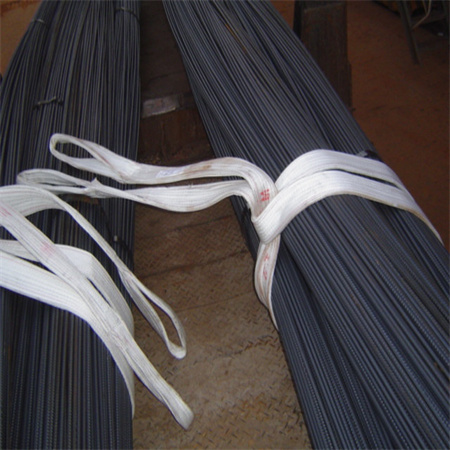
Lift Sling Rigging Co., Ltd. manufactures the white polypropylene lifting belt - a flat woven webbing sling built to EN 1492-1, made to order in white webbing from 1 t to 10 t in single or double ply. White is specified for general industry for two working reasons: white webbing does not transfer colour to the load it is wrapped around, and contamination, wear and chemical attack are visible on a light band early. It is woven from polypropylene, the lightest of the three common lifting fibres, which takes up below 0.1% of its own weight in water so a wet belt carries its dry rating. Because white sits outside the EN 1492-1 capacity colour sequence, capacity is carried by the black transverse stripes, one stripe per tonne, and by the identification label - so the label is a safety item on this product. 7:1 safety factor and a minimum breaking load of seven times the working load limit, edge protection, wear pads and UV-stabilised webbing on request, any length from 1 m to 12 m. Keep it clear of chlorinated solvents, aromatic hydrocarbons and strong oxidising acids, and below +80 C. HS code 630790. Phone 18066002268.
Hits: ℃
Release time:2026-09-21 08:20
Lift Sling Rigging Co., Ltd. +8618066002268 produce White polypropylene lifting belt,white polypropylene sling,white polypropylene lifting belt.
White Polypropylene Lifting Belt

White polypropylene lifting belt — white PP webbing to EN 1492-1, 1 t to 10 t, endless or eye-to-eye, single or double ply, any length from 1 m to 12 m
What is on this page. This page covers the white polypropylene belt as a general-industry specification: what the product is, the band range and how a white band carries its capacity, why white is specified and what it costs, the loads and industries that specify it, the fibre and the form, how the white belt behaves in service, how it is inspected, how it is marked, and how to order it.
What the product is, and the words that get confused with it — section 1
The white band range and how capacity is read on a white belt — section 2
Why white, what it buys and what it costs — section 3
Where a white belt is specified, industry by industry — section 4
The fibre and the form: polypropylene, endless or eye-to-eye — section 5
White webbing in service: wet, hot, cold, sunlit, abrasive — section 6
Inspection and retirement criteria for a white belt — section 7
Marking, traceability and the colour question — section 8
How to order: the checklist — section 9
1. What a White Polypropylene Lifting Belt Is
A white polypropylene lifting belt is a flat woven webbing sling woven from polypropylene and supplied with white webbing, sewn into either a continuous loop or an eye-and-eye form. EN 1492-1 — the European standard for these products — covers flat woven webbing slings in Type A to Type D, made of polyamide, polyester or polypropylene, across webbing widths of 25 mm to 450 mm, and sets out the requirements for design, testing and marking. The belts on this page are the polypropylene construction at a 7:1 safety factor, supplied in white at the customer's request.
On the words belt and sling. In this industry the two are used interchangeably for this product, and a quotation may use either without meaning anything different. Outside the industry they are not: lifting belt is also the name of a back-support belt worn by a person, which is a different product sold through a different channel and marked to a different regime. That is why our product names qualify the term — white polypropylene lifting belt, white PP webbing belt — rather than using lifting belt on its own.
There are two chemistry pages in this family, and this is not one of them. Polypropylene is unaffected by acids and by alkalis, so a white polypropylene belt is often bought for a pickling or plating line as well, and this site covers that duty on its own pages: the white acid-resistant and alkali-resistant sling for a plant running both an acid stage and an alkali stage, and the acid-alkali flat double-ear lifting belt for the eye-to-eye form of the same chemistry. This page is the general-industry white belt: white because the load must not be marked or because contamination must be visible, rather than white because of a tank.
Terminology: what the words in the quotation actually mean
| Term you may be offered | What it actually is | What to check |
|---|---|---|
| White polypropylene lifting belt | Flat woven polypropylene webbing, supplied white, for general lifting where the sling must not mark the load | Band, ply, form and length basis — the four figures the name does not carry |
| White polypropylene sling, white PP sling | The same product named by fibre and abbreviation | The same four |
| White webbing belt, white belt sling | The same product under a different trade word; belt and sling are interchangeable here | Which product the seller means, because lifting belt also names a back-support belt worn by a person |
| White one-way sling, single-use white sling, disposable sling | A different product and a different risk: a consumable built to DIN 60005 or similar, normally no higher than 1,000 kg at 4:1 or 5:1, permitted one trip and then destroyed. White is the conventional colour of these, which is why the two get confused | Whether the product is re-usable. The belt on this page is a re-usable EN 1492-1 band at 7:1 |
| Round sling, round lifting belt, braided sling, rond sling | A different product: a load-bearing yarn core inside a woven tubular cover, under EN 1492-2 | The standard. A flat woven belt and a round sling are not interchangeable |
| White acid-resistant and alkali-resistant sling | The same white polypropylene construction, specified for a plant that runs an acid stage and an alkali stage | Whether the duty is a process tank rather than a general lift — if it is, that page carries the chemistry detail |
| White nylon sling, white polyester sling | The same white presentation in a different fibre, which changes the strength, the stretch, the wet behaviour and the chemistry | The fibre, because white tells you nothing about it |
2. The White Band Range, 1 t to 10 t
The band works exactly as it does across the rest of the flat woven range, because the band is set by the standard rather than by the colour. What changes on a white belt is how the capacity is communicated: on a capacity-coloured band the webbing colour is the first cue and the black stripes repeat it, while on a white band the colour carries nothing and the stripe count and the label carry the whole message.
White polypropylene lifting belt: band specification, 1 t to 10 t
| Band | Black stripes on the white webbing | Working load limit, straight lift | Minimum breaking load at 7:1 | Choked hitch (0.8) | Basket, parts parallel (2.0) | Two-leg assembly (1.4) |
|---|---|---|---|---|---|---|
| 1 t | 1 stripe | 1 t / 1,000 kg / 2,205 lb | 7 t | 0.8 t | 2 t | 1.4 t |
| 2 t | 2 stripes | 2 t / 2,000 kg / 4,409 lb | 14 t | 1.6 t | 4 t | 2.8 t |
| 3 t | 3 stripes | 3 t / 3,000 kg / 6,614 lb | 21 t | 2.4 t | 6 t | 4.2 t |
| 4 t | 4 stripes | 4 t / 4,000 kg / 8,818 lb | 28 t | 3.2 t | 8 t | 5.6 t |
| 5 t | 5 stripes | 5 t / 5,000 kg / 11,023 lb | 35 t | 4.0 t | 10 t | 7.0 t |
| 6 t | 6 stripes | 6 t / 6,000 kg / 13,228 lb | 42 t | 4.8 t | 12 t | 8.4 t |
| 8 t | 8 stripes | 8 t / 8,000 kg / 17,637 lb | 56 t | 6.4 t | 16 t | 11.2 t |
| 10 t | 10 stripes | 10 t / 10,000 kg / 22,046 lb | 70 t | 8.0 t | 20 t | 14.0 t |
How to read the white band table.
Count the stripes, then read the label. On a white band there is no colour shortcut, so the stripe count is the working figure and the label repeats it in words and figures. A legible label is therefore a safety item on this product, and a stripe count obscured by staining is the same problem.
The rating does not move with the weather. Polypropylene takes up below 0.1% of its own weight in water, so a belt that has been out in the rain or hosed down carries the figure in this table, wet or dry.
Breaking loads are destruction figures. 7 t at the 1 t band and 70 t at the 10 t band are minimum breaking loads at the EN 1492-1 factor of 7:1, never working capacities and never a margin to spend.
Width is a construction figure, not a rating. Polypropylene has the lowest tenacity of the three fibres, so the same band arrives on a wider, heavier band of webbing than a polyester belt of the same rating. On a load where the sling width itself is the constraint, that matters more than the colour it was bought for.
Ply is a separate decision. The same band is built single ply on a wider webbing or double ply on a narrower one. Ply changes the weight, the width and the bulk of the eye in the same opening, not the rating.
Above 10 t. Heavier flat woven belts are made to order; for very heavy lifts a round sling, a wire rope sling or a lifting beam is usually the better answer.
3. Why White, and What It Costs
The white reason, what it buys, and what it costs
| Reason for white | What it actually buys | What it costs | Our view |
|---|---|---|---|
| Colour transfer to the load | A coloured sling can mark the material it wraps. Published sling-manufacturer data gives this as a designed property of white webbing: white pile yarns are used to prevent colour transfer to the load | Nothing operational. It is load protection, not a compromise | Strong reason. It stands up for painted, coated, polished, galvanised, printed and finished work, and for any load where a mark is a reject |
| Contamination, wear and chemical attack are visible | Staining, dried residue, glazing, abrasion and the beginnings of chemical attack are easier to see on a light ground than on a dark one, and published guidance is consistent that contamination and chemical exposure are things an inspection has to catch | White shows ordinary workshop soiling too, so it looks worse than it is and needs washing more often to stay legible | Strong reason wherever the inspection is the control. A band that is uniformly dirty has lost the advantage, so pair white with a cleaning routine |
| Visually matching the load or the plant | Convenience: one colour across a rigging store, or a belt that does not stand out against white goods or pale material | The identification cost below, with no offsetting benefit | Acceptable if a plant genuinely standardises on one colour, but it should be a decision rather than a default |
| White looks cleaner, or more hygienic | Nothing. White webbing is not a hygiene certification, not a food-contact approval and not a statement about the fibre | The identification cost below, paid for nothing | Not a reason. If the duty needs a hygiene or food-contact specification, that is a different conversation about materials and certification |
| White because it is the cheap one-way colour | Nothing. In this market white is the conventional colour of a single-trip consumable, so buying white expecting a consumable price gets you a re-usable belt at a re-usable price | A specification mismatch: a 7:1 belt used as though it were disposable | Not a reason, and a warning — see section 1 |
What white costs you, stated plainly. A white band has no place in the capacity colour sequence, so the working load limit is carried by the stripe count and the label. That is a real reduction in the redundancy of the marking, and it has one hard consequence: a white belt whose label is missing or illegible is out of service even if the webbing is perfect, and a stripe count obscured by staining is the same problem. We mark white belts accordingly:
Every white belt carries its stripe count in the standard way, one dark stripe per tonne, high-contrast against the white ground.
Every white belt carries a legible label stating the working load limit in words and figures, the fibre, the standard, the length and the traceability code.
Where a customer prefers the standard capacity colour, we supply the code colour on the same construction. White is a customer requirement rather than a manufacturing preference, and it is quoted as a deviation so that nobody discovers it at goods-in.
We do not ink, paint or dye a white band to imitate a capacity colour. Published sling guidance is explicit that paint should not be used to colour-code webbing, because the solvents in the paint can corrode the synthetic material. A white belt marked on site with a colour is a white belt put out of service by a marker pen.
4. Where a White Belt Is Specified, Industry by Industry
A white belt is bought by industries where a mark on the product is a defect, and by plants where the inspection has to work. The table below is how those enquiries actually arrive, and what else matters once white has been chosen.
Industries and duties that specify a white polypropylene belt
| The duty | Why white | What else matters |
|---|---|---|
| Painted, coated, powder-coated and galvanised work | The sling must not leave a mark on the finish, which is precisely what white pile yarns are for | Width and edge protection: a narrow belt concentrates pressure and can dent or mar the surface it does not colour |
| White goods, appliances and enamelled panels | Colour transfer and scuffing both show immediately on a pale finish | A light belt also tells the operator instantly whether the band has picked up dirt or metal dust from the line |
| Glass, stone, marble and ceramic | Marks and stains are visible on the product and can be permanent | Diameter of curvature and bearing area are the engineering questions, not the colour |
| Paper, printing, packaging and board | Any transfer of colour to the web or sheet is a production reject, and contamination such as dried ink or grit shows on white | The belt must be clean and dry: a dirty band marks paper as surely as a coloured one |
| Textiles, nonwovens and finished fabric | There is no safe colour to transfer to a pale or undyed fabric | Abrasiveness of the fibre against fine fabric; a pad or a wider band reduces it |
| Food, beverage and pharmaceutical adjacent handling | White is requested for appearance and for visible cleanliness, and that is all it is — white webbing is not a food-contact approval or a hygiene grade | If the duty genuinely needs a food-contact or hygiene specification, raise it explicitly; we will not imply one from a colour |
| Electronics, clean assembly and laboratories | A light band shows contamination, and a coloured band can shed dye into an environment where that is a defect | Storage matters as much as the band: a white belt stored in a dirty workshop arrives at the bench dirty |
| Acid, alkali and plating lines | The white polypropylene construction is also the chemistry construction, so the same belt covers both | This duty has its own pages in this family: white acid-resistant and alkali-resistant sling and the acid-alkali flat double-ear lifting belt |
| General yard, warehouse and installation work | Usually plant standardisation rather than a functional need | If there is no marking or visibility reason, the capacity colour is the better specification — see section 3 |
Two practical points that apply wherever white is used. First, white makes the sling's condition the operator's business: a dark band hides soiling that a white one shows, which is the point, but it also means a white belt in a dirty plant looks condemned long before it is, and needs a washing routine rather than a new specification. Second, a white belt has to be stored clean: the most common complaint about white webbing is not wear at all, it is that the belt was hung on a hook in a workshop and picked up the dirt that the white ground advertises.
5. The Fibre and the Form: Polypropylene, Endless or Eye-to-Eye
Two decisions sit behind a white belt: the fibre, which is polypropylene on this page, and the form, which is decided by how the rigger has to use the sling. The fibre is covered in depth on its own page; what follows is the summary you need to choose the form, and the honest limits of the fibre.
Polypropylene as a belt fibre: what it brings and what it costs
| Property | What it means for a white belt |
|---|---|
| Weight | The lightest of the three common lifting fibres, and lighter than water — published webbing data puts polypropylene at 0.90 to 0.92 g/cm3, about 20% lighter than a comparable polyester webbing. A light belt is easier on the hands and on the load |
| Water | Takes up below 0.1% of its own weight, so there is no wet derating: a wet belt carries its dry rating |
| Acids and alkalis | Unaffected by both. Polyester is attacked by alkalis and polyamide by acids, so polypropylene is the one fibre that covers a finishing line end to end |
| Strength | The lowest of the three, so a given band arrives on more webbing: wider, and heavier, than a polyester belt of the same rating |
| Abrasion | The most abrasion-prone of the three in published sling comparisons, which is why edge protection and rotation matter more on this fibre than on the others |
| Sunlight and UV | The poorest UV resistance of the three and it must be supplied UV-stabilised. On a white belt there is a second consequence: it does not fade visibly, so UV damage has to be found by feel |
| Heat | −40 °C to +80 °C under EN 1492-1, the lowest ceiling in the flat woven range, with a softening point near 150 °C and a melting point around 160 °C to 170 °C |
| Solvents | Softens in chlorinated solvents and is attacked by aromatics, and cannot be cleaned back to a rated condition |
| Label colour | Brown, which is how a polypropylene belt is identified whatever colour the webbing is |
Endless or eye-to-eye: choosing the form of a white belt
| Endless white belt (Type A) | Eye-to-eye white belt (Type B, C or D) | |
|---|---|---|
| End fittings | None, by definition | None in Type B and C; metal fittings in Type D |
| Where the hook contacts | Any point on the loop | The eyes, at each end, every time |
| Wear | The loop can be rotated, so wear, soiling and hook contact keep moving round the band | The same two eyes take every lift, so wear and soiling concentrate there |
| Length basis | Loop circumference | Bearing point to bearing point, laid flat |
| Best for | Choked, basket and multi-point picks; slings that are repositioned during the job; and duty where a worn or soiled section has to be moved out of the load path | Lifts that need a fixed hookable end, assemblies with a master link, and work where the rigger needs a definite end to attach to |
| On a white belt specifically | Rotation is the reason to prefer endless in a dirty plant: the part that picked up the soiling can be moved out of the load path, and the stripes stay legible longer | White eye-to-eye belts are the natural choice where the load must not be marked and the rig needs a hookable end, and the eye should be padded for finished surfaces |
6. White Webbing in Service: Wet, Hot, Cold, Sunlit, Abrasive
White changes one thing in service and leaves the rest alone. The technical limits below are the fibre's; what white changes is what you can see — and, in one case, what you cannot see, which is the point most easily missed on a light band.
White polypropylene in service: what the condition does, and what to do about it
| Condition | What it does to the belt | What we recommend |
|---|---|---|
| Wet: rain, hose-down, wash-down | Nothing. Polypropylene takes up below 0.1% of its own weight in water, so a wet belt carries its dry rating and there is no wet figure to derate against | Plan the lift on the figure on the label, wet or dry. Dry the belt before storage so that dried residue and grit are visible on the white webbing at the next inspection |
| Soiling, staining and dried residue | The white-specific condition. Soiling is what you bought — it makes wear and contamination visible — but a band that is uniformly dirty shows nothing, and staining over a stripe count makes the capacity unreadable | Wash with mild soap and water and dry naturally. Never use a solvent, never clean a stripe away, and treat a band whose stripes cannot be counted as out of service |
| Heat and hot surfaces | EN 1492-1 gives polypropylene a range of −40 °C to +80 °C, the lowest in the flat woven range, with softening near 150 °C | Keep the band clear of heat sources, hot surfaces and welding or plasma work nearby. This is the fibre's tightest limit, not its toughest |
| Cold and frost | Serviceable to the low end of its range, but the most prone of the three to going stiff and more brittle as it cools | −40 °C is the lower bound. Inspect a frozen band for stiffness and surface cracking, and clear ice off it: ice cuts and abrades |
| Sunlight, UV, and arc welding nearby | The poorest UV resistance of the three fibres, and the worst case for inspection: a white band does not visibly fade, so the colour cue usually used for UV damage is missing. Published sling guidance notes that slings become bleached and stiff when exposed to sunlight or arc welding | Buy UV-stabilised webbing for anything outdoors or near a window, park belts out of direct sun, and judge a white belt by feel rather than by colour — stiffness is the signal, not fading |
| Abrasion: grit, metal dust, sharp edges, dragging | The wear that actually retires these belts. Polypropylene is the most abrasion-prone of the three lifting fibres, and one published note specifically warns that metal shavings cut through polypropylene bands | Sleeve or pad every edge the belt crosses, rotate an endless belt between lifts, and wash grit out of the weave. On a white belt, wear also shows as a grey or darkened contact patch — read it |
| Oil, grease and ordinary workshop fluids | The fibre tolerates ordinary oil and grease, but they leave a mark that white webbing advertises | Wash before the belt goes back on finished work; a greasy white band will mark the next load it touches |
| Chlorinated solvents, aromatics, tar and paint | Polypropylene softens or swells in chlorinated solvents and is attacked by aromatics and tars; published polymer data is consistent that it should not be used in contact with strong oxidising acids, chlorinated hydrocarbons and aromatics | Keep the belt away from degreasing baths, paint and solvent vapour. A belt cleaned with solvent has no reliable rating left |
| Crush and pinch between load and a hard surface | A white belt shows a crush mark as a local flattening and often as a permanent crease, which is easier to see than on a dark band | Do not rest loads on the belt and do not pull it from under a load resting on it |
| Stored dirty, damp, in the open workshop | A storage failure rather than a lifting failure, and the white band makes it visible, which is the point | Store dry, dark and off the floor, away from oil, chemicals and sharp edges, and clean before storing rather than before use |
7. Inspection and Retirement Criteria for a White Belt
Every sling should be inspected before every use, with a documented periodic inspection on top of that. On a white belt two things are different from a coloured one: more damage is visible, because soiling, wear and chemical attack show on a light ground, and one kind of damage is invisible, because a white belt does not fade, so UV degradation has to be found by feel.
White polypropylene lifting belt: what to check, and when to withdraw
| What to look at | Withdraw the belt if | Why it matters on this product specifically |
|---|---|---|
| Stripe count and label | The stripes cannot be counted, or the count disagrees with the label; or the label is missing or illegible | On a coloured band the colour is a second, independent capacity cue. On a white band the stripes and the label are the whole message, so an obscured stripe count or a lost label is a capacity failure, not a cosmetic one |
| Webbing body | Cuts, snags, fraying, exposed load-bearing yarn, or damage reaching about 10% of the webbing width in any transverse section | Abrasion is the mechanism that retires these belts, and polypropylene is the most abrasion-prone of the three fibres |
| Soiling that will not wash out | Staining that hides the weave, dried solids worked into the belt, or any residue you cannot identify | The white band shows contamination early, which is why it was bought — but a band that is uniformly dirty has lost that advantage. Rinse, dry, re-inspect, and if the mark remains, treat it as attack |
| Stiffness and feel | A noticeable stiffening, a hard or brittle feel, or a powdery surface | The primary UV and heat signal on a white belt, because the colour-fade cue that works on a coloured band is absent. Judge it in the hand |
| Discoloration, including marks that are not dirt | A localised patch that is bleached, eaten, glazed or hardened rather than merely soiled | Acid or caustic burns and discoloration with brittle or stiff areas are named removal conditions in the regulation and in published guidance |
| Heat damage | Glazing, melting, scorch marks or weld spatter | Polypropylene has the lowest heat ceiling in the range at +80 °C, and melting or charring is a removal condition |
| Swelling, softening or a tacky surface | Any part that is swollen, softened, sticky or has changed dimension | The signature of chlorinated solvent or aromatic attack, and there is no field repair and no way to clean it back to a rated condition |
| Stitching and eyes or splices | Broken, pulled or loose stitches, a distorted eye, or an open lap splice | The stitch carries the whole load and cannot be repaired on site |
| Wear pads and edge protection | A pad or sleeve worn through to the webbing underneath | Protection is sacrificial by design — once it is gone, the wear is into load-bearing webbing |
| Fittings | Corrosion, pitting, cracking or deformation at any fitting | If the belt is also used on an acid or caustic line, aluminium is severely degraded by alkali, caustic environments, acids and salt water, and high-strength alloy fittings are susceptible to hydrogen embrittlement in acidic conditions |
| Loading history | A known shock load, an overrun, or a lift taken on the wrong hitch figure | Polypropylene stretches about 5% at the working load limit, enough to leave a permanently elongated section after a snatch load |
| The set, if it is an assembly | Any one belt in the set fails, or the legs are of mixed band, mixed ply, mixed length or mixed fibre | An assembly is only as strong as its weakest leg, and a white leg in a set of coloured ones is a marking inconsistency waiting to be misread |
Care rules for a white polypropylene lifting belt.
Never use a polypropylene webbing belt below −40 °C or above +80 °C.
Wash with mild soap and water, and dry naturally. Never use a solvent, and never repaint, re-ink or re-dye a stripe or a capacity colour: published sling guidance warns that the solvents in paint corrode the synthetic material.
Clean before storing, not before use on a white belt, and store it dry, dark and off the floor, away from oil, chemicals, solvent vapour and sharp edges.
Rotate the loop between lifts on an endless belt, and alternate the ends on an eye-to-eye belt, so that wear and soiling keep moving rather than collecting in one place.
Do not drag a belt on the floor or over sharp edges, grit or metal shavings, and never pull a belt out from under a load resting on it.
Do not twist, knot, shorten or lengthen a belt, and never repair one.
Pad every edge and every finished surface the belt crosses, at any load: on finished work the pad protects the load as much as the sling.
Keep the belt clear of chlorinated solvents, aromatics, tars, paints and strong oxidising acids.
Buy UV-stabilised polypropylene for anything that lives outdoors or near a window, and judge it by feel rather than by colour, because a white belt does not fade.
In an assembly, inspect every belt in the set and keep the set together.
Cut a retired belt through before disposal so that it cannot be put back into service by mistake.
8. Marking, Traceability and Standards
The marking is part of the product rather than a finishing touch, and on a white belt it is doing more work than usual. The table sets out what has to be there and why.
What a white polypropylene belt has to carry, and why
| Mark | What it states | The white-belt consequence |
|---|---|---|
| Black transverse stripes | The working load limit, one stripe per tonne | On a white belt this is the primary capacity cue — keep it clean and keep it legible |
| Fibre identification | Brown, for polypropylene | The label colour is how the fibre is confirmed, and the fibre is what sets the strength, the wet behaviour and the chemistry |
| Identification label | Working load limit in words and figures, fibre, standard reference, length and traceability code | On a white belt the label is the only written capacity source, so a destroyed label takes the belt out of service |
| Webbing colour | White, at the customer's request | Quoted as a deviation from the capacity colour sequence, so that the buyer knows the band colour carries no capacity information |
| Manufacturer and traceability code | Who made it and which batch it came from | It links the belt in service back to the batch it was tested with |
| Customer marking or logo | Nothing about capacity | Permitted alongside the required marks, never instead of them; and the webbing itself is never painted or inked |
What the product is built to. The belts on this page are made to EN 1492-1, Textile slings — Safety — Flat woven webbing slings made of man-made fibres for general purpose use, at a 7:1 safety factor, in polypropylene, in single or double ply, with webbing widths from 25 mm to 450 mm. White webbing is the one deliberate departure from the standard's presentation and is quoted as a deviation.
The same product under two rulebooks
| Point of comparison | EN 1492-1 (Europe and most export markets) | ASME B30.9 with the US sling rule, OSHA 1910.184 |
|---|---|---|
| Safety factor behind the marking | 7:1 for flat woven webbing slings | Commonly a 5:1 design factor, so the same nominal marking corresponds to a smaller breaking load |
| Colour code | A capacity colour sequence for the band, with the black stripe count repeating the capacity — and no white in that sequence | Not mandated; the identification tag is the authority, and the colour is best practice rather than a requirement |
| Temperature ceilings | Polypropylene −40 °C to +80 °C; polyester and polyamide −40 °C to +100 °C | The regulation gives polyester and polyamide 180 °F (82 °C) and polypropylene 200 °F (93 °C) — the ranking of the fibres is reversed against EN 1492-1 |
| Polyamide (nylon) on acid duty | The fibre is attacked by acids, so acid duty points away from polyamide on materials grounds | Nylon web slings shall not be used where fumes, vapors, sprays, mists or liquids of acids or phenolics are present — 1910.184(i)(6)(i). A prohibition, not a caution |
| Polyester and polypropylene on caustic duty | Polyester is attacked by alkalis and polypropylene is unaffected | Polyester and polypropylene web slings shall not be used where fumes, vapors, sprays, mists or liquids of caustics are present — 1910.184(i)(6)(ii) |
| Aluminium fittings on caustic duty | Fitting material is quoted against the duty | Web slings with aluminum fittings shall not be used where fumes, vapors, sprays, mists or liquids of caustics are present — 1910.184(i)(6)(iii) |
| Fibres other than polyamide and polyester | Type A to D covers polyamide, polyester and polypropylene | Published OSHA guidance states that synthetic webbing materials other than nylon and polyester are also used and that the manufacturer should be consulted for specific data |
| What counts as chemical exposure | Contact with a named substance at a stated concentration and temperature | Published guidance states that the strength of synthetic webbing slings can be degraded by chemically active environments, including exposure to chemicals in the form of solids, liquids, vapours or fumes |
| Removal from service | Damage criteria including cuts, abrasion, chemical and heat damage, and illegible marking | Acid or caustic burns, melting or charring, excessive abrasive wear, discoloration and brittle or stiff areas, and missing or illegible identification are all listed as requiring immediate removal |
Duties a white polypropylene lifting belt is not rated for, at any band.
Lifting or suspending a person.
Towing, recovery or vehicle pulling — the rating is a lifting rating and tow loads are shock loads.
Staying in place permanently as a tie, guy or restraint.
Being knotted or twisted to shorten it.
Lifting over an unprotected sharp edge without a sleeve.
Contact with chlorinated solvents, aromatic hydrocarbons, tars, paints or strong oxidising acids — the polypropylene limitation.
Use as a single-trip consumable — this is a re-usable EN 1492-1 belt at 7:1 with an inspection regime; a one-way white sling is a different product under a different standard.
Being presented as a hygiene, food-contact or cleanroom grade — white webbing is a colour, and the certificate has to be asked for separately.
Working on or near live electrical conductors, or in service above +80 °C.
9. How to Order: The Checklist
Everything below is a question we will ask anyway; sending it up front is what turns the quotation around faster.
The order checklist for a white polypropylene lifting belt
| What we need | What to send | Why it changes the answer |
|---|---|---|
| Load, and the hitch | The load and how it will be hitched, or the band | Choked costs 20%, basket doubles the parts that are parallel, and a two-leg assembly is 1.4 rather than 2.0 |
| Form | Endless loop or eye-to-eye | The two forms have different length bases and different wear patterns; rotation is the reason to prefer endless in a dirty plant |
| Length and the basis | For eye-to-eye, the effective working length bearing point to bearing point; for endless, the loop circumference | Two different measurements of the same job, and a quotation that does not state the basis is ambiguous |
| Ply | Single or double ply, or let us weigh width against band | Ply changes the weight, the width and the bulk of the eye in the same opening, not the rating |
| White, and who is accountable for the marking | Whether the webbing must be white, and whether capacity may be carried on the stripe count and label | White is outside the capacity colour sequence, so the trade is a deliberate one and we quote it as a deviation |
| Load protection | Whether the surface must not be marked, and how hard it is | Width, edge protection and wear pads are the answer on finished work; colour alone does not protect the load |
| Edge and curvature | Sharp edges, finished edges, and the diameter the belt wraps | Diameter of curvature is part of the rating, and polypropylene is the most abrasion-prone of the three fibres |
| Fittings | Whether the belt is an assembly, and what the fittings will meet | Aluminium and high-strength alloys both have chemistry limits |
| Environment | Indoors or outdoors, and whether the belt lives near UV or heat | Polypropylene has the poorest UV resistance of the three and the lowest heat ceiling, and a white belt does not fade to warn you |
| Destination market and standard | Where the belt will be used and the standard it must satisfy | It decides whether the label must show 7:1 or another factor, and which temperature ceiling applies |
| Quantity and certification | How many, and whether a test certificate or third-party witnessing is required | Traceability depends on the batch, so it is set at order rather than at delivery |
10. Frequently Asked Questions
Q1: What is a white polypropylene lifting belt?
Q2: Is a white lifting belt the same as a white one-way sling?
Q3: Why is the belt white, and how do I read its capacity?
Q4: Does white mean the belt is food grade or hygienic?
Q5: Which loads is a white belt usually specified for?
Q6: Does a white belt lose capacity when it is wet?
Q7: What temperature can a white polypropylene lifting belt work at?
Q8: Which chemicals will damage a white polypropylene belt?
Q9: Why is polypropylene used for a white belt rather than polyester?
Q10: What do you need from me to quote a white polypropylene lifting belt?
Contact us — white polypropylene lifting belts direct from the manufacturer
Tell us the load and what must not be marked, and we will come back with the specification and price for your white polypropylene lifting belt: band, fibre, ply, form, length and basis, webbing colour, edge protection and marking all on one sheet. We build to order in single or double ply, in polypropylene, polyester or polyamide, endless or eye-to-eye, in any length from 1 m to 12 m and beyond, with the black capacity stripe count and a legible identification label as standard, UV-stabilised webbing for outdoor duty, wear pads and edge protection on request, and matching sets for two-leg and four-leg assemblies. Volume discounts apply.
Contact: Wang Lili
Phone: 18066002268
E-mail: 702461526@qq.com
Address: Lifute Industrial Park, Taizhou City, Jiangsu Province, China
- Previous:Anchor ring, flat lifting strap-anchor eye-flat lifting strap-anchor buckle-flat sling
- Next:Acid-alkali flat double-ear lifting belt-white polypropylene
-
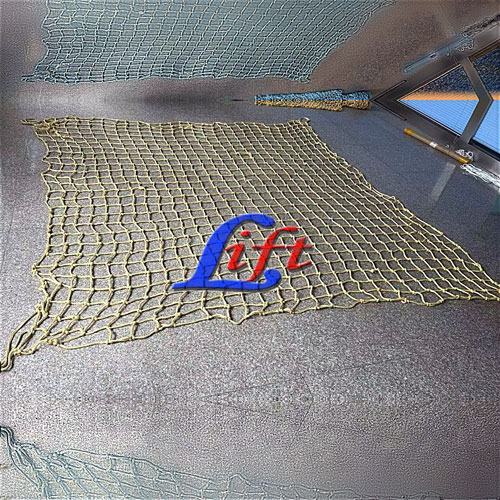
Drone Anti-collision Net
-
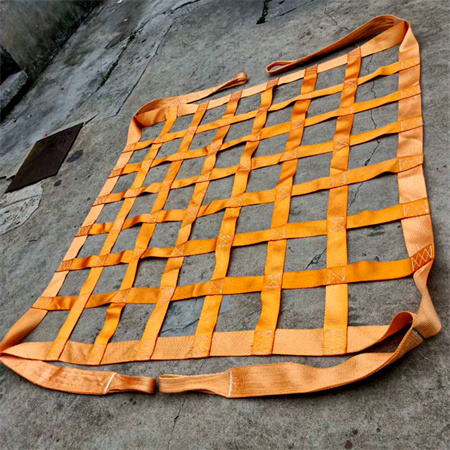
Extra Large Capacity Cargo Net
-
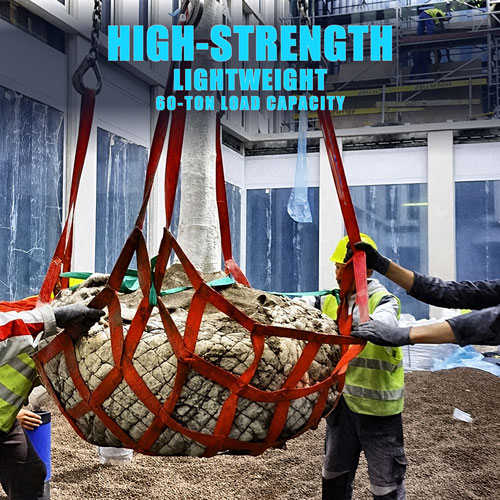
Cargo Webbing Net
-

Color changing nylon double buckle loop nylon braided rope
-

Two end buckle lifting rope, double buckle round lifting rope, double fork nylon lifting rope, non jointed nylon lifting rope
-

Emergency escape lifeline, fire escape rope, fire safety escape emergency rope, steel wire core fire rope

