 Language
 简体中文
简体中文
- On the 2018 National Day holiday, Lifet completed six 100 ton large tonnage lifting belts as a gift
- The role of suspension net in the transportation of goods turnover
- Cargo soft lifting net, lifting net, lifting net, lifting net, bag, climbing net
- Precautions for using Lifutiden elevator
- How to make circular lifting straps
Contact: Wang Lili
E-mail:18066002268
Phone:702461526@qq.com
Address: Lifute Industrial Park, Taizhou City, Jiangsu Province
Lifute Hoisting Co., Ltd. 18066002268 produces lifting belts, lifting nets, nylon ropes, soft ladders, steel wire rope rigging, paper ropes, safety belts, safety nets, lifting chains, steel coil hoists, crossbeam hoists, flat lifting belts, circular lifting belts, electric traction ropes, high-altitude safety belts, and anti fall safety nets Two end buckle lifting rope, double buckle round lifting rope, double fork nylon lifting rope, non jointed nylon lifting rope. Lift Sling Rigging Co.
Hits: ℃
Release time:2026-09-29 15:59
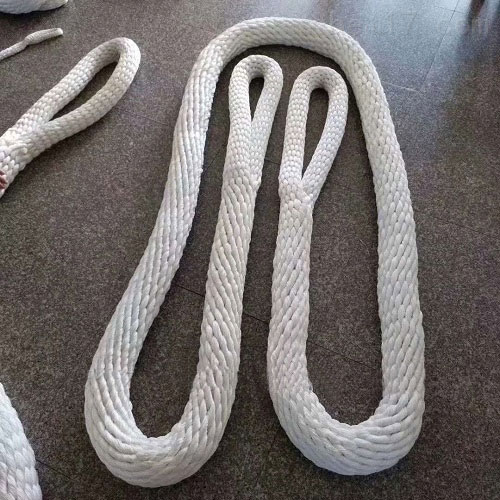
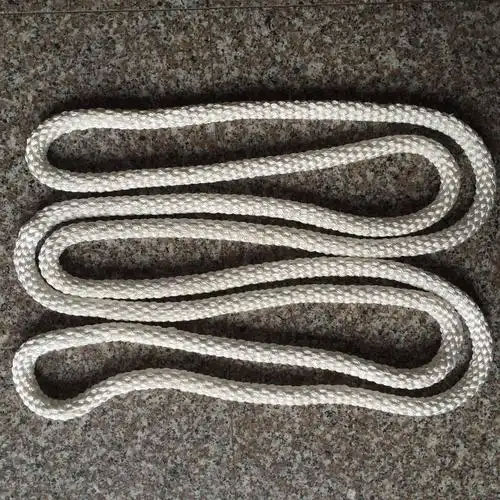
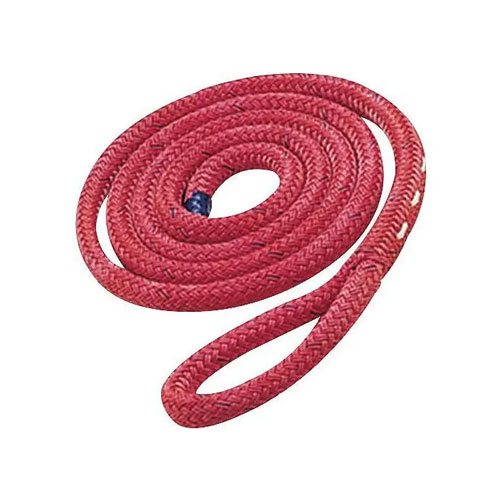
Lift Sling Rigging Co., Ltd manufactures Two end buckle lifting rope, double buckle round lifting rope, double fork nylon lifting rope, non jointed nylon lifting rope. Read the four phrases togethe r and something unusual appears: not one of them describes the rope. Two of them describe the fittings at its ends, one describes the shape of the article as a whole, and the last one describes someth ing that is not there. This page is therefore about a rope at the two places where it stops being a rope.
Two End Buckle Lifting Rope, Double Buckle Round Lifting Rope, Double Fork Nylon Lifting Rope, Non Jointed Nylon Lifting Rope
1. Four Phrases, and Why They All Point at the Ends
The four phrases in the product name divide into two groups: those that name something fitted to the rope, and those that name an absence. What none of them does is tell a buyer anything about the rope between the ends — its construction, its fibre or its working load. That is a useful thing to notice before ordering, because it means the name can be satisfied by a range of ropes and says nothi ng about which one is needed.
| The phrase | What it describes | What it leaves open |
|---|---|---|
| Two end buckle lifting rope | Both ends carry a buckle. It is a statement about two places, and it says there are two of them. | Which buckle, in what material, gripping what section, and whether the two ends are the same. The phrase does not say the ends match. |
| Double buckle round lifting rope | Two buckles and a round article: a loop rather than an open length, with a fitting at each of two places on it. | Whether the article is closed or openable, and which of the two the buyer needs. The two are used differently and are inspecte d differently. |
| Double fork nylon lifting rope | A fork end, twice. This is the phrase with the least precedent anywhere: the word fork appears a handful of times elsewhere on this site and the word pair double fork appears nowhere at all. | Almost everything. What a fork is on this article has to be settled before an order can be quoted, and Section 5 sets out the two readings. |
| Non jointed nylon lifting rope | An absence. The phrase says a joint or a join is not present, somewhere, and it is the only one of the four that names somethi ng the buyer will not see. | Where the absence is claimed: along the body, or at the ends, or both. Section 6 takes the two readings apart. |
The practical consequence is short. A buyer who orders from this name and adds only a diameter and a length has specified a rope and left the article undefined, because on this product the article is the ends. Everything below is about those two places and about what the words for them can and cannot carry.

2. This Site Already Uses These Words, on Flat Straps
Before any of the four phrases is asked to carry a specification, it is worth knowing where the same words are already in use here. Two established pages on this site are built on end buckles, and both of them are about flat woven articles:
| The page | What it owns | Why this page does not repeat it |
|---|---|---|
| The double buckle flat wear-resistant sl ing page | A buckle on a flat strap, and the wear that a flat strap takes where it rubs. The article there is a woven band, and the buckl e is the frame the band is threaded through. | That page is about a flat section and about abrasion on a worn surface. This page is about a round section, where the fitting cannot be threaded through anything. |
| The two end buckle flat lifting strap p age | A two-end-buckle flat strap as a closed loop in the flat family, and how that differs from a round sling. That is the loop que stion for a woven band. | The loop-versus-sling comparison is made there. Here the article is a rope, and the loop question appears in a different form in Section 4. |
So the words two end buckle and double buckle already belong to flat woven articles on this site, and neither of those pages is about a rope. That is the gap this page occupies, and it is a real ga p rather than a small one: on a flat band the buckle question is largely settled by the band's width and by how the band is threaded, and on a round rope none of that applies.
3. What Changes When the Same Fitting Meets a Round Section
The single most useful thing to understand about this product is that a fitting which works on a flat band does not automatically work on a rope, and that the reason is geometry rather than quality .
| On a flat woven band | On a round rope |
|---|---|
| The band can be threaded through a frame and folded back on itself. The load is spread across a flat width, and the fitting ho lds a section that is wide and thin. | A rope cannot be threaded through a frame and folded back the same way. The fitting has to grip, clamp or contain a circular s ection, and it meets the rope along a line rather than across a width. |
| The contact between band and fitting is flat against flat, so the pressure is even as long as the band is straight. | Contact is local. A fitting that touches a rope at a few points concentrates the load at those points, which is why the form o f the fitting matters more here than the metal it is made from. |
| A worn band is visible as a thinning or a fuzziness along a flat face, and the area is easy to look at. | A damaged rope is visible from the outside of a round section, which shows perhaps half of its circumference at a time. The pa rt inside the fitting, and the far side of the rope, are not on view. |
| If the fitting is the wrong size the webbing simply crumples against it, and the article can often still be used. | If the fitting is the wrong size the rope either slips or is crushed. Neither is a condition to keep working with, and neither is always visible on inspection. |
None of that is a criticism of any particular fitting. It is the reason this page has its own subject: the same three words, two end buckle, applied to a round article, ask a question that the flat strap pages never had to ask.
4. Two Buckles on a Loop: What It Buys, and What It Costs
The second phrase in the name describes a loop with two fittings. That combination is a distinct article rather than a decoration of the first, because it decides whether the article can be opened.
| The question | What a loop with two buckles answers | What it costs |
|---|---|---|
| Can the article be put around a load that has no free end, or removed from it without lifting the load off? | Yes. Two fittings mean the loop can be opened at two places, which is what makes it usable where a closed loop cannot be fitte d at all. | The article now depends on two fittings instead of none, and it depends on the user closing them correctly every time. |
| Is the loop adjustable? | Only if the fittings are designed to grip at a variable position. A closed loop has one length and one shape; a buckled loop c an in principle be set to several. | Adjustability is the feature that most often turns out to be unapproved. If the length must be adjustable, that requirement ha s to be on the order rather than assumed. |
| How many places have to be looked at before the article is used? | Two, plus the body. The buckles are also the parts that can be got wrong before the lift rather than during it. | Two inspection points instead of one, on an article that may be used by different people. This is the practical argument for a closed loop in some applications. |
5. Double Fork: a Phrase With No Precedent on This Site
The third phrase is the one that cannot be looked up. On this site the word fork appears a handful of times, on three pages, and the word pair double fork appears nowhere at all — which means that unlike the first two phrases, this one has no established usage here to fall back on. A buyer who writes it and a supplier who reads it may each be picturing something different, and neither will find out until the goods arrive.
| The reading | What it would mean on a rope | What the order has to add |
|---|---|---|
| A fork is a clevis-style end: a U-shaped fitting that takes a pin | The end of the rope carries a two-plate fitting so that it can be pinned to a matching lug or bracket. Two such ends are a rea l and common article, and they let the rope be attached and removed with a pin rather than a knot or a hook. | The pin diameter, the gap between the plates, the material, and the position of the pin hole. Two forks also have to be told w hich way they face relative to each other. |
| A fork is a two-leg end: the rope divides into two branches | The end of the article becomes two parts, so the article picks up the load in two places rather than one, and each branch carr ies part of the load. | The leg length, the angle the two legs work at, and how the load is shared. An angle that is not stated is an angle that will be wrong on site. |
| A fork is something else again, borrowed from another trade | The phrase is doing no work at all and describes neither the fitting nor the shape. This is commoner than it sounds: words mig rate between lifting, rigging and general hardware, and arrive without a definition. | A drawing or a photograph of the end the buyer has in mind. On a phrase with no precedent, an image settles in one line what a paragraph of description cannot. |
This page does not pick one of those readings for the phrase, because picking one would create a specification that no test can confirm and that a supplier could satisfy while shipping something th e buyer did not want. What it does instead is the thing that works: it asks for the fitting to be named, dimensioned and drawn. That is not a way of avoiding the question, it is the only form of the q uestion that can be answered.
6. Non Jointed: the Body, or the Whole Article?
The fourth phrase describes an absence, and absences are the hardest things to order because the supplier has to work out where the buyer is looking. This site has used a closely related word three times, once on each of three pages, and each time it described the loop of an endless article — a closed band with no join in it. That is one reading of the phrase. There is another, and on a rope th e two lead to different articles.
| Where the joint is said to be absent | What that means in practice | What to write on the order |
|---|---|---|
| Along the body: the rope is one continuous length with no join in it | The length was made in one piece rather than assembled from shorter lengths. This is the reading that matches how the word is used elsewhere on the site for a closed loop. | The length required, and confirmation that it is a single piece. If the required length is longer than what can be made in one piece, say so and let the supplier answer rather than assuming. |
| At the ends: the article has no join anywhere, including where the ends are made up | This is the stronger claim and the more expensive one. It says the ends are formed without a splice or a sewn joint — the rope is returned and finished so that the load path runs through the rope itself. | The end form, explicitly, for each end. This is the requirement that decides whether the ends can be fitted with the buckles a nd forks described above at all. |
| Both, which is usually what is meant | A continuous body and ends made without a join. The article then has no assembled connection in it anywhere, and the only adde d parts are the fittings. | Say it in that form. Where an article has no joint, the fittings and the ends carry the whole question, which is why this page keeps coming back to them. |
Two pages on this site deal with how an end is made. The splicing, threading and wrapping sling page covers the operations themselves, an d the circular sling and cylindrical sling page covers the difference between a woven tube and a tube with a seam. Neither covers a rope whose ends are returned without a join, which is the reading this page is for.
7. What the Order Has to Name
Written in the order in which the lines decide whether the rest can be answered at all. The first three lines are the ones that are usually missing, and on this product they are the whole specifica tion.
| # | The line | Why it has to be there |
|---|---|---|
| 1 | The fitting at each end, named, with its dimensions and its material | This is the article. Two ends named loosely are two ends that will not match the hardware they are meant to meet. |
| 2 | Where the absence of a joint is claimed | Along the body, at the ends, or both. The three produce different articles and are quoted at different prices. |
| 3 | Openable or closed: whether the loop has to be fitted around a load with no free end | This decides between a loop with two fittings and a closed loop, which are different articles rather than options on one. |
| 4 | The rope itself: construction, diameter and fibre | The name says nylon and leaves the construction open. The fibre is the buyer's line, and the diameter follows from the load. |
| 5 | Length, and whether it is the rope length or the finished article's length | On a loop with two fittings the two differ, and the difference reappears at inspection as a dimension nobody owns. |
| 6 | Whether the length has to be adjustable, and who is allowed to adjust it | Adjustability is the feature most often assumed and least often approved. If it is needed it belongs on the order, not in the workshop. |
| 7 | The hardware each end will meet | A fitting is chosen against what it connects to. Pin diameter, hook throat and ring size are the dimensions that make a fittin g right or wrong. |
| 8 | Marking, and the documents that travel with the article | On an article whose identity depends on two fittings, the marking is what lets the next inspector confirm that the article in front of them is the one described. |
8. Inspection: Two Fittings and One Body
Articles on this site are inspected the same way everywhere: what can be seen is one input, and the record covers the rest. On this product there is a third place to look, because the ends are not part of the rope and do not wear like it.
| Where to look | What it can show | What it will not |
|---|---|---|
| The body along its length | Flattening, glazing, local wear, and a change of colour that suggests heat or contamination. On a rope, roughly half the circu mference is on view at any moment, so it has to be turned. | Loss of strength inside the structure. Nothing visible corresponds one to one with the remaining capacity. |
| Each fitting, where it grips the rope | A fitting that has moved, a rope that has been crushed or necked where it enters, deformation of the fitting itself, and the c ondition of anything that moves or closes. | What has happened inside the fitting, and whether the rope under it has been overstressed. This is the place a rope article fa ils that a closed loop cannot. |
| The ends, as the point where the absence of a joint was claimed | Whether the return is still tucked and whether the finished end has moved. Where the article is claimed to have no joint, the finished end is the only place that claim can be checked. | Whether the rope inside the return has been loaded beyond what it was made for. The end looks the same either way. |
| The record | What the article is, how long it has been in service, what it has carried and what has happened to it. On this article the rec ord also answers a question the others do not: whether anyone has adjusted the length. | Nothing, where there is no record. An article whose adjustments were never written down has no length, and therefore no rating , that can be confirmed. |
9. Retirement, and What Ends the Article's Life
The usual list applies here, and it is short. What is specific to this product is that a retirement decision can be triggered by a part that is not the rope.
| Trigger | Why it ends the article's life here |
|---|---|
| A fitting that has deformed, cracked or lost material | The rope may be perfect and the article is still finished, because the ends are the article. This is the retirement reason tha t has no equivalent on a closed loop. |
| A fitting that has slipped, or a rope that has necked where it enters the fitting | Movement means the connection is no longer the one that was made up and inspected. It cannot be re-set by eye and used again.< /td> |
| A justified length adjustment that nobody recorded | The article's rating belongs to the length it was made to. Once that is unknown, so is the rating, and re-certifying a length nobody wrote down is not possible from the article alone. |
| Damage, heat or contamination found on the body | The ordinary reason, and the one the record is written for. On this article it is worth adding that the ends are judged separa tely: a sound body does not clear the fittings. |
| The article's service interval or its stated life | Where an interval or a life is agreed, it retires the article regardless of appearance, because appearance was never the whole test on any page of this site. |
10. Which Part of This Subject Is Argued Where
The other pages that share words with this one are listed below. Each already argues its part in full, and none of them is repeated here.
| The part of the subject | Where it is argued | Why it is not repeated here |
|---|---|---|
| A buckle on a flat woven band, and the wear a band takes | the double buckle flat wear-resistant sling page | That page is written for a flat section. On a rope the fitting cannot be threaded and the wear appears on a round surface, whi ch is Section 3 of this page. |
| A two-end-buckle flat strap as a closed loop, against a round sling | the two end buckle flat lifting strap page | The loop-versus-sling comparison belongs to the flat family. Here the loop question is about openability, in Section 4. |
| How an end is actually made: the operations involved | the splicing, threading and wrapping sling page | Those pages set out the work. This page only says what has to be asked for in words when no joint is wanted. |
| A woven tube and a tube with a seam | the circular sling and cylindrical sling page | The seam question belongs to an article closed from a body. On a rope there is no closing line, so the same word points at the finished end instead. |
| Nylon as a material for a rope or a sling, wet and warm and chemically loaded | the nylon woven flat sling page | The fibre's own behaviour is argued there. This page names nylon in its title and leaves the material argument to that page. |
| Articles that are supplied once and not returned | the disposable polyester and nylon circular sling page | That page carries the once-only argument. It matters here only because a two-buckle article is the form in which a once-only l oop can be fitted at all. |
| A rope ordered together with a sling for one lift | the disposable cargo sling and matching lifting rope page | That page decides the pair. This one prices the rope with its ends. |
Frequently Asked Questions
What are the two ends of this rope fitted with?
That is the first thing to settle and the name does not settle it. The phrase says a buckle is at each end, not which buckle, in what material, or whether the two ends match. Name the fitting, its dimensions and its material, and say what hardware it has to meet.
Is a double buckle loop stronger than a closed loop?
Not in itself. A loop with two fittings introduces two connections that a closed loop does not have, so there are two more places that have to be right. What the two fittings buy is openability: th e loop can be fitted around a load that has no free end.
What does double fork mean?
This site has no established use of the phrase, and the word fork appears only a handful of times, on other pages. It could mean a clevis-style end that takes a pin, or an end that divides into two legs, or something borrowed from another trade. Ask for the fitting by name and dimensions, or send a drawing of the end.
Does non jointed mean there is no splice in the rope?
It can mean that, and it can mean something stronger: that the ends are also formed without a splice, so the article has no assembled join anywhere. The two are different articles and are quoted di fferently. Say which is wanted, and for which of the two ends.
Why does the site use the word jointless elsewhere?
It is used on three pages to describe the loop of an endless article: a closed band with no join in it. That is one reading of the phrase on this product. On a rope the same idea can also be claime d at the ends, which is the reading Section 6 separates out.
Can the length be adjusted?
Only if the fittings are made to grip at a variable position, and only if that is what the order says. Adjustability is the requirement most often assumed rather than written, and an adjustment nob ody recorded leaves the article with no confirmable length.
What diameter and fibre should be ordered?
The name says nylon and leaves the construction open, so both lines are the buyer's. The diameter follows from the load and from the hardware the ends have to meet; a fitting chosen for one diamete r will not grip another.
Can the rope be inspected without removing the fittings?
No. The body can be turned and looked at, and the finished ends can be checked, but the rope inside each fitting is not on view. That is one of the places this article can fail that a closed loop c annot.
Which part of the article is most likely to end its life?
The fittings, and they can do it while the rope is still sound. A deformed or cracked fitting, or a rope that has necked where it enters one, retires the article even though the body looks untouche d.
Is this the same product as the other double buckle page?
No. The other pages on this site that use these words are about flat woven articles: a buckle on a flat band, and a two-end-buckle flat strap. This page is about a rope, where a fitting meets a rou nd section that cannot be threaded through anything.
What should I send with an enquiry?
The fitting at each end by name, dimensions and material; where the absence of a joint is claimed; whether the loop must open; the rope's construction, diameter and fibre; the length and whether it is the rope or the finished article; whether adjustment is allowed and who may do it; the hardware the ends will meet; and the marking and documents required.
Contact Lift Sling Rigging Co., Ltd
Lift Sling Rigging Co., Ltd, Lifute Industrial Park, Taizhou City, Jiangsu Province, China. Telephone and WeChat: 18066002268. E-mail: 702461526@qq.com. HS code 630790. Name the two ends and say wh ere the joint is claimed to be absent; those two lines decide most of the quotation.
- Previous:Color changing nylon double buckle loop nylon braided rope
- Next:Emergency escape lifeline, fire escape rope, fire safety esc
-
Drone Anti-collision Net
-
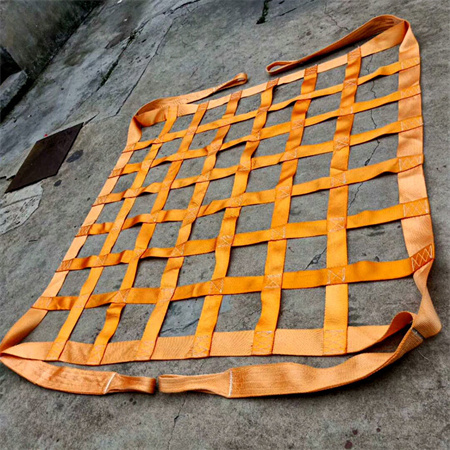
Extra Large Capacity Cargo Net
-
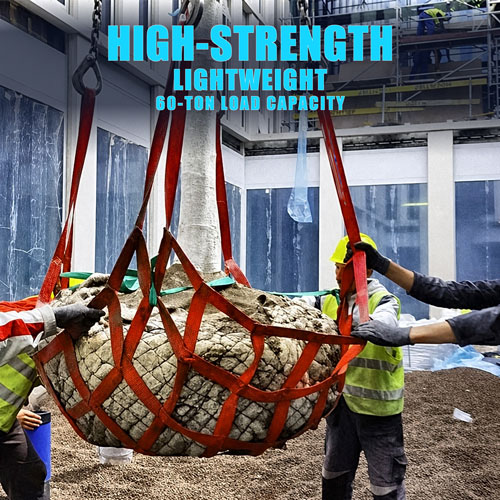
Cargo Webbing Net
-

Color changing nylon double buckle loop nylon braided rope
-

Two end buckle lifting rope, double buckle round lifting rope, double fork nylon lifting rope, non jointed nylon lifting rope
-

Emergency escape lifeline, fire escape rope, fire safety escape emergency rope, steel wire core fire rope

