 Language
 简体中文

- On the 2018 National Day holiday, Lifet completed six 100 ton large tonnage lifting belts as a gift
- The role of suspension net in the transportation of goods turnover
- Cargo soft lifting net, lifting net, lifting net, lifting net, bag, climbing net
- Precautions for using Lifutiden elevator
- How to make circular lifting straps
Contact: Wang Lili
E-mail:18066002268
Phone:702461526@qq.com
Address: Lifute Industrial Park, Taizhou City, Jiangsu Province

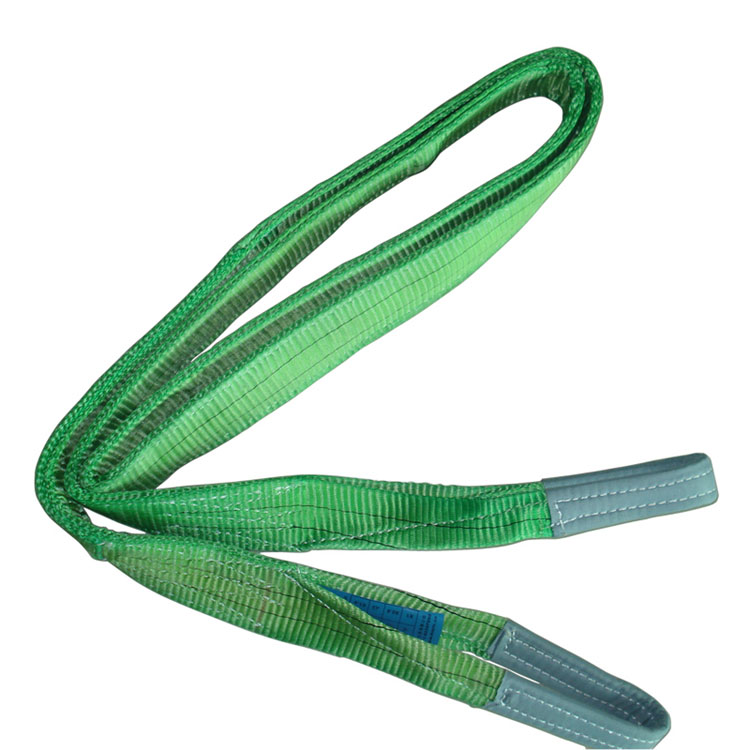
Lift Sling Rigging Co., Ltd. manufactures the flat lifting strap - a flat woven webbing sling built to EN 1492-1, made to order from 1 t to 10 t in single ply, double ply and heavier builds, for hoisting heavy workpieces: machined and finished parts, dies and moulds, plate, castings, rolls and machine tools. The strap is the right answer where the load must not be marked and where the band has to spread its pressure across a wide bearing area rather than concentrate it on a narrow contact. It is supplied with the end you need: a soft eye, a reinforced eye, a thimble eye, or an end with a ring or a buckle-type fitting, and the terms anchor eye, anchor ring and anchor buckle are explained on this page, because different suppliers use them for different things and the phrase alone does not specify a product. 7:1 safety factor and a minimum breaking load of seven times the working load limit, choked hitch 0.8, basket 2.0 and two-leg 1.4, edge protection and wear pads on request, any length from 1 m to 12 m. HS code 630790. Phone 18066002268.
Hits: ℃
Release time:2026-09-17 10:04
Lift Sling Rigging Co., Ltd. +8618066002268 produce Anchor ring,flat lifting strap,anchor eye,flat lifting strap,anchor buckle, flat sling.
Flat Lifting Strap

Flat lifting strap — heavy workpiece webbing strap to EN 1492-1, 1 t to 10 t, single ply to heavy builds, endless or eye-to-eye, any length from 1 m to 12 m
What is on this page. This page covers the flat lifting strap as a heavy workpiece product: what it is and what the words around it mean, the range and the build, how the ends are terminated and what the anchor terms actually refer to, the workpiece duties it is bought for, how to size it, when to choose a strap rather than a round sling or a chain, how it is inspected and retired, and how to order it.
- What a flat lifting strap is, and the words that get confused with it — section 1
- The range and the build: band, ply and width — section 2
- How the strap is terminated: eye, ring, buckle, and what the anchor terms mean — section 3
- Lifting heavy workpieces: what the strap actually has to do — section 4
- Sizing the strap from the weight, the hitch and the surface — section 5
- Strap, round sling or chain: choosing the sling for the load — section 6
- Inspection and retirement criteria — section 7
- Marking, standards and what a flat strap is not rated for — section 8
- How to order: the checklist — section 9
- The questions we are asked most often — section 10
1. What a Flat Lifting Strap Is
A flat lifting strap is a flat woven webbing sling: a wide band of man-made fibre woven flat, sewn into a reinforced eye at each end, closed into a continuous loop, or built as an assembly with end fittings. EN 1492-1 — the European standard for these products — covers flat woven webbing slings made of polyamide, polyester or polypropylene across webbing widths of 25 mm to 450 mm, in single and multi-ply construction, and sets out the requirements for design, testing and marking. The straps on this page are that product at a 7:1 safety factor, built for heavy workpiece duty.
Strap, sling and belt: in this trade they are the same thing. All three words are used interchangeably for this product, and a quotation may use any of them without meaning anything different. We still qualify the terms we use, because outside the trade they are not the same: strap is also used for a load restraint or tensioning strap, which is a different product, rated to a different regime and often tensioned by a ratchet rather than used to lift. If a quotation says only strap, ask two questions: what is it rated to, and under which standard.
Why a flat band rather than a chain, on a heavy workpiece. This is the central engineering point of the page, and it is a question of pressure rather than of strength. A chain of the same capacity carries its load on the very small area where the links touch the workpiece, so it marks a machined face, dents a casting and prints a witness line on anything painted or polished. The same load carried by a wide flat band is spread across the full width of the webbing, and the pressure on the surface falls in proportion. That is why finished, machined and coated work is usually rigged with a strap, and why the width of the band is a specification figure rather than a detail — it is the number that decides whether the load is marked.
What a flat strap is not. Three products sit close to it and are routinely quoted as if they were the same:
Terminology: what the words in the quotation actually mean
| Term you may be offered | What it actually is | What to check |
|---|---|---|
| Flat lifting strap, flat sling, flat webbing sling | Flat woven webbing, sewn into eyes or a loop, built to EN 1492-1 | Band, ply, width, end form and length basis — the figures the name does not carry |
| Heavy duty strap, heavy workpiece lifting strap | The same product specified for heavier bands and heavier loads, often in double ply or more | Whether the build is single or multi-ply, and whether the width the load can tolerate is enough for the band |
| Load restraint strap, ratchet strap, cargo strap | A different product: a tensioning strap for securing a load, not a lifting sling. It is normally tensioned by a ratchet and is not rated for overhead lifting | The standard and the rating. A restraint strap must not be used as a lifting sling |
| Round sling, round lifting sling, braided sling, rond sling | A different product: a load-bearing core of yarn inside a woven tubular cover, under EN 1492-2 | The standard. A flat strap and a round sling are not interchangeable |
| Chain sling, wire rope sling | Different products with different contact areas, different edge behaviour and different inspection regimes | What the load will tolerate — see section 6 |
| Anchor eye, anchor ring, anchor buckle | Three phrases used loosely for the way the strap is terminated; there is no settled technical meaning behind any of them | The termination, described in words — section 3 |
2. The Range and the Build: Band, Ply and Width
The band works the same way across the flat woven range, because it is set by the standard rather than by the application. What a heavy workpiece strap adds is build: where a general purpose strap reaches a band on one thickness of webbing, a heavy strap reaches it on more plies, which is how the heavier bands are made without an unusable width.
Flat lifting strap: band specification, 1 t to 10 t
| Band | Working load limit, straight lift | Minimum breaking load at 7:1 | Choked hitch (0.8) | Basket, parts parallel (2.0) | Two-leg assembly (1.4) | Typical build and duty on this range |
|---|---|---|---|---|---|---|
| 1 t | 1 t / 1,000 kg / 2,205 lb | 7 t | 0.8 t | 2 t | 1.4 t | Single ply; light parts, small assemblies |
| 2 t | 2 t / 2,000 kg / 4,409 lb | 14 t | 1.6 t | 4 t | 2.8 t | Single ply; general machine shop duty |
| 3 t | 3 t / 3,000 kg / 6,614 lb | 21 t | 2.4 t | 6 t | 4.2 t | Single ply; plate, castings, small dies |
| 4 t | 4 t / 4,000 kg / 8,818 lb | 28 t | 3.2 t | 8 t | 5.6 t | Single ply, or double ply on a narrower band |
| 5 t | 5 t / 5,000 kg / 11,023 lb | 35 t | 4.0 t | 10 t | 7.0 t | Double ply; the working band for most die and mould work |
| 6 t | 6 t / 6,000 kg / 13,228 lb | 42 t | 4.8 t | 12 t | 8.4 t | Double ply; heavier castings and rolls |
| 8 t | 8 t / 8,000 kg / 17,637 lb | 56 t | 6.4 t | 16 t | 11.2 t | Double ply and heavier builds; check the width the load can take |
| 10 t | 10 t / 10,000 kg / 22,046 lb | 70 t | 8.0 t | 20 t | 14.0 t | Heavy build; above this a round sling usually suits better |
Single ply, double ply and heavier builds. Ply is how many thicknesses of webbing are stacked in the body of the strap. Published European product data maps the progression directly: single ply for the lighter and middle capacities, double ply through the working range, and four plies for the heaviest flat webbing slings. Ply is a construction figure and not a rating — a 5 t strap is a 5 t strap in either ply — but it changes four things that matter on a heavy workpiece:
- Weight and handling. More plies make a heavier, stiffer strap. On work where riggers position the sling by hand many times a shift, that is a real cost.
- Width. Ply is how a heavy band is reached without an unwieldy width. Where the load tolerates a wide band, one or two plies at a wide width may be the better answer; where the rig is tight, more plies at a narrower width.
- Bearing pressure. More plies and more width spread the load and lower the pressure on the workpiece — which is the whole point on machined and painted surfaces.
- The bulk at the end. A multi-ply eye is a thicker eye in the same hook opening, so confirm that the hook or shackle still fits the eye before ordering the heavier build.
Which fibre, and what follows from it. A flat lifting strap is built in polyester, polyamide or polypropylene, and the fibre decides four things the band does not. The temperature range for use and storage under EN 1492-1 is −40 °C to +100 °C for polyester and polyamide but only −40 °C to +80 °C for polypropylene. The stretch under load is lowest in polyester. The wet behaviour differs: polyamide loses up to 15% of its dry rating while wet, while polypropylene takes up below 0.1% of its own weight in water and does not derate at all. And the chemistry differs, because polyester is attacked by alkalis and polyamide by acids, while polypropylene is unaffected by both. Tell us the environment and we will name the fibre rather than assume it.
3. How the Strap Is Terminated: Eye, Ring, Buckle, and What the Anchor Terms Mean
This section exists because the page's subject includes three phrases that buyers search for and that the trade uses loosely. Rather than invent a definition for them, here is what the terminations actually are, what each is for, and how to specify one without using an ambiguous word.
Termination options on a flat lifting strap
| Termination | What it is and what it is for | What to watch |
|---|---|---|
| Soft eye | An eye formed in the webbing itself, with no metal. The lightest and most compliant option, and the usual choice where the strap goes around the load or onto a hook | The webbing at the eye is the load path, so it needs protection where the hook or the load edge bears on it |
| Reinforced or folded eye | Extra webbing and stitching at the eye so that hook contact and wear are taken by sacrificial material. Common on heavier bands | A thicker eye in the same opening — confirm the hook still fits |
| Thimble eye | A metal thimble formed into the eye so that the bearing surface is steel and the webbing is not cut by a shackle pin or a thin load edge | The thimble adds a metal component to the assembly, which has to suit the environment — see the chemistry notes below |
| Eye with a ring end (the term buyers search as anchor ring) | An end fitted with a ring so that the strap can be attached to a hook, a pin or another sling end. Useful where the rig has to pass through something rather than over it | The ring is rated as part of the strap assembly, not on its own. If you want the ring as hardware, buy it as hardware |
| Eye with a buckle-type fitting (the term buyers search as anchor buckle) | An end fitted with a buckling or tensioning fitting so that the strap can be closed around a load or adjusted | Anything adjustable is a different load path from a fixed eye, and the assembly must be rated as an assembly |
| Assembly with a master link and hooks | A strap built as a rig with a master link, and hooks sized to the load, so that the whole assembly has one rating | Every component in the load path has to be rated, and the assembly is only as strong as its weakest part |
| No eye at all: endless loop | The band closed into a continuous loop, rotated between lifts so that wear and contact keep moving | The length is the loop circumference, not bearing point to bearing point |
How to specify a termination without ambiguity. Describe what the end has to do: what will enter it (a hook, a shackle pin, a ring, another sling), the direction the load pulls out of it, and how much room the rig gives. From those three answers the eye form, the eye length and any fitting follow. That is the conversation, and it does not need either party to agree a definition of anchor eye.
Fittings have their own limits, and on this product they matter. A metal fitting in the load path is not automatically the strongest part of the rig: it is a component with its own material behaviour. Two published facts worth knowing before a fitting is chosen:
- Aluminium is severely degraded by alkali, caustic environments, acids and salt water. Manufacturer data says so directly, and the US sling rule separately prohibits aluminium fittings where caustics are present.
- High-strength alloy fittings are susceptible to hydrogen embrittlement in acidic conditions. Published industrial guidance is consistent on this and keeps those grades out of pickling and galvanising lines, which is why the strength of the fitting is not the only selection criterion.
- Where the environment is unknown, a soft eye has nothing to corrode. It is worth saying plainly: on some duties the safest specification is the one with no metal in it at all.
4. Lifting Heavy Workpieces: What the Strap Actually Has to Do
Heavy workpiece lifting is not one task but several, and they ask different things of the strap. The table below is organised by the load, because that is how the enquiry arrives and because the load decides two of the three constraints before the weight is even considered.
Heavy workpiece duties and what each one asks of a flat lifting strap
| The load | What it asks of the strap | What to specify for it |
|---|---|---|
| Machined and finished parts | No marking and no denting. The contact pressure has to stay below what the surface will take | Width of band, wear pads, and a basket hitch rather than a choke where the rig allows it |
| Dies, moulds and tooling | High weight in a compact shape, often with lifting holes or eye bolts rather than a natural bearing surface, and often an off-centre centre of gravity | The pick points, the weight, and how the load hangs — an off-centre load puts up to 67% on one sling where the centre of gravity sits a third of the way along |
| Plate, sheet and slab | A thin edge, which is the sharpest thing a strap ever meets, and a surface that will show every mark | Edge protection without exception, and the widest band the rig allows |
| Castings and rough parts | Rough, abrasive and sometimes sharp surfaces, and weight with an irregular shape | Protection plus a tolerance for abrasion — and a check of what the casting surface will do to the band over many lifts |
| Rolls, tubes and cylinders | A small diameter relative to the strap, which changes the bearing case and can pinch the band | Diameter of curvature, which is part of what the rated load is based on, and a check that the band does not fold on itself |
| Machine tools, beds and enclosures | Very heavy, awkward, often with no clear pick point and a centre of gravity that is not where it looks | The rigging plan, not only the sling. This is the duty where an engineered assembly with a master link earns its place |
| Glass, stone and polished panels | A surface that cannot be marked at all, and edges that can cut the band | Wide bands, full edge protection, and often vacuum or clamp devices below the strap rather than the strap alone |
| Bundles, racks and stacked assemblies | A load made of many parts, so the band bears on edges rather than a face, and the bundle can shift | Choked hitches with the 0.8 factor applied, and protection at every contact point |
The three constraints, in the order they should be considered. Weight is only the first of them, and on finished work it is rarely the binding one.
- Weight. This sets the band, once the hitch is applied. It is arithmetic and it is the part everybody does.
- The surface. This sets the width and the protection. A strap that is strong enough but too narrow will still scrap the part, and on machined, painted and polished work that is the whole risk of the lift.
- The edges and the curvature. This sets the protection and sometimes the hitch. Published guidance lists diameter of curvature among the things the rated load is based on, and it is explicit that slings must be protected in configurations with sharp angles.
5. Sizing the Strap from the Weight, the Hitch and the Surface
What each hitch does to the rating of a flat lifting strap
| Hitch | Factor | What it does to the strap and the load |
|---|---|---|
| Straight, eye to eye | 1.0 | The reference case. The band takes the load along its length |
| Basket, parts parallel | 2.0 | Doubles the bearing area on the load, which is why it is the preferred hitch on finished work — and it doubles the parts of the band that are sharing the load |
| Choked | 0.8 | Costs 20% of the rating, and puts the strap round the load and back through its own eye, so the eye takes the abrasion as well as the load |
| Two-leg assembly, within 45 degrees of vertical | 1.4 | A pair of 3 t straps gives 4.2 t, which is 40% more than one strap and not 100% more |
| Four-leg assembly, within 45 degrees of vertical | 2.1 | Rated as if only three legs carry the load, so four legs give 2.1 and not 4.0 |
| Off-centre pick, two points | Up to 67% on one strap | Two straps share equally only when the centre of gravity is exactly halfway between the pick points. Move it a third of the way and one strap carries 67% of the load |
| Bridle or multi-point spread | Depends on the included angle | The eyes are loaded across their width rather than along it, which is a different bearing case — tell us the angle |
Five rules that decide a heavy workpiece strap.
- Count the hitch before the weight. A 5 t strap choked is a 4 t strap. On heavy workpieces the choke is the normal hitch rather than the exception, so apply the 0.8 before choosing the band, not after.
- An assembly is never the sum of its straps. Two legs are 1.4 and four are 2.1, because a four-leg assembly is rated as if only three legs carry the load.
- Off-centre is the most under-estimated case in the shop. Dies, moulds and machine tools rarely have their centre of gravity where the drawing suggests. Two pick points and a load a third of the way towards one of them means 67% on that strap.
- Curvature is part of the rating, not a detail. A wide band wrapped round a thin plate edge or a small roll is not doing the same job as the same band in a straight lift. The answer is more bearing area, a different hitch or protection — not a heavier band.
- Width is how you protect the load. On finished work the band is often set by what the surface will take rather than by the weight, and a wider band at the same band rating is frequently the correct answer.
6. Strap, Round Sling or Chain: Choosing the Sling for the Load
A flat strap is the right answer for most heavy workpiece duty, but not for all of it. The comparison below is the one worth having before the order, because the wrong family is more expensive than the wrong band.
Flat strap against round sling and chain, on the things that decide heavy lifts
| What decides it | Flat lifting strap (EN 1492-1) | Round sling (EN 1492-2) | Chain sling |
|---|---|---|---|
| Contact pressure on the load | The lowest of the three: the load is spread across the full width of the band | Low, but concentrated on a narrower contact than a wide flat band | The highest: the load is carried where the links touch, which marks machined and painted surfaces |
| Marking the workpiece | The reason straps are bought for finished work | Low, but less predictable than a flat band | Marks and dents; a witness line is normal rather than a fault |
| Sharp edges and cut resistance | Needs protection: a sleeve or pad at every edge it crosses | Also needs protection, and a cut cover is easier to miss than a cut band | The strongest of the three against edges, which is why chains keep the roughest work |
| Heat | Limited; a man-made fibre with a defined temperature ceiling | Same family of limits as the strap | The only one of the three that tolerates heat and hot workpieces |
| Chemistry | Chosen by fibre: polypropylene is unaffected by acids and alkalis, polyester and polyamide each fail one of them | Same fibre logic as the strap | Has its own limits, and high-strength alloy fittings are kept out of acid work because of hydrogen embrittlement |
| Weight and handling | Light, and easy to position by hand | The lightest per tonne of the three | Heavy, and awkward to reposition |
| Damage and inspection | Inspection is visual and condition based; abrasion and cuts are the mechanisms | The cover hides the core, so a damaged cover has to be treated as a damaged sling | Inspection is by link, and by measurement where wear is suspected |
| Where it wins | Machined, painted, polished and plated work; awkward shapes; anywhere the load must not be marked | Very heavy loads in tight rigs, and duty where a soft sling is wanted without a wide flat band | Rough, sharp, hot or abrasive loads, and heavy duty in yards and foundries |
The practical rule. If the surface matters, the strap wins. If the weight is very high and the rig is tight, a round sling is often the better answer and it will reach bands a flat strap cannot. If the load is rough, sharp, hot or unknown, a chain is doing the job it was designed for. Where a lift has two of those properties at once — a heavy die with a sharp edge and a finished face, for example — the answer is usually a strap with protection rather than a heavier strap.
7. Inspection and Retirement Criteria
Every strap should be inspected before every use, with a documented periodic inspection on top of that. On heavy workpiece duty the wear is concentrated in three places — the eyes or fittings, the contact patch where the band bears on the load, and the stitching — so the inspection should follow the load path rather than scan the band.
Flat lifting strap: what to check, following the load path, and when to withdraw
| Where to look | Withdraw the strap if | Why it matters on heavy workpiece duty |
|---|---|---|
| Stitching at the eyes | Broken, pulled or loose stitches, or an eye that has changed shape | The stitch carries the whole load and cannot be repaired on site. There are two of them on an eye-to-eye strap and both matter |
| Eye reinforcement and wear pads | A reinforcement or pad worn through to the webbing underneath | Protection is sacrificial by design — once it is gone, the wear is into load-bearing webbing, and on machined work the next thing to suffer is the workpiece |
| Fittings: rings, thimbles, buckles | Corrosion, pitting, cracking, deformation, or a fitting that has been loaded other than as designed | A fitting is a rated component in its own right, and on this product the fitting is often the part that is wrong. Aluminium is degraded by alkali, acid and salt water and alloy grades are susceptible to hydrogen embrittlement in acid |
| Webbing body | Cuts, snags, fraying, exposed load-bearing yarn, or damage reaching about 10% of the webbing width in any transverse section | Abrasion and cuts are the mechanisms that retire flat straps, and heavy workpiece duty supplies both: rough castings, plate edges and grit |
| Contact patch and bearing area | A localised flattened, glazed or polished patch, or a permanent crease across the band | The contact patch is where the load actually entered. A glazed patch means heat or friction, a crease means the band was pinched, and both are localised strength losses |
| Edge protection sleeves | A sleeve that is cut through, displaced or missing from where it was fitted | Published European guidance requires slings to be protected in configurations with sharp angles; a displaced sleeve is an unprotected edge |
| Whole length | Localised discoloration, bleaching, melting or charring | Melting or charring of any part of the sling is a removal condition, and heat damage arrives earlier on a man-made fibre than on a chain |
| Labels and marking | The label is missing or illegible — the working load limit, fibre, standard, length or traceability code | The label is what certifies the strap; the webbing cannot be identified from looking at it |
| Loading history | A known shock load, an overrun, a lift taken on the wrong hitch figure, or a strap that has been used as a tow or restraint strap | A strap that has been used outside its rating has no rating left, even if it looks perfect |
| The set, if it is an assembly | Any leg of the set fails, or the legs are of mixed band, ply, length or type | An assembly is only as strong as its weakest leg, and on heavy workpiece work the legs are often bought at different times |
Care rules for a flat lifting strap.
- Never exceed the band on the label, and never exceed it on the hitch the label does not describe — apply 0.8 for a choke, 1.4 or 2.1 for an assembly, and up to 67% onto one strap when the load is off-centre.
- Protect every edge, every time, at any load. Not for the strap's sake alone: a cut edge marks the load as well.
- Do not drag a strap over the floor, over plate edges or over machining swarf, and never pull a strap out from under a load resting on it.
- Do not twist, knot, shorten or lengthen a strap, and never repair one — the stitch at the eye in particular cannot be repaired.
- Keep restraint straps out of the rig and keep lifting straps out of load restraint duty. A strap that has been tensioned over a truck load has been loaded in a way no lifting rating covers.
- Clean and dry before storage, and store off the floor away from oil, chemicals, solvent vapour, heat and sharp edges.
- Rotate the loop or alternate the ends so that wear and the contact patch keep moving rather than collecting in one place.
- Inspect fittings as components, not as accessories — corrosion, pitting and deformation are reasons to withdraw, not to clean and re-use.
- Put the strap into a documented inspection programme as well as the pre-use check, especially where the load or the environment is severe.
- Cut a retired strap through before disposal so that it cannot be put back into service by mistake.
8. Marking, Standards and What a Flat Strap Is Not Rated For
What the product is built to. The straps on this page are made to EN 1492-1, Textile slings — Safety — Flat woven webbing slings made of man-made fibres for general purpose use, which covers single-leg, two-leg, three-leg, four-leg and endless sewn flat woven webbing slings with or without fittings, in polyamide, polyester or polypropylene, across webbing widths of 25 mm to 450 mm, at a 7:1 safety factor.
What every flat lifting strap has to carry, and why
| Mark | What it states | Why it matters |
|---|---|---|
| Working load limit code | The band, by webbing colour and by the black stripe count, one stripe per tonne | It is the capacity cue a rigger reads first, and it must be legible on a strap that works in a machine shop |
| Fibre identification | Blue for polyester, green for polyamide, brown for polypropylene | The label colour is how the fibre is confirmed, and the fibre sets the strength, the stretch, the wet behaviour and the chemistry |
| Identification label | Working load limit in words and figures, fibre, standard reference, length, traceability code | The label is what certifies the strap. If the assembly is rated differently from the strap, the assembly rating is the one that counts |
| Length and basis | For eye-to-eye, the effective working length bearing point to bearing point; for endless, the loop circumference | Two different measurements of the same job, and a quotation that does not state the basis is ambiguous |
| Manufacturer and traceability code | Who made it and which batch it came from | It links the strap in service back to the batch it was tested with |
| Customer marking | Nothing about capacity | Permitted alongside the required marks, never instead of them. Webbing should not be painted or inked: published guidance warns that the solvents in paint corrode the synthetic material |
The same product under two rulebooks
| Point of comparison | EN 1492-1 (Europe and most export markets) | ASME B30.9 with the US sling rule, OSHA 1910.184 |
|---|---|---|
| Safety factor behind the marking | 7:1 for flat woven webbing slings | Commonly a 5:1 design factor, so the same nominal marking corresponds to a smaller breaking load |
| Colour code | A capacity colour sequence for the band, with the black stripe count repeating the capacity | Not mandated; the identification tag is the authority |
| What the rated load is based on | Design, testing and marking to the standard, with hitch factors applied in service | Published OSHA guidance lists material strength, design factor, type of hitch, angle of loading, diameter of curvature and fabrication efficiency |
| Protection at edges | Published European guidance requires protection in configurations with sharp angles | The regulation addresses damage in service and lists removal criteria rather than prescribing sleeves |
| Removal from service | Damage criteria including cuts, abrasion, chemical and heat damage, and illegible marking | Acid or caustic burns, melting or charring, excessive abrasive wear, discoloration and brittle or stiff areas, and missing or illegible identification are all listed as requiring immediate removal |
Duties a flat lifting strap is not rated for, at any band.
- Lifting or suspending a person.
- Towing, recovery or vehicle pulling — the rating is a lifting rating and tow loads are shock loads.
- Load restraint, lashing or cargo securing — that is what a restraint strap is for, and the two must not be substituted.
- Staying in place permanently as a tie, guy or restraint.
- Being knotted or twisted to shorten it, or being loaded through a buckle or fitting that is not part of the rated assembly.
- Lifting over an unprotected sharp edge without a sleeve.
- Use of a bare ring, eyebolt or other hardware as a lifting point on its own — that is hardware, rated and inspected as hardware.
- Working on or near live electrical conductors, or in service above the fibre's temperature ceiling.
9. How to Order: The Checklist
The order checklist for a flat lifting strap
| What we need | What to send | Why it changes the answer |
|---|---|---|
| Load and hitch | The weight and how it will be hitched | Choked costs 20%, basket doubles the parts that are parallel, two legs are 1.4 and four are 2.1 |
| Pick points and centre of gravity | Where the strap will sit, and how the load hangs | An off-centre load puts up to 67% on one strap, and dies and machine tools rarely hang as the drawing suggests |
| The surface | What the load will tolerate: machined, painted, polished, plated, rough | This sets the width and the protection, and on finished work it is often the binding constraint rather than the weight |
| Edges and curvature | Sharp edges, plate edges, and the diameter the band wraps | Diameter of curvature is part of the rating, and slings must be protected with sharp angles |
| Build | Single ply, double ply or heavier, and the width the rig allows | Ply is how a heavy band is reached without an unusable width, and it changes the bulk of the eye in the same hook opening |
| Ends | What will enter the end — a hook, a shackle pin, a ring, another sling — and the direction of pull | That decides the eye form, the eye length and any fitting, without either side having to agree what anchor eye means |
| Fittings and environment | Whether the ends need fittings, and what they will meet | Aluminium is degraded by alkali, acid and salt water and alloy grades are susceptible to hydrogen embrittlement in acid; a soft eye has nothing to corrode |
| Form and length basis | Eye-to-eye or endless, and the basis you are measuring on | Bearing point to bearing point and loop circumference are different measurements of the same job |
| Assembly | Whether the strap is one sling or part of a set with a master link and hooks | An assembly is rated as an assembly, and a 5 t strap in a 4 t assembly is a 4 t assembly |
| Market and standard | Where the strap will be used and the standard it must satisfy | It decides whether the label must show 7:1 or another factor |
| Quantity and certification | How many, and whether a test certificate or third-party witnessing is required | Traceability depends on the batch, so it is set at order rather than at delivery |
10. Frequently Asked Questions
Q1: What is a flat lifting strap?
Q2: What is the difference between a strap and a sling?
Q3: What do anchor eye, anchor ring and anchor buckle mean?
Q4: Does this page sell the anchor ring itself?
Q5: Why use a flat strap for heavy workpieces rather than a chain?
Q6: How do I choose the band for a heavy workpiece?
Q7: What is the heaviest flat lifting strap you make?
Q8: Can a flat lifting strap be used on a sharp edge?
Q9: How long does a flat lifting strap last?
Q10: What do you need from me to quote a flat lifting strap?
Contact us — flat lifting straps direct from the manufacturer
Tell us the load, the pick points and what the surface will take, and we will come back with the specification and price for your flat lifting strap: band, fibre, ply, width, end form, length and basis, protection and marking all on one sheet, with the fitting material called out if the strap is to be an assembly. We build to order in single ply, double ply and heavier builds, in polypropylene, polyester or polyamide, endless or eye-to-eye, in any length from 1 m to 12 m and beyond, with the EN 1492-1 colour code, the black capacity stripe count and a legible identification label as standard, protective sleeves and wear pads on request, and matching sets for two-leg and four-leg assemblies. Volume discounts apply.
- Contact: Wang Lili
- Phone: 18066002268
- E-mail: 702461526@qq.com
- Address: Lifute Industrial Park, Taizhou City, Jiangsu Province, China
- Send an enquiry >>
- Previous:Reinforced lifting straps with colored flat and sheathed lifting straps
- Next:White polypropylene lifting belt-white polypropylene sling-w
-
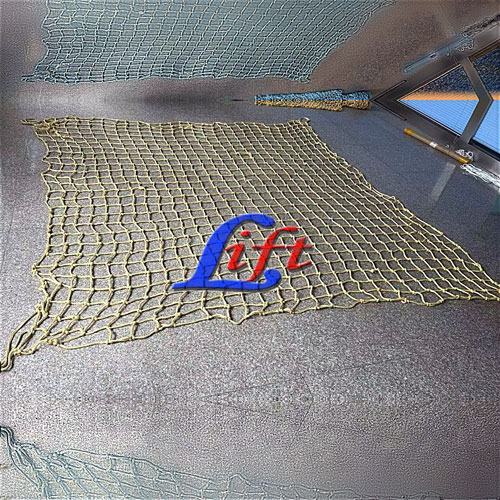
Drone Anti-collision Net
-
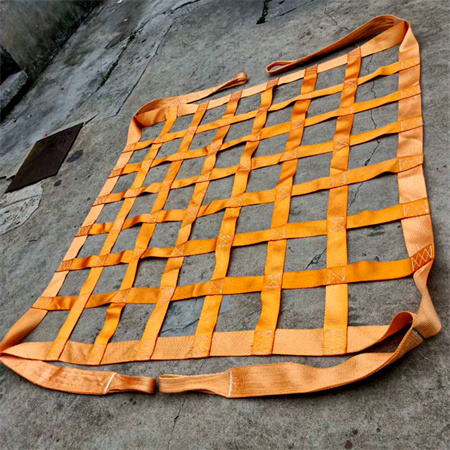
Extra Large Capacity Cargo Net
-
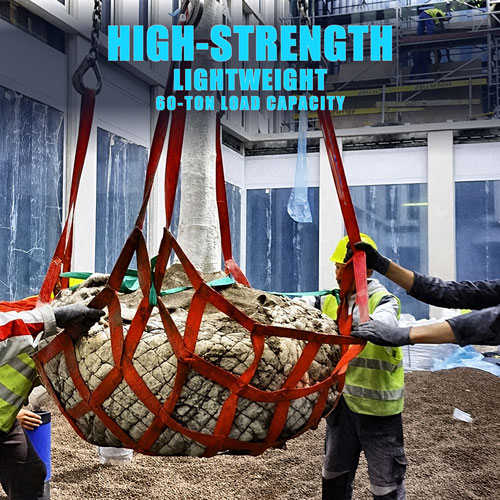
Cargo Webbing Net
-

Color changing nylon double buckle loop nylon braided rope
-

Two end buckle lifting rope, double buckle round lifting rope, double fork nylon lifting rope, non jointed nylon lifting rope
-

Emergency escape lifeline, fire escape rope, fire safety escape emergency rope, steel wire core fire rope

