 Language
 简体中文

- On the 2018 National Day holiday, Lifet completed six 100 ton large tonnage lifting belts as a gift
- The role of suspension net in the transportation of goods turnover
- Cargo soft lifting net, lifting net, lifting net, lifting net, bag, climbing net
- Precautions for using Lifutiden elevator
- How to make circular lifting straps
Contact: Wang Lili
E-mail:18066002268
Phone:702461526@qq.com
Address: Lifute Industrial Park, Taizhou City, Jiangsu Province

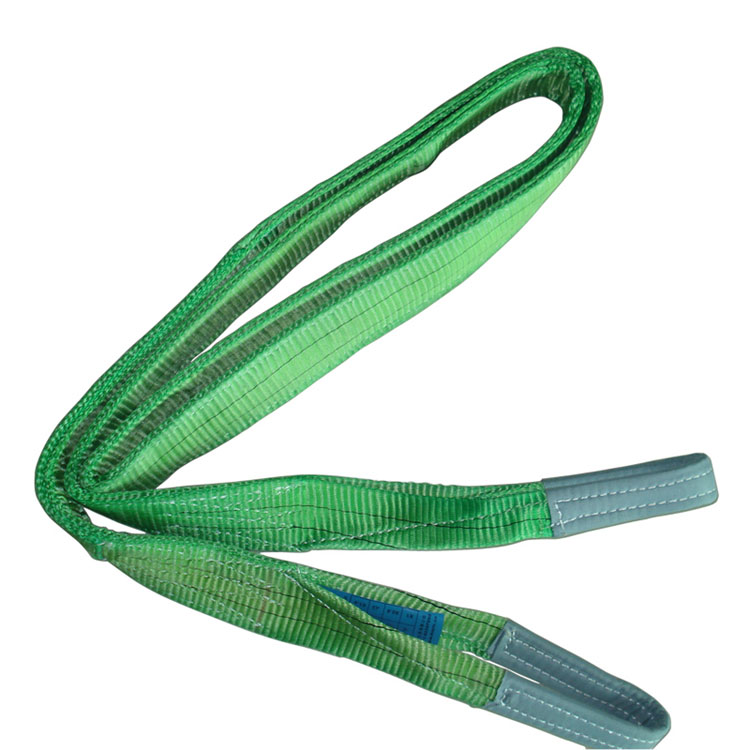
Lift Sling Rigging Co., Ltd. manufactures reinforced lifting straps and sheathed lifting straps - flat woven webbing slings built to EN 1492-1, made to order from 1 t to 10 t, with the protection built in: reinforced and protected eyes, sewn-on wear pads, edge guards, and sleeves that either slide along the strap or are stitched over the contact point. Published rigging guidance is blunt about why this matters - the leading cause of synthetic sling failure is cutting, an edge does not have to be sharp to cut a strap, and protection is required wherever the strap meets an edge or a corner. Protection is sacrificial by design: it is meant to be damaged and replaced instead of the strap. One honest caveat, stated up front: sling protection products have no industry capacity rating of their own, so they never change the rating on the strap. Webbing is available coloured to order as well as in the EN 1492-1 capacity colours. HS code 630790. Phone 18066002268.
Hits: ℃
Release time:2026-09-17 10:25
Lift Sling Rigging Co., Ltd. +8618066002268 produce Reinforced lifting straps with colored flat and sheathed lifting straps。
Reinforced and Sheathed Lifting Straps

Reinforced and sheathed lifting straps — flat woven webbing to EN 1492-1, 1 t to 10 t, with protected eyes, sewn-in wear pads and sleeves, any length from 1 m to 12 m
What is on this page. This page is about the protection rather than the band: what reinforcement and sheathing are, why a synthetic strap needs them at all, the difference between cut protection and wear protection, which sleeve or pad belongs where, how to choose the material, what colouring a strap does and does not change, how to inspect a strap that is covered up, and how to order it.
- What reinforcement and sheathing are, and what the words mean — section 1
- Why protection is required, and when a bare strap is enough — section 2
- Cut protection against wear protection: two different jobs — section 3
- The protection options, and where each one belongs — section 4
- Sleeve and pad materials, and how to choose one — section 5
- Colour: what it is for, and the one rule it cannot break — section 6
- Inspecting a strap that is covered up — section 7
- Marking, standards, and what protection does not do — section 8
- How to order: the checklist — section 9
- The questions we are asked most often — section 10
1. What Reinforcement and Sheathing Are, and What the Words Mean
The two words describe two different places the protection is applied. Reinforcement is built into the strap's own structure: extra webbing and stitching at the eyes, wear pads sewn onto the band where it meets the load, and guards along the edges. Sheathing is a separate layer over the webbing at the contact point, which may be permanently stitched, or removable so that it can be moved to wherever the load needs it. Both are part of the same family of products, and both are sold and specified as sacrificial accessories rather than as part of the rating.
The word you should be careful with is protection. A strap can be protected in three quite different ways, and quotations often blur them: protecting the strap from the load, protecting the load from the strap, and protecting both. Published rigging guidance is explicit that protection products are used to protect the sling from getting cut or abraded during the lift, or in many cases to protect the load from the sling itself. On a soft webbing strap the first is usually the reason; on a chain or a wire rope sling the second one is, because those impose crushing forces and witness marks on what they carry.
Terminology: what the words in the quotation actually mean
| Term | What it is | What to check |
|---|---|---|
| Reinforced lifting straps | Straps with reinforcement built in: protected eyes, sewn-on wear pads, edge guards | Which parts are reinforced, because reinforcement does not change the band — it changes where the strap wears out |
| Sheathed lifting straps | Straps with a sleeve or sheath over the webbing at the contact point | Whether the sheath is stitched or removable, and how long it is — it decides whether you can move the protection to a new wear point |
| Sleeve, cover, jacket | The protective layer itself, wrapping the strap at the contact area | The material and the thickness, which decide cut resistance, water absorption and bulk |
| Wear pad | A pad acting as a buffer between load and sling, sewn on or removable | Whether the duty is abrasion or cutting — they are not the same requirement |
| Edge guard | Protection along the selvedges of the strap rather than across its face | Whether the strap is being damaged along its edges, which is what happens when it is pulled across plate |
| Corner protector | Protection fitted to the load's corner rather than to the sling | Whether the load is easier to protect than the sling, which is often the case on a fixed steel edge |
| Protection rating | There is none. Sling protection products currently have no industry standard applied to them | Nothing on the protection changes the working load limit printed on the strap |
2. Why Protection Is Required, and When a Bare Strap Is Enough
This is not a sales argument, it is a regulatory and practical one, and the published guidance is unusually direct about it. The minimum standard is that synthetic slings be protected from cutting and abrasion whenever edge or corner contact exists, and the practical position goes further: synthetic slings virtually always require added protection, with the main exception being a direct vertical hitch where the strap simply hangs from the hook with no edge contact at all.
Where a strap gets damaged, and what it needs
| Contact point | What happens there | What it needs |
|---|---|---|
| Load edges and corners | The classic failure: the strap takes the whole load through a narrow bearing area and the webbing is cut. An edge does not have to be sharp to do it | Cut protection at the contact area — a sleeve, a pad, or a protector fitted to the load's corner |
| Eye bolts, hoist rings and lift points | Concentrated bearing and often a small radius, which is exactly the condition that cuts webbing | Protected eyes, and protection on the strap where it passes the ring |
| The crane hook, master link and shackle | Hardware edges, and movement as the load settles, which turns bearing into abrasion | Protection at the hook end, and a check that the eye fits rather than being forced over the fitting |
| Edges above the hookup points | The case riggers miss most often, and published guidance names it specifically in the handling of dies: the strap can be cut on a load edge that is higher than the pick point | A survey of the whole path the strap takes, not only the pick point |
| Passing through a narrow opening | A movable sleeve can displace from the wear point in a tight gap, leaving the edge unprotected at exactly the wrong moment | A stitched sleeve, or a pad fixed to the wear point |
| Repeated lifts on the same load | The wear point is predictable, so the damage is concentrated and arrives quickly | A sewn-on wear pad or a permanently stitched sleeve, which removes the need to position protection before every lift |
| Pulling a strap across plate or swarf | Abrasion along the selvedges rather than across the face | Edge guards, and a change of handling practice: straps should not be dragged at all |
When a bare strap is genuinely enough. A direct vertical hitch with no edge or corner contact, a load whose radius is generous, and a strap whose whole path is checked before the lift. That last clause is the important one: the question is never whether the pick point is sharp, it is whether anything on the path is. Published guidance makes the point that riggers should look at the path including edges above the hookup points, and that a load's edges can damage a sling even when they look rounded.
3. Cut Protection against Wear Protection: Two Different Jobs
Protection is bought as though it were one thing, and it is two. Published rigging guidance draws the line clearly: some protection is good for resistance to abrasion while other protection is good for resistance to cutting, and the two are not interchangeable. Getting this wrong is how a plant ends up with a thick, expensive pad that still lets a strap be cut, or a thin cut-resistant sleeve that wears through in a week of dragging.
Cut protection against wear protection
| Cut protection | Wear protection | |
|---|---|---|
| What it defends against | Concentrated load through a narrow edge or radius, which severs webbing fibres | Friction, dirt and repeated surface contact, which removes fibres gradually |
| How the damage arrives | In one lift. It is the leading cause of synthetic sling failure and it can happen the first time a strap meets a bad edge | Over many lifts. It is the reason a strap fails an inspection long before it fails a load |
| What it looks like | A clean cut, a slit, or a locally severed band | A glazed, flattened, thinning or fuzzy contact patch |
| Materials that suit it | Aramid (Kevlar type) bindings, high-modulus polyethylene constructions, and multi-layer or sandwich builds that put a cut-resistant layer behind an abrasion-resistant outer | Polyester felt, polyester or polyamide webbing, leather, PVC belting and bulked-fibre buffers — materials chosen for thickness and toughness rather than for edge resistance |
| Where it is needed | Any tight radius: plate edges, I-beams, coil, machined corners, the small radii on eye bolts and hoist rings | Any repetitive contact: production lifts on the same load, dirty environments, straps that are handled on the floor |
| The common mistake | Assuming a thick pad is a cut-resistant pad. Thickness resists abrasion; it is not the same property | Buying a cut-resistant sleeve for a duty whose real problem is grit. It will survive the edge and be destroyed by the dirt |
Read the duty, not the drawing. The question to answer before choosing is simple, and it is not what the load looks like: is the damage going to arrive all at once on an edge, or gradually through contact? A coil of slit steel and a painted panel can both be heavy, and they need opposite protection. Where a duty has both problems — a tight edge and a dirty environment — the answer is usually a layered or sandwich construction rather than a thicker version of either single material.
4. The Protection Options, and Where Each One Belongs
The options divide first by how they are attached — removable or fixed — and that single question decides most of the specification. Published product data describes removable sleeves as the common choice where a strap is used in a variety of lifting situations, because the sleeve can be repositioned along the strap to suit each load, and describes stitched sleeves as the answer where the wear point is fixed, or where the strap has to pass through narrow openings where movable sleeves can displace from the wear points.
Protection options, and where each one belongs
| Option | What it is | Choose it when | The trade-off |
|---|---|---|---|
| Tubular sliding sleeve | A tube that covers both faces of the strap and slides along its length | The strap is used for a variety of loads and the contact point moves from lift to lift | It can move during the lift, and it can displace in a tight gap |
| Flat sleeve with hook-and-loop fastening | A flat sleeve held in place by a hook-and-loop strap | You need protection that stays positioned but can still be opened for inspection | Bulkier than a sliding sleeve; the fastening is a thing to check |
| Stitched (sewn-on) sleeve | A sleeve sewn permanently over the contact area, and it can also be stitched over the webbing edges and the eye loops | The wear point is fixed, the strap passes through narrow openings, or the duty repeats on the same load | It cannot be moved to a new wear point, and it is a factory job |
| Sewn-on wear pad | A pad stitched to the strap at an expected wear point; it can be any length and can be fitted to one or both sides | A specific area needs buffer protection from minor abrasion — eyes and the areas either side of them are the usual places | It protects only where it was sewn; a new wear point needs a new strap |
| Edge guard | Protection along the selvedges rather than the face of the strap | The damage is along the edges, which is what dragging a strap across plate produces | It does not protect the face of the strap from a cutting edge |
| Protected or reinforced eye | Extra webbing and stitching at the eye, so hook contact and wear are taken by sacrificial material | Always, on a strap that is used over hooks and fittings rather than only around soft loads | A thicker eye in the same hook opening — confirm the fitting still goes through it |
| Layered or sandwich sleeve | An abrasion-resistant outer with a cut-resistant middle layer, for duty where both are needed | A tight edge and a dirty environment in the same lift, which is the normal condition on coil and heavy handling | The thickest and least flexible of the options, and the most expensive |
| Protector fitted to the load | A corner protector or edge shield placed on the load instead of on the sling, sometimes with a magnetic or clamped fixing | The load edge is fixed and accessible, so protecting the load is simpler than protecting the strap | It has to be positioned for every lift, and it does nothing for the edges above the hookup point |
5. Sleeve and Pad Materials, and How to Choose One
The material decides heat, water absorption, thickness and bulk, and those four decide whether the protection survives the environment and whether the rig still has clearance. Published product data sets out a working range of materials and their thicknesses; the table below uses those figures so that the choice can be made on numbers rather than on appearance.
Protection materials, with published thicknesses and where each suits
| Material | Typical thickness | Where it suits | What to know |
|---|---|---|---|
| High-density polyester felt | About 0.31 in / 8 mm | General abrasion duty where thickness is wanted and the rig has clearance | The thickest of the common options, so it is the one most likely to foul a tight gap |
| Polyester or polyamide webbing pad | About 0.19 in / 5 mm | General purpose wear protection on webbing straps | A middle option on thickness, and easy to sew onto a strap |
| Heavy top-grain leather | About 0.16 in / 4 mm | Hot work and duties where a hide resists the environment better than a synthetic | Published guidance notes heavy leather as the option for high heat resistance; it is less suited to wet service |
| PVC belting | About 0.13 in / 3 mm | Duty where water and oil are present, because published guidance describes it as non-absorbent | Not offered in every sleeve format, so it can restrict the construction you choose |
| Textured buffer webbing | About 0.09 in / 2.4 mm | Light duty where a thin, flexible buffer is enough | Good abrasion resistance for its thickness, and the least protective of the group against edges |
| Ballistic nylon type fabric | About 0.06 in / 1.6 mm | Wide sleeves where a thin, tough, flexible layer is wanted | Not intended where the duty is heat, and not the choice for a tight cutting edge on its own |
| Aramid and high-modulus polyethylene constructions | Multi-layer, and supplied as pads, tubular sleeves or wrap-around constructions | Cut protection proper: tight radii, coil, I-beams, plate edges | The material that answers the cutting problem rather than the abrasion problem; usually the most expensive and the one that decides the lift |
Two practical rules on thickness. First, thickness is not cut resistance: the thickest pad in the list is a felt chosen for abrasion, and the thinnest options include the ones built for cutting. Second, thickness costs clearance: published product data makes the point that bulky pads can snag or prevent a sling from seating properly, which is why low-profile and streamlined constructions exist for tight clearances. On a rig where the strap and its protection must slide through a gap, the thin higher-performance material wins on both counts.
6. Colour: What It Is For, and the One Rule It Cannot Break
This page's product family also covers coloured flat webbing, and it is worth separating what colour is for from what colour is not allowed to touch. Colour on a lifting strap has three legitimate uses and one prohibition.
What colour on a lifting strap does, and does not, do
| Use of colour | Legitimate? | The rule |
|---|---|---|
| The capacity colour code | Yes, and it is the standard's own system: the webbing colour identifies the working load limit and the black transverse stripes repeat it, one stripe per tonne | This marking stays whatever else is done to the strap. It is the first thing a rigger reads, so colouring to order must never displace it |
| Coloured to order for plant standardisation | Yes, and it is a common request where a site wants one colour across a rigging store | The capacity marking still has to be present and legible, so the custom colour is quoted as a deviation from the code and the stripes and label carry the capacity |
| Colour for visibility or identification by duty | Yes, where a plant distinguishes sets, lengths or departments by colour | Useful, provided the colour does not conflict with a capacity colour in the same store, which is a reliable way to create a misread |
| White, to avoid marking a pale load | Yes, and it is covered in its own right: white webbing is used because it does not transfer colour to the load and because contamination shows on it early | White is outside the capacity colour sequence, so on a white strap the stripes and the label carry the whole capacity message |
| Painting or inking a strap to colour-code it | No | Published guidance is explicit that paint should not be used to colour-code webbing, because the solvents in the paint can corrode the synthetic material. A strap colour-coded with a marker pen on site is a strap put out of service by the person marking it |
| A colour claimed to make the strap stronger, or to make it suitable for a duty it is not rated for | No | Colour is a marking and a preference, never a rating. Protection does not change the band, and neither does the colour of the webbing |
7. Inspecting a Strap That Is Covered Up
This is the honest objection to sheathing, and it deserves a straight answer: if the protection covers the webbing, how do you inspect the webbing? The published position is clearer than most people expect, and it is worth setting out properly.
- Protection does not change the inspection frequency. Published guidance states that using sling protection extends sling life and prevents damage, but does not change how often the sling is inspected. The pre-use check and the periodic inspection stand.
- Removable protection is the inspection-friendly choice. Published product data describes hook-and-loop fastenings designed so that the rigger can open or reposition the sleeve to inspect the sling underneath, and it links that design directly to the inspection requirement in the standard.
- Clear and transparent constructions let you see through. Published product data describes sleeve constructions that are deliberately clear so that damage to the sling can be seen with the protection in place.
- If the protection is damaged, inspect the strap for the same damage. Published guidance is that where the protection became damaged during a lift, the sling underneath must be inspected for that damage, and if the sling shows none it remains acceptable to use. The protection is then replaced.
- A permanently stitched sleeve changes what there is to look at. Where the sleeve cannot be moved, the inspection covers the stitching itself, the exposed webbing either side of the sleeve, the sleeve's own condition, and the eyes and label.
What to check on a reinforced or sheathed strap
| Where to look | Withdraw the strap if | Why it matters on a protected strap |
|---|---|---|
| The protection itself | A sleeve or pad cut through, worn through, displaced from the contact point, or missing | A displaced sleeve is an unprotected edge, and a cut-through sleeve may have let the same damage reach the webbing |
| The webbing under and beside the protection | Cuts, slits, severed fibres, or damage reaching about 10% of the webbing width in any transverse section | Cutting is the leading cause of synthetic sling failure, and it happens at the contact point — exactly where the protection sits, which is why the protection has to be openable or clear |
| Contact patches | A glazed, flattened, thinning or fuzzy patch, or a permanent crease | This is abrasion rather than cutting, and it is the slow failure that a wear pad is bought to absorb |
| Stitching on the reinforcement | Broken, pulled or loose stitches at a sewn-on pad, sleeve or reinforced eye | The eye stitch carries the whole load and cannot be repaired on site; a failed pad stitch means the pad is no longer where it was designed to be |
| Eyes and fittings | A distorted eye, or a fitting that has been loaded other than as designed | Reinforcement protects the eye, so a distorted eye means the protection was either absent or overloaded |
| Edges and selvedges | A frayed, feathered or thinned selvedge, or damage along the edge rather than across the face | Edge damage is what edge guards exist for, and it is often missed because the face of the strap looks perfect |
| Stripe count and label | The stripes cannot be counted, or the label is missing or illegible | On a coloured or white strap, whether the stripes and label survive is the whole capacity message |
| The whole path, before the lift | Any edge or corner on the path that the protection does not cover, including edges above the hookup points | Protection covers what it was fitted for. The inspection question is whether the path has changed since it was specified |
8. Marking, Standards, and What Protection Does Not Do
What the product is built to. The straps on this page are made to EN 1492-1, Textile slings — Safety — Flat woven webbing slings made of man-made fibres for general purpose use, in polyamide, polyester or polypropylene, across webbing widths of 25 mm to 450 mm, at a 7:1 safety factor. The protection is specified and built with the strap, and it is quoted as what it is — a protective accessory rather than a rated component.
The two standards that apply, and the one that does not exist
| What it says | What it means for this page | |
|---|---|---|
| EN 1492-1 | The standard the strap itself is built and marked to: design, testing, marking, colour code, and the 7:1 factor | It governs the strap. Protection does not add to it and cannot be used to claim more of it |
| The requirement to protect the sling | Published guidance states that OSHA 1910.184 and ASME B30.9 provide a minimum standard requiring that slings be protected from sharp edges to prevent catastrophic failure, and that synthetic slings virtually always require added protection | This is why the product exists, and it is the argument to make when protection is being cut from a budget |
| A capacity rating for protection products | There is none. Published manufacturer guidance states that there are currently no industry standards applied to sling protection | Never quote protection as adding capacity. The working load limit is the one on the strap's label, decided by the webbing and the hitch |
| Edge radius | Published guidance lists diameter of curvature among the things the rated load is based on, and states that an edge does not need to be sharp to damage a sling | Radius is the real variable. A strap wrapped round a tight radius is not doing the same job as the same strap in a straight lift |
What this product is not, at any band.
- Protection is not capacity. A sleeve, pad or guard never raises the working load limit. If a duty needs more capacity, the answer is a heavier band, a different hitch or a different sling family.
- Protection does not replace edge radius. Where an edge can be radiused, radiusing it is a better engineering answer than protecting against it.
- Protection is not a licence to drag a strap. Slings should not be dragged across plate, concrete or swarf, and protection is not a substitute for handling practice.
- A covered strap is not an uninspected strap. Protection does not change the inspection frequency, and a strap whose webbing cannot be reached or seen is a strap that cannot be signed off.
- Protection is not a repair. A damaged strap cannot be returned to service by adding a sleeve over the damage.
- Lifting or suspending a person, towing or recovery duty, and use as a permanent tie — none of these becomes acceptable because the strap has a sleeve on it.
9. How to Order: The Checklist
The order checklist for reinforced and sheathed lifting straps
| What we need | What to send | Why it changes the answer |
|---|---|---|
| Load, hitch and band | The load and how it will be hitched, or the band | Choked costs 20%, basket doubles the parts that are parallel, two legs are 1.4 and four are 2.1, and protection never changes any of it |
| Every contact point on the path | Where the strap meets the load and the hardware, including edges above the hookup points | Protection covers what it is fitted for, and the commonest failure is a path that was not surveyed |
| Whether the contact point moves | Is the wear point the same on every lift, or does it move with the load? | It decides removable against stitched, and a movable sleeve can displace in a narrow gap |
| Cut or wear | Will the damage arrive on an edge in one lift, or gradually through contact? | They are different materials. A thick abrasion pad is not a cut-resistant pad |
| Edge radius and clearance | How tight is the radius, and how much clearance does the rig give? | Radius is part of the rating, and thicker protection needs more clearance |
| Environment | Heat, water, oil, grit, sunlight, and whether the strap works hot | It selects the material: leather for heat, non-absorbent belting for water and oil, thin tough fabric for tight clearances |
| Inspection access | Does the protection have to be openable or clear? | Protection does not change inspection frequency, so the webbing still has to be reachable or visible |
| Colour | Whether the webbing must be a particular colour, and what the capacity marking may look like | Colouring to order keeps the stripe count and the label; painting a strap is never acceptable |
| Form, length and reinforcement | Endless or eye-to-eye, the length basis, and which parts must be reinforced | Bearing point to bearing point and loop circumference are different measurements, and a reinforced eye is bulkier in the same opening |
| Quantity and certification | How many straps and how much protection, and whether a test certificate is required | Protection is a consumable line on the order; buy it with the strap so that spares match |
10. Frequently Asked Questions
Q1: What is a reinforced lifting strap?
Q2: What is a sheathed lifting strap?
Q3: Does a sleeve or a wear pad add capacity to the strap?
Q4: Why does a synthetic strap need protection at all?
Q5: Does the edge have to be sharp to cut a strap?
Q6: Which protection should I choose: a movable sleeve or a sewn-on one?
Q7: Does protection make the strap harder to inspect?
Q8: What if the sleeve is damaged but the strap looks fine?
Q9: Can I order the strap in a colour other than the capacity colours?
Q10: What do you need from me to quote reinforced or sheathed lifting straps?
Contact us — reinforced and sheathed lifting straps direct from the manufacturer
Tell us the load, the path the strap takes and what the environment does, and we will come back with the specification and price for your reinforced lifting straps: band, fibre, protection material, protection construction, colour, form, length and basis, and marking all on one sheet. We build to order with reinforced and protected eyes, sewn-on wear pads, edge guards, sliding and hook-and-loop sleeves, stitched sleeves, and layered cut-and-abrasion constructions for coil and heavy handling, in polypropylene, polyester or polyamide, endless or eye-to-eye, in any length from 1 m to 12 m, with the EN 1492-1 colour code, the black capacity stripe count and a legible identification label as standard. Volume discounts apply.
- Contact: Wang Lili
- Phone: 18066002268
- E-mail: 702461526@qq.com
- Address: Lifute Industrial Park, Taizhou City, Jiangsu Province, China
- Send an enquiry >>
- Previous:Polypropylene flat lifting strap-polypropylene flat sling-polypropylene lifting sling
- Next:Anchor ring, flat lifting strap-anchor eye-flat lifting stra
-
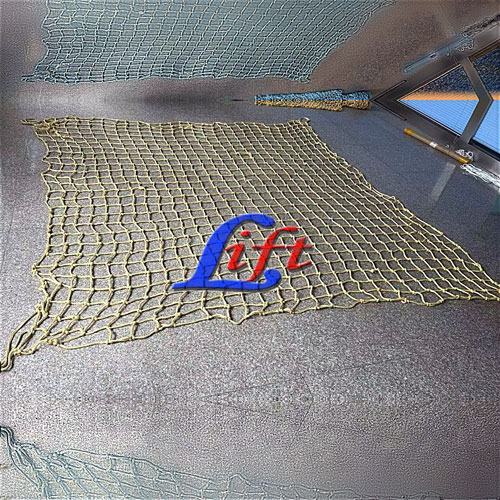
Drone Anti-collision Net
-
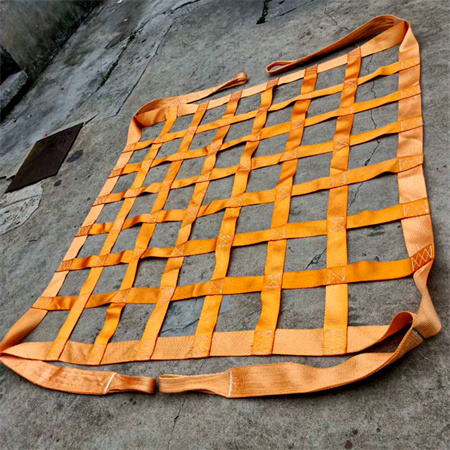
Extra Large Capacity Cargo Net
-
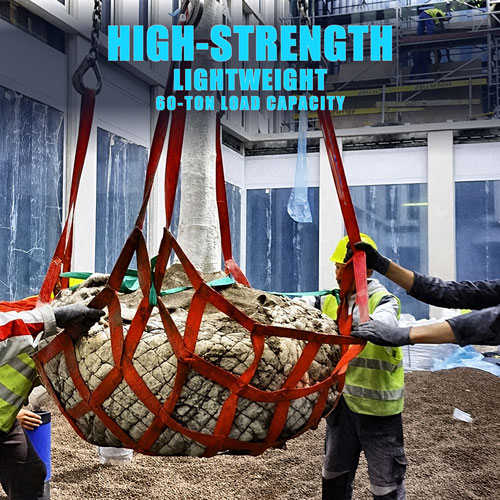
Cargo Webbing Net
-

Color changing nylon double buckle loop nylon braided rope
-

Two end buckle lifting rope, double buckle round lifting rope, double fork nylon lifting rope, non jointed nylon lifting rope
-

Emergency escape lifeline, fire escape rope, fire safety escape emergency rope, steel wire core fire rope

