 Language
 简体中文

- On the 2018 National Day holiday, Lifet completed six 100 ton large tonnage lifting belts as a gift
- The role of suspension net in the transportation of goods turnover
- Cargo soft lifting net, lifting net, lifting net, lifting net, bag, climbing net
- Precautions for using Lifutiden elevator
- How to make circular lifting straps
Contact: Wang Lili
E-mail:18066002268
Phone:702461526@qq.com
Address: Lifute Industrial Park, Taizhou City, Jiangsu Province
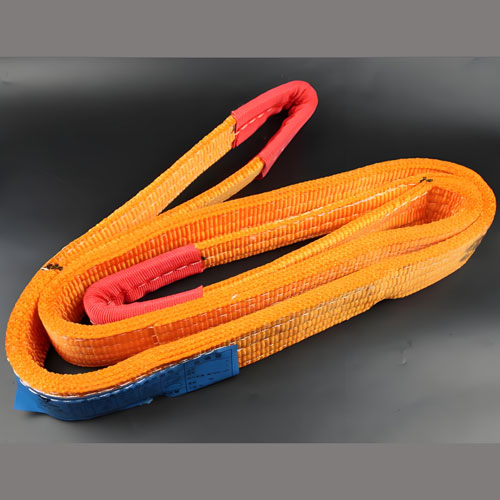
Lifute Hoisting Co., Ltd. 18066002268 produces lifting belts, lifting nets, nylon ropes, soft ladders, steel wire rope rigging, paper ropes, safety belts, safety nets, lifting chains, steel coil hoists, crossbeam hoists, flat lifting belts, circular lifting belts, electric traction ropes, high-altitude safety belts, and anti fall safety nets
Hits: ℃
Release time:2026-09-21 10:38
Lift Sling Rigging Co., Ltd. +8618066002268 produce Wear resistant flat lifting belt sling,Wear-Resistant Flat Webbing Sling,Abrasion-Resistant Flat Webbing Sling,Wear-Resistant Flat Lifting Sling.
Wear Resistant Flat Lifting Belt Sling — What Wear Resistance Buys, and What It Does Not
1. The Names on This Listing, and the One Word That Needs Unpacking
This article is listed under four names — Wear resistant flat lifting belt sling, and alongside it Wear-Resistant Flat Webbing Sling, Abrasion-Resistant Flat Webbing Sling and Wear-Resistant Flat Lifting Sling. They are four descriptions of one product, and the differences between them are worth a sentence each, because the words are not interchangeable in a specification.
Flat is the structural word, and it is the one that places the article in a family. A flat woven sling is a woven band with edges, and its load-bearing connection is made by stitching — the published rule for this family is that stitching is the only method used to attach end fittings to webbing and to form eyes, in an even pattern with enough stitches to develop the full breaking strength of the sling (§2). A roundsling has no edges to speak of and no stitched load path; it is a sleeved loop, and it is covered by a different standard. That single difference decides where a sling wears first (§4) and is the subject of the circular lifting straps page, which treats the sleeved round form.
Belt, sling, strap, webbing are four words for the same band, and they carry no technical distinction at all. They exist because buyers search with all four.
Wear resistant is the word that needs unpacking, and the rest of this page is largely about it. It is a true statement about the article — the construction is chosen to resist abrasion — but it is not a class in any standard, it does not appear on the label as a rating, and it has no published test that a buyer can point at. Sections 3, 5 and 7 deal with what it does mean, how it is achieved, and how its limits are found in service.
2. The Family This Article Belongs To, and the Rule That Shapes It
The article is a flat woven webbing sling, and the standard that governs it is EN 1492-1 — the European norm for flat woven webbing slings made from man-made fibres such as polyester, polyamide or polypropylene, covering widths from 25 mm to 450 mm and including single-ply and multi-ply designs, at a safety factor typically of 7:1, with the familiar colour code for quick working-load identification and mandatory marking. Its sibling standard, EN 1492-2, governs roundslings — the sleeved endless loop form.
Three of the requirements in this family deserve naming here because each of them shows up later on this page. The webbing is to be of uniform thickness and width, and the selvage edges are not to be split from the webbing's width — an edge that has begun to separate is a defect in the article, not cosmetic wear (§4). Fittings must have a minimum breaking strength equal to that of the sling and must be free of all sharp edges that could in any way damage the webbing — hardware is inside the wear problem, not outside it (§5). And stitching is the only method used to form eyes, in an even pattern with enough stitches to develop the full breaking strength — which is why the stitched region is one of the three places this family wears first (§4).
Note also the width range, because it is part of what a buyer is selecting. A flat sling is not only a capacity ladder; it is a width and a number of plies, and once wear resistance is the objective, the width and the layering become as interesting as the tonnage (§5).
| The rule in this family | What it says | Why it decides how this article wears |
|---|---|---|
| Standard and factor | Flat woven webbing slings in man-made fibre, typically 7:1 | Sets the break-to-working ratio; durability choices sit underneath it and do not alter it |
| Webbing thickness and width | Uniform thickness and width; selvage edges not split from the width | A split edge is a defect; edge integrity is the first thing abrasion attacks |
| Eyes are stitched | Stitching is the only method used to form eyes, in an even pattern, strong enough to develop the full breaking strength | The stitched zone is a wear zone, and broken or worn stitches are a removal criterion (§7) |
| Fittings | Breaking strength at least equal to the sling; free of all sharp edges that could damage the webbing | The hardware end is where cutting and abrasion meet; a compliant fitting is still a wear partner |
| Environment | Requirements for ultra-violet and chemical resistance; material-specific exclusions (§8) | Degradation from light and chemicals shows up as weakness, not as visible wear, which makes it a separate hazard |
3. "Wear Resistant" Is a Construction Description, Not a Rating
This is the section to read before paying a premium for the words. In this family, the standard sets requirements for materials, stitching, elongation, and ultra-violet and chemical resistance, and it provides a colour code and a marking scheme. It does not contain a wear-resistance grade, a wear-resistance class, or a wear-resistance test result that appears on a label. There is no published figure that says one sling is twice as wear resistant as another.
What that means in practice is worth stating in three sentences. First, wear resistance cannot be certified against a number, so a supplier claiming a wear-resistance class is claiming something the standard does not offer. Second, the working load limit is unaffected by how wear resistant the sling is — the colour code and the label speak about capacity and about the hitch the capacity is based on, and nothing else. Third, the value of wear resistance is realised as service life, and service life is visible only in the inspection record: a sling that is retired later because its surface survived longer is a sling that delivered the benefit (§7, §9).
There is a useful way to think about it. Capacity is a number the standard guarantees; durability is a set of choices the manufacturer makes within the standard, and it is selected the way one selects a material for a floor — by the conditions it will meet, not by a rating. That is why the honest version of this page's title is a description of the article rather than a claim about it, and why the enquiry form in §11 asks about the conditions rather than asking for a grade.
One further caution belongs here. Because durability has no standard figure, it is also the easiest thing to over-buy. A sling working on a smooth, painted load in a clean workshop does not need the heaviest edge treatment available; a sling working repeatedly against flame-cut steel or concrete does, and the pages on this site that deal with wear protection as a product and with the sling sheath exist for that case. §4 and §5 are the material for that decision.
4. Where a Flat Sling Actually Wears: Three Zones
Abrasion is not uniform across a sling, and knowing where it happens changes what to order. There are three zones, they fail for different reasons, and each has a different remedy.
The eyes, where the sling meets hardware. This is where the sling is bent around a hook, a shackle or a master link, and it is the zone with the highest contact pressure in a normal lift. The relevant published requirement is that fittings must be free of all sharp edges that could in any way damage the webbing, and the relevant published inspection question is whether the eyes are reinforced and the stitching intact. Wear here is mechanical and local: it shows on the inside of the eye, where the bend is.
The body, where the sling meets the load's edge. This is contact between the webbing and the load itself, and it is the zone where a flat sling is at its most exposed because it has edges — a woven band presents its selvage to whatever it crosses. The published rules for this family are unusually direct about it: the webbing is to be of uniform thickness and width, and the selvage edges are not to be split from the webbing's width, which means a frayed or separated edge is a defect rather than a cosmetic mark. Where the load's edge is hard enough to require it, the answer is protection at the contact point, and the test for when an edge needs protecting is set out on the circular lifting straps page.
The centre and the stitched zone, under load and in handling. Abrasion also comes from the sling's own use rather than from the load: the stitched region where eyes are formed, the middle of the body where it crosses the load or slides against itself in a basket, and the whole surface when the sling drags. Dragging is prohibited in this family for the same reason it is prohibited everywhere — the floor is an abrasive surface and the cover is the load path — and it is the single most common way a serviceable sling is consumed early.
| Wear zone | Why it wears there | What actually helps |
|---|---|---|
| The eyes | Highest contact pressure in the lift; the sling is bent around hard hardware | Reinforced eyes, compliant and smooth fittings, and inspection of the stitching (§7) |
| The body at the load edge | Direct contact with the load; a woven band presents its selvage to whatever it crosses | Edge protection at the contact point, and any construction that thickens the working surface (§5) |
| The stitched zone | Stitching is the only method used to form eyes, so the whole load passes through a sewn region | Nothing in the design removes it; protection from hardware contact and honest inspection keep it sound |
| The whole body, from handling | Dragging across floors and abrasive surfaces, and contact with the ground when parked | Procedure, not product: do not drag slings, and store them off the floor |
| The surface in chemical or UV service | Not mechanical wear at all — degradation that shows as weakness before it shows as damage | Material selection against the environment (§8); no amount of surface hardening substitutes for it |
5. The Four Ways a Flat Sling Is Made Wear Resistant
Within the standard, durability is pursued in four ways, and buyers usually meet them mixed together. Separating them is worth the effort, because they cost differently and they help in different places.
More plies and greater thickness. This family explicitly includes single and multi-ply designs, so a heavier construction is not a deviation from the standard but one of its own categories. Adding plies and thickness buys material to lose: the surface can be abraded for longer before the load-bearing section is reached, and the band is stiffer against edge contact. What it does not do is change the working load limit, which is set by the rating and not by the thickness beyond it.
A coating, usually polyurethane. A coating applied to the webbing protects the woven surface itself, and this site carries the coated idea as its own listings — the polyurethane anti cutting flat sling and the polyurethane adhesive sling among them. The important question about any coating is whether it is permanently fixed to the webbing or merely applied: a coating that can be lost in service is a coating that leaves when the work gets hard, while a fixed coating stays with the yarn it is protecting.
Reinforced eyes and edges. Because the eye is the highest-pressure zone (§4) and the stitched zone carries the whole load, reinforcement there addresses the two places where a flat sling most often ends its life. The published buyer's checklist asks exactly this question — whether the eyes are reinforced and the stitching intact — which is a useful sign that the industry treats it as a specification item rather than a nicety.
A separate protective sleeve or sheath. A sleeve is a removable or fitted component that takes the contact instead of the sling, and the art of choosing between a pad, a corner protector and a sleeve is set out on the circular lifting straps page. This site lists the sheathed version as wear resistant sling sheath. The advantage of a sleeve over an intrinsic construction is renewal: it is a consumable, and a worn sleeve is replaced for a fraction of the cost of a worn sling.
| Route | What it buys | What it does not buy |
|---|---|---|
| Single versus multi-ply, thickness | Material to lose before the load-bearing section is reached; stiffness at the edge | Capacity, which the rating sets; nor immunity to cutting (§6) |
| A permanently fixed coating | Protection of the woven surface itself; resistance to both wear and cutting at the surface | Capacity; and if the coating is not permanent, it buys nothing durable at all |
| Reinforced eyes and edges | Life in the two zones where it is actually consumed: the eye and the stitched region | Anything where the wear is happening at the load contact instead |
| A separate sleeve or sheath | Renewability: the sacrificial part is replaced, and the sling keeps its identity and its rating | Impact on the rating — and it can be left behind, which the fitted version cannot |
6. Wear and Cutting Are Two Different Failures
The words travel together in product names, and buyers often treat them as one property. They are not, and the difference decides which construction is worth paying for.
Wear, or abrasion, is a slow loss of material. It removes the surface progressively, and its signature is a sling that still holds together while getting thinner, fuzzier and more frayed at the edges. It gives warning, and it is exactly what a multi-ply or thicker construction is for: there is material there to be lost.
Cutting is a local and sudden event. It arrives at a point — a sharp edge, a burr, a fragment of glass or a damaged fitting — and it removes or severs a section rather than abrading it. Thickness helps less than one would expect, because a cut does not care how many plies there are if it can reach them all at one place; what helps is removing the point, or interposing something at that point. This is why the regulation is so direct about hardware being free of all sharp edges that could in any way damage the webbing — the wording is about preventing the event, not about surviving it.
The practical consequences are three. Thickness is an answer to abrasion and only a partial answer to cutting. Protection at the contact point is an answer to both, because it addresses the point where the event starts. And a cut cannot be inspected away — by the time a cut is visible in this family, the removal criteria have already been met, since snags, punctures, tears and cuts are all on the list (§7).
| The failure | How it behaves | What answers it |
|---|---|---|
| Abrasion | Slow, progressive, visible; the surface is consumed | Multi-ply and thicker constructions, fixed coatings, and honest inspection intervals |
| Cutting | Local, sudden, and able to reach every ply at one point | Fittings free of sharp edges; protection interposed at the contact point; removing the point itself |
| Edge separation | The selvage beginning to split from the webbing's width — a defect in a standard sense, not cosmetic wear | Protection where the band crosses an edge; removal from service once it has happened |
| Chemical or ultra-violet degradation | Loss of strength with little or no visible wear — the quietest failure in the family | Material selection against the environment, and storage away from sunlight and chemicals (§8) |
7. Abrasion Is on the Removal List: the Criteria That Retire This Sling
Wear matters commercially because it is one of the published reasons a sling is taken out of service. The regulation for this family lists conditions under which a synthetic web sling shall be immediately removed from service, and the list is short enough to memorise and specific enough to be useful on a site walk.
The conditions are: acid or caustic burns; melting or charring of any part of the sling surface; snags, punctures, tears or cuts; broken or worn stitches; and distortion of fittings. Read alongside the inspection guidance for this family, which adds cuts, abrasion, chemical damage, ultra-violet degradation and distorted fittings to what a check should look for, this is the complete vocabulary of a flat sling's end of life — and abrasion is in it by name.
Two items on the list are worth dwelling on because they are the ones most often argued about. Broken or worn stitches is a removal criterion in its own right: because stitching is the only method used to form the eyes in this family, the sewn region carries the whole load, and wear there is structural however sound the surrounding webbing looks. And melting or charring of any part of the sling surface covers the heat events that a wear-resistant construction does nothing about — weld splatter, hot slag, a sling laid on a recently cut plate. A sling bought for abrasion resistance is not thereby resistant to heat, and this is the criterion that proves it.
| Condition on the list | What it looks like on site | Why it retires the sling |
|---|---|---|
| Snags, punctures, tears or cuts | A break in the surface, however small, from an edge or a point | Load path interrupted at one place; thickness elsewhere is irrelevant |
| Broken or worn stitches | Disturbed or missing thread in the eye, where the load is transferred | Stitching is the only method used to form the eyes, so this is the connection failing |
| Melting or charring of the surface | Glazed, fused or blackened fibres, often from weld splatter or hot metal | Heat damage is strength loss that abrasion resistance cannot address |
| Acid or caustic burns | Stiff, discoloured or brittle areas after chemical contact | Chemical attack is a strength loss with little visible wear (§8) |
| Distortion of fittings | Bent, opened or deformed end hardware | The assembly's rating is only as good as its weakest component |
On repair, the rule is as strict as anywhere in this family: synthetic web slings which are repaired shall not be used unless repaired by a sling manufacturer or an equivalent entity, and each repaired sling is subject to its own requirements. A worn eye is not a workshop job.
8. Temperature and Chemicals: the Wear-Resistant Sling's Blind Spots
This section exists because it is the one where a buyer who has paid attention to abrasion most often gets caught. Wear resistance is a surface property; temperature and chemistry work through the surface into the yarn, and they do it without producing the abrasion that an inspection is trained to find.
The published environmental rules for this family are specific and material-dependent. On temperature: synthetic web slings of polyester and nylon are not to be used at temperatures in excess of 180 °F, and polypropylene web slings are not to be used above 200 °F. The polypropylene allowance being higher is worth noticing, because it runs against the intuition that the more expensive fibre must have the wider envelope.
On chemicals, the exclusions are written per material and per chemistry. Nylon web slings are not to be used where fumes, vapours, sprays, mists or liquids of acids or phenolics are present. Polyester and polypropylene web slings are not to be used where fumes, vapours, sprays, mists or liquids of caustics are present. And a third rule catches hardware rather than webbing: web slings with aluminium fittings are not to be used in the presence of caustics. Read together, they say something practical — the choice of fibre is not a preference between two good options but a decision against a specific chemical, and the fitting material joins the decision.
Ultra-violet exposure belongs in the same category. The standard for this family carries requirements for ultra-violet resistance, and the inspection guidance treats ultra-violet degradation as a condition to look for, so storage away from sunlight is a durability measure in its own right: a sling that lives on an outdoor rack is being consumed by the light rather than by the load.
| Exposure | The published limit or exclusion | What to say in the enquiry |
|---|---|---|
| Temperature, polyester or nylon | Not above 180 °F | Say whether the exposure is a one-off event or a working environment |
| Temperature, polypropylene | Not above 200 °F | Do not assume the fibre with the higher temperature ceiling is best for the rest of the environment |
| Acids and phenolics | Nylon web slings excluded where fumes, vapours, sprays, mists or liquids are present | Name the chemistry, not just "chemical plant" |
| Caustics | Polyester and polypropylene web slings excluded; likewise aluminium fittings | Name the fitting material as well as the fibre |
| Sunlight and ultra-violet | Ultra-violet resistance is a material requirement, and degradation is an inspection item | Describe where the sling is stored, not only where it is used |
9. Inspection: How the Money Spent on Wear Resistance Gets Earned Back
A wear-resistant sling does not announce its benefit. It shows up as a sling that survives an inspection it would otherwise have failed, and then survives the next one. That is why the inspection regime is not a formality on this page — it is the instrument that measures whether the construction was worth buying.
The published practice for this family is short. Visual checks before every use, and a documented periodic inspection at least annually. The checks themselves are the criteria of §7 plus the environment of §8: cuts, abrasion, chemical damage, ultra-violet degradation, distorted fittings, and the two questions the buyer's checklist asks — whether the eyes are reinforced and the stitching intact.
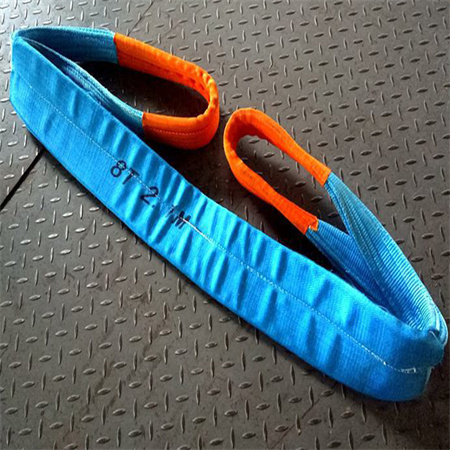
The three zones a flat sling wears in are visible on the article itself: the eyes where it meets hardware, the body and its selvage edges where it crosses the load, and the stitched region that carries the load (§4).
Two habits make the regime do real work. Inspect to a light and at the zones, not to the silhouette — the eyes and the stitched region are where this family's failures concentrate, and both are easy to pass over in a glance from the outside. And record the retirements: a sling withdrawn for abrasion after two years, where the previous construction lasted one, is evidence that money was spent well. Without the record, durability is a belief.
Storage is part of the same discipline, and the guidance is explicit: slings are to be stored away from sunlight, chemicals and sharp edges. A wear-resistant sling stored on a rack in direct sun and beside a chemical store is being degraded by exposures that no construction in the webbing can offset.
| When | What is done | What it protects |
|---|---|---|
| Before every use | Visual check of the whole sling, with the eyes and the stitched region examined specifically | Stops a damaged sling entering a lift; catches cuts and snags, which are sudden rather than gradual |
| Annually, documented | Periodic inspection to the family's criteria, in writing | Catches cumulative abrasion, and creates the record that shows whether the durability is real |
| On any suspect finding | Remove from service immediately, and look for the cause | Prevents a find being treated as wear to monitor when it is a criterion already met |
| Between lifts | Stored away from sunlight, chemicals and sharp edges; not dragged or left on the floor | Removes the two largest uncontrolled exposures in most workshops: light and the floor |
| After any repair | A repaired sling is used only if the repair was made by a sling manufacturer or an equivalent entity | Keeps the stitched connection — which carries the whole load — inside the standard |
10. Identification: What the Label Carries, and Why It Matters More on a Durable Sling
A sling that lasts longer accumulates more of its history on its label. For this family the published marking rule is that each sling shall be marked or coded to show the rated capacities for each type of hitch and the type of synthetic web material — so a flat sling's label is expected to say not only how much it will carry but in which hitch that figure applies, and what the webbing is made of.
The wider marking guidance for webbing slings adds the rest of what should be legible on the tag: the working load limit, the length, the manufacturer, the standard reference and serial information. Taken together with the colour code for quick identification, the label is the only element of a flat sling that a rigger can read to establish capacity in the field.
The reason this matters more on a durable article is arithmetic. A sling bought for abrasion resistance is expected to be in service for longer, over more lifts, in harsher conditions — which is precisely the environment in which a tag is scuffed, a colour fades, and a length gets taken on trust. The colour is a convenience; the tag is the record. Where the tag is no longer legible, the article's capacity can no longer be established, and it cannot be used whatever its condition (§7).
| What is marked | Why it is required | What goes wrong without it |
|---|---|---|
| Rated capacity per type of hitch | The figure depends on the hitch; one number without its hitch is not a rating | A sling used in a choker at its vertical figure |
| Type of synthetic web material | The material decides which chemicals and temperatures are excluded (§8) | A nylon sling put into acid service, or polyester into caustic service |
| Length | A set of legs has to match, and the geometry of the lift depends on it | Mismatched legs sharing a load unevenly |
| Serial information and manufacturer | Traceability, and who to ask about a repair or a replacement | No way to establish the article's history or to have it repaired properly |
| Standard reference and colour | Records which standard the article was made to, with the code for quick field checks | A flat sling and a roundsling treated as interchangeable, when they are separate standards |
11. Buying This Article: the Enquiry, and an Honest Note About Duplicate Listings
The enquiry for a wear-resistant flat sling is short, and it is written around the conditions rather than around the word on the title. State what the sling will contact — the load's surface, its edges, the hardware — because that decides which of the four routes in §5 is worth paying for. State the hitch and the angle, because the capacity figure that appears on the label depends on both. State the environment: temperature, chemistry and sunlight, since those are the exposures a wear-resistant construction does nothing about (§8). State the width and the ply requirement if the application has one, since width and layering are part of what is being selected. And state the documentation your site has to hold — the marking, the standard reference, and the test information your inspection regime will want to see.
One matter of housekeeping belongs on this page, because a buyer comparing listings will meet it immediately. This site carries a considerable number of listings in this family whose names overlap: among them Polyester wear-resistant flat sling, Polyester wear-resistant flat sling 10T large tonnage thick lifting sling, LiFu anti cutting lifting belt, Anti cutting flat sling / polyurethane flat anti cutting sling, Four layer thick flat lifting belt / Double buckle wear-resistant lifting belt, Thickened two end buckle flat lifting belt, and Double buckle lifting sling. Some of these are genuinely different products — a coated sling and a sheathed sling are not the same article, and a four-layer construction differs from a single-ply one. Others read as the same article described twice.
The practical advice is to buy on the specification and, where two listings turn out to describe one product, to have the site treat them as one: a set of near-identical pages competing for the same words splits their ranking instead of adding to it, and the correct remedy is a single page with the duplicates pointing at it. The genuinely distinct articles in the family, and what distinguishes each, are set out below so that a buyer can tell them apart before ordering.
| What to state in the enquiry | What it decides |
|---|---|
| What the sling contacts | Whether the answer is thickness, a fixed coating, reinforced eyes, or a separate sleeve (§5) |
| Hitch and angle | The capacity that will be printed on the label, per hitch (§10) |
| Temperature, chemistry, sunlight | The fibre and the fitting material, and whether either is excluded outright (§8) |
| Width and ply requirement | The part of this family's own range that applies, from single-ply to multi-ply (§5) |
| Documents your site must hold | Marking, standard reference and test information that the inspection regime will ask for (§9, §10) |
| Article in the family | What actually distinguishes it |
|---|---|
| This article, a flat woven wear-resistant sling | The base article of the family: woven webbing, stitched eyes, durability pursued in the webbing itself |
| A coated sling, polyurethane | A coated surface rather than a heavier weave; the question to ask is whether the coating is permanently fixed |
| A sheathed sling | A separate protective component, which is renewable — the economics differ from an intrinsic construction |
| A four-layer or thickened sling | Ply count and thickness, which are categories of this standard rather than deviations from it |
| A double-buckle sling | The end hardware, covered on its own listing; the durability question here is about the webbing |
| A protected round sling | A different family and a different standard; the contact-point rules are on the circular lifting straps page |
12. Frequently Asked Questions
Q1: Does "wear resistant" mean the sling has a higher working load limit?
Q2: Which standard covers this sling, and is it the same as a round sling's?
Q3: What is the difference between wear resistance and cut resistance?
Q4: Where will this sling wear first?
Q5: How is wear resistance actually achieved?
Q6: Does a thicker or coated sling resist heat as well?
Q7: Which fibre should I choose for a chemical environment?
Q8: What retires one of these slings?
Q9: Can a worn eye be repaired?
Q10: I keep finding several similar listings on this site. Which one is this?
Contact
Send the contact conditions, the hitch and the environment, and we will come back with the article, the fibre, the width and ply, and the marking that has to travel with it — number the standard reference, the working load limit per hitch and the material.
Telephone and WeChat — 18066002268
E-mail — 702461526@qq.com
Address — Lifute Industrial Park, Taizhou City, Jiangsu Province, China
- Previous:Web Sling Bridle Assembly
- Next:Wear Protection lifting sling_ Sleeve Wear Pad flat web slin
-
Drone Anti-collision Net
-
Extra Large Capacity Cargo Net
-
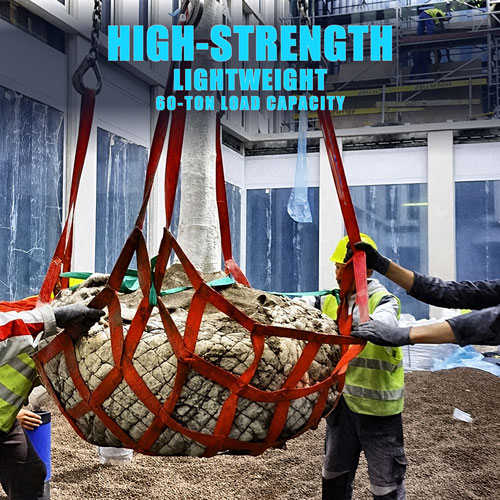
Cargo Webbing Net
-

Color changing nylon double buckle loop nylon braided rope
-

Two end buckle lifting rope, double buckle round lifting rope, double fork nylon lifting rope, non jointed nylon lifting rope
-

Emergency escape lifeline, fire escape rope, fire safety escape emergency rope, steel wire core fire rope

