 Language
 简体中文

- On the 2018 National Day holiday, Lifet completed six 100 ton large tonnage lifting belts as a gift
- The role of suspension net in the transportation of goods turnover
- Cargo soft lifting net, lifting net, lifting net, lifting net, bag, climbing net
- Precautions for using Lifutiden elevator
- How to make circular lifting straps
Contact: Wang Lili
E-mail:18066002268
Phone:702461526@qq.com
Address: Lifute Industrial Park, Taizhou City, Jiangsu Province
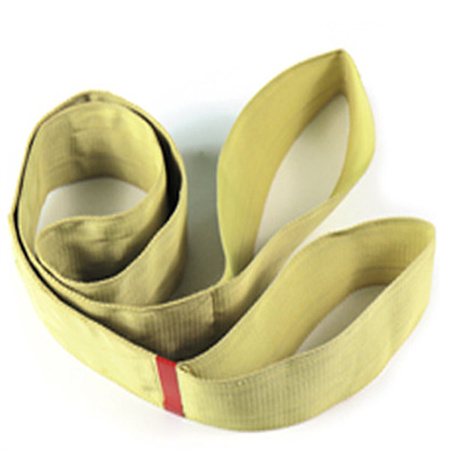
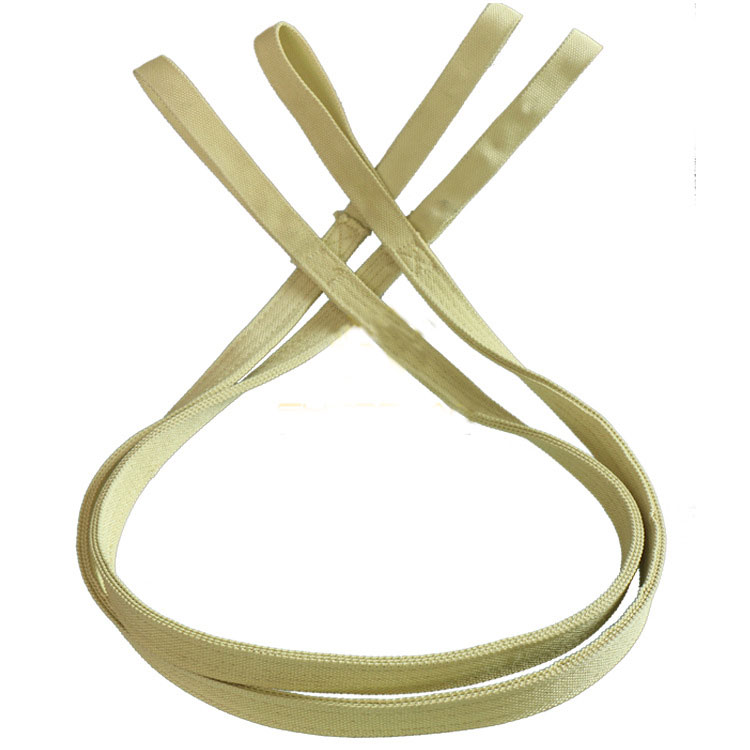
Lift Sling Rigging Co., Ltd. +8618066002268 produce High temperature resistant ring eye type lifting belt, double buckle fireproof and flame-retardant sling, high temperature resistant, corrosion-resistant and heat-resistant mold, double earring eye wear-resistant and cutting flat sling.
Hits: ℃
Release time:2026-09-17 14:30
Lift Sling Rigging Co., Ltd. +8618066002268 produce High temperature resistant ring eye type lifting belt, double buckle fireproof and flame-retardant sling, high temperature resistant, corrosion-resistant and heat-resistant mold, double earring eye wear-resistant and cutting flat sling.
High Temperature Resistant Ring Eye Type Lifting Belt

A ring eye belt: woven webbing, a sewn ring eye at the end, made to order in the width and working load limit the hot job needs.
1. What the Product Is, and What the Name Means
A ring eye lifting belt is a flat woven webbing sling — a band of high-tenacity yarn woven to a fixed width, plied to the capacity it has to carry, closed at each end by a sewn joint and, in this form, finished with a ring eye: a sewn loop large enough to sit over the hook or the load ring the job actually uses. That last point is the whole reason the form exists separately from a plain eye, and the trade lists the ring-eye form alongside the flat sling when it sets out how webbing slings are made. The second half of the name is the part that needs care, because the same words carry four different products in the market and only one of them is the belt you may need.
| What the words can mean | What it is | How to tell whether that is what you need |
|---|---|---|
| Ring eye as a sewn webbing eye | A loop woven and sewn from the band itself, sized to go over the hook or the load ring directly | This is what we make and what this page describes. If your connection is a hook or a ring and you want no shackle in between, this is the article |
| Ring eye as an eye carrying a metal ring | A sewn loop that holds a loose metal ring, so the belt can be threaded and pulled back on itself — the binding form | A different order line with a different duty. If the belt holds rather than lifts, say so and we quote the binder; the ring is then a fairlead and not a lifting fitting |
| Heat resistant ordinary webbing | Polyamide, polyester or polypropylene webbing finished in a colour or a coating that is sold as heat resistant | Read the ceiling, not the adjective: every published figure for these three fibres stops below 100 °C (§2). If the job is hotter than that, this is not the article |
| Heat resistant aramid webbing | Woven para-aramid (Kevlar) webbing, which reaches a continuous 350 °C and a peak 500 °C | This is the construction behind a genuine high-temperature belt, and the one you are ordering when the load comes out of a furnace (§3) |
Two consequences follow immediately, and both are worth saying before any pricing conversation. First, a temperature rating belongs to the fibre and the construction, not to the width, the colour or the ply — so a 50 mm aramid belt and a 50 mm polyester belt of the same working load limit are not interchangeable on a hot lift even though they look alike and lift alike. Second, the end form is a separate decision from the fibre: a ring eye can be sewn into either one. When you order, give us both, or you will get the right end on the wrong webbing.
This page does not repeat what already sits on this site. The chemistry of the common fibres is on the nylon woven flat sling page and the polypropylene flat sling page; the eye-to-eye form, eye length and the length datum are on the acid-alkali flat double-ear lifting belt page; how a band loads a round surface is on the flat lifting strap page; sheaths and edge protection are on the reinforced and sheathed lifting straps page; the lifting-versus-lashing standards split is on the polypropylene flat lifting strap page; and if the load is a cable rather than a hot workpiece, the cable sling page covers the drum, coil and bend-radius rules that page exists for.
2. The Temperature Ceiling of Ordinary Webbing, and Where Aramid Starts
Almost every disappointing purchase in this corner of the market comes from one sentence: “it is a heat resistant sling”. The adjective is free; the fibre is not. So here is the ceiling of each fibre as the published sources state it, including the two figures that disagree with each other, because a buyer who knows about the disagreement asks better questions than one who has been given a single number.
| Fibre | Published service ceiling | What that means on a hot job |
|---|---|---|
| Polyamide (nylon) | Not above 82 °C (180 °F); one OSHA guidance figure for nylon and polyester is 90 °C (194 °F) | The ceiling exists because the fibre softens and then melts. Comfortable for outdoor and general work; unsuitable for anything off a furnace |
| Polyester | The same 82 °C (180 °F), with the same 90 °C guidance figure | Same ceiling for the same reason — softening of the fibres. The fibre is chosen here for its low stretch and its acid side, not for heat |
| Polypropylene | Not above 93 °C (200 °F) — a higher published service figure than nylon or polyester | Worth understanding rather than quoting: these are service figures, not melting points, and polypropylene has the lowest melting point of the three while carrying the highest published service number. Two figures, two criteria — use the lower applicable one |
| Para-aramid (Kevlar) | Continuous 350 °C, peak 500 °C for woven 100% para-aramid fabric | The fibre that makes a high-temperature belt possible at all. Chosen in the trade for hot environments — foundries, power generation, glass tempering — rather than for price |
Two notes belong under that table. The published figures disagree, and that is normal. A university safety page restating the code gives nylon and polyester 180 °F and polypropylene 200 °F; a sling maker's knowledge base gives polyester and nylon 180 °F and explains the reason as softening or actual melting of the fibres; OSHA's own safe-sling-use guidance gives nylon and polyester 194 °F (90 °C). The figure you may work to is the lowest one that applies to your situation, and where the sling will be in contact with a hot load rather than merely near it, the answer is the fibre's own datasheet. And no accessory changes the fibre. A sheath, a sleeve or a coating protects the band from edges and from wear — it does not raise the temperature the yarn can take, and a protection device carries no industry rating at all. That point is set out in full on the reinforced and sheathed lifting straps page and it is the single most common misunderstanding on a hot job.
3. What 500 °C Actually Requires
This page exists in its present form because of one number. The belt on this page has been offered for years with a 500 °C figure in its description — “for Hoisting Heavy Workpieces in Environments up to 500°C” — and nothing in that description says what the belt is made of. Read against §2, that figure cannot be true of nylon, polyester or polypropylene webbing, all three of which stop below 100 °C in every published source. It can be true, and is true in the trade, of a woven para-aramid construction, which reaches a continuous 350 °C and a peak 500 °C. So the figure is not wrong; it is unqualified. Below is what has to be settled for the number to be worth anything on a purchase order.
| What has to be true | Why it decides the answer | What to write on the enquiry |
|---|---|---|
| The fibre is a high-temperature one | A temperature figure is a property of the yarn. No width, colour, ply or finish moves a common fibre towards 500 °C | “Aramid webbing, continuous 350 °C” — or tell us the temperature and let us name the fibre for you |
| Continuous, not peak | The published figures for para-aramid are 350 °C continuous and 500 °C peak. A peak figure describes a short excursion; a shift describes hours | “Continuous 400 °C for 20 minutes per cycle” is a specifiable sentence. “500 °C” on its own is not |
| Where the temperature is measured | Furnace air, the workpiece surface and the yarn under the eye are three different numbers, and the belt lives or dies by the last one | “The load surface is 600 °C; the belt touches it for the first 30 seconds” — that is a rigging problem as much as a fibre problem |
| The time at temperature | Heat damage accumulates. A belt that survives one hot pass is not a belt that survives a shift of them, and repeated exposure is what turns a working belt into a removed one | Lifts per shift, and the dwell time in the hot zone |
| The fittings | The standard requires a sling's fittings to be rated at least as strongly as the sling itself, so at temperature the hardware becomes the limit: a heat-resistant webbing joined to ordinary fittings has moved the problem, not solved it | Say what the belt connects to, and whether that part is in the hot zone at all — often the answer is to keep the hardware outside it |
| The marking says which | EN 1492-1 covers polyamide, polyester and polypropylene — aramid is outside it, so a heat-resistant belt has no EN colour code to read and no EN working load limit colour at all | Ask for the fibre, the working load limit and the temperature figure on the label and on the certificate |
4. Contact Heat, Radiant Heat and Weld Splatter
The temperature in a specification and the temperature a belt actually experiences are different things, because heat arrives by four routes and the webbing responds differently to each. The distinction that matters most on a shop floor is between a belt standing near a heat source and a belt touching one: radiation and hot air raise the yarn temperature slowly and can be managed with distance, shielding and a short dwell, while contact transfers heat straight into the band and is decided by the load's surface temperature. Molten metal and welding spatter are a third case again — they are not a temperature at all, they are damage delivered to a point.
| How the heat arrives | What it does to the webbing | The working rule |
|---|---|---|
| Contact — the belt on the hot load | Heat is conducted straight into the yarn at the contact patch, which is also the patch carrying the load. Softening starts there and the band can fail from the inside out | Keep the belt off the hot surface wherever the geometry allows: lift from a cold feature, use a heat barrier between the two, or let the workpiece cool to a temperature you actually know before you rig it |
| Radiant heat — standing near a furnace, a billet or a molten bath | Raises the whole band slowly. The exposure is a function of distance, time and shielding rather than of a single number, so the same belt can be perfectly safe at 3 m and unusable at 0.5 m | Plan the pick-up so the belt enters the hot zone late and leaves it early, and shield where the plant allows it. A belt that hangs in the radiant field all shift is being consumed whether or not it is lifting |
| Hot air and hot gases | A slow, even soak. It rarely produces the dramatic signs, which is what makes it the quietest failure mode: the belt ages rather than marks | Treat a belt that lives in a hot atmosphere as one that needs its own inspection interval, not the plant's general one |
| Molten metal splash | Delivers a point of extreme temperature to a small area of the band and burns through the yarn locally. The belt keeps the appearance of a belt and loses capacity at the burn | A splash-exposed belt is a removed belt, not a protected one. Webbing is not splash protection: if the duty involves molten metal, the rigging plan has to keep the belt out of the splash zone entirely |
| Welding spatter and hot sparks | The same mechanism at a smaller scale — and it is one of the removal criteria a synthetic sling is judged by. Break tests on synthetic web slings show spatter, heat, ultraviolet exposure, cuts and knots each reduce the breaking strength of the sling | Cover the belt, or move it, whenever hot work is going on nearby. A belt that is not in use still gets damaged by a welder working above it |
The rule that ties the four rows together is the one in the removal criteria: melting, charring or weld splatter takes a synthetic sling out of service immediately. That is not a recommendation to weigh against the remaining life of an expensive belt. It is the criterion, and it exists because all three are point damage — the band looks nearly intact and the capacity is gone at the mark. Heat damage of this kind becomes invisible in the way that matters most: the area that was damaged is the area that was carrying the load.
5. How to Specify a Heat-Resistant Sling
Heat-resistant belts are quoted wrongly more often than any other product on this site, and the reason is always the same: the enquiry states a temperature and nothing else. A temperature is one of ten things that change the answer. The table below is the decision order we work through, and it doubles as the list of questions we will ask if the enquiry arrives as “heat resistant sling, 300 degrees”.
| Decision | The options | What it changes |
|---|---|---|
| 1. The temperature and its kind | Under about 90 °C; a short excursion above it; or a continuous hot environment | Everything. Below the common ceiling the choice is free and the fibre is picked on chemistry, stretch and cost; above it the fibre is aramid and the price follows the fibre |
| 2. Continuous or peak | A figure held for the whole cycle, or a brief excursion above it | Whether you are buying the 350 °C continuous figure or the 500 °C peak figure. A belt specified on the peak number and worked at that number is a belt being consumed |
| 3. Contact or non-contact | The belt touches the hot load; the belt only stands in the hot zone; or both at different moments | Whether the surface temperature of the load has to be under the fibre's ceiling. Contact is decided by the workpiece, not by the air |
| 4. Time in the hot zone | Seconds per lift; minutes; the whole shift | The inspection interval more than the construction. A belt that spends an hour a day in radiant heat is not in the same condition as one that enters the zone for ten seconds |
| 5. The load | Weight, and the shape and condition of the surface the belt bears on | Working load limit and band width together. A hot casting with a rough or sharp edge is the case where width and protection matter as much as the fibre |
| 6. Working load limit and ply | 1 t to 10 t in the ordinary range; single ply or duplex at the same width | How many belts you need and how wide they are. Duplex reaches a higher capacity in the same width, at the cost of stiffness |
| 7. The end form | Ring eye, plain eye, or eye-and-fitting — see §6 | How the belt connects, and whether the hardware — which has its own temperature limit — is in the hot zone |
| 8. Protection | A sheath or sleeve against edges and wear; nothing at all where there is no edge | Service life against the load's surface. It does not change the temperature the yarn can take |
| 9. The other environment | Indoors or outdoors; wet; the chemicals present; ultraviolet exposure | Whether the aramid belt is also the right answer. Heat is rarely the only thing a plant does to a sling |
| 10. Marking and paperwork | Fibre, working load limit, temperature figure, batch identification, test certificate | Whether the belt can be used at all: a sling whose identification is missing or illegible is a sling to be removed, and heat duty is what makes labels unreadable |
6. The Ring Eye End
The end form is the half of the product name that people skip. A ring eye is a sewn loop of the band itself, made big enough to take the hook or the load ring the job actually uses — the point of the form being that it connects directly, without a shackle or an extra fitting in the load path. That directness is what the trade means when it lists the ring-eye form next to the flat sling, and it is also why the form has to be specified rather than assumed: the same two words are used in the market for a sewn webbing eye and for an eye that carries a metal ring, and those are two different articles with two different duties.
| The decision | Choose this | Why it matters on a hot job |
|---|---|---|
| Sewn ring eye (what we make) | A loop woven and sewn from the same band, sized to the hook or ring | Nothing metallic enters the hot zone, and the piece that touches the load is the same heat-resistant yarn as the body of the belt |
| Eye carrying a metal ring | A sewn loop holding a loose ring, so the belt can be threaded back on itself | A holding article rather than a lifting one, and a metal part inside the heat. If this is what you need, order it as a binder and not as a lifting sling |
| Eye size against the hook | An eye long enough for the object in it: the working rule is that an object in the eye must not be wider than one third of the length of the eye | An eye that is filled to the edge by a hook is already a rigging fault, and on a hot job it is also the point where the yarn is most compressed |
| Eye length and the length datum | Length bearing point to bearing point unless another datum is called out | Two suppliers quoting “2 m” against different datums deliver belts that differ by the length of two eyes. The datum rules are on the acid-alkali flat double-ear lifting belt page |
| Fittings, if any | Keep the metal out of the heat wherever the geometry allows | A fitting has to be rated at least as strongly as the sling it is fitted to, and it also has its own temperature limit — so hardware in the hot zone becomes the weakest link in the assembly |
| Sheathing the eye | A stitched sheath where the eye bears on a hot, rough or sharp feature | Protects the part of the belt that takes the most wear. It changes the wear life, not the temperature rating |
| Hitch | Straight, choked or basket — the ordinary factors are 0.8 choked, 2.0 basket, 1.4 for a two-leg assembly | Decides the working load limit you have to order. A basket around a hot round workpiece also spreads the contact and softens the point load |
7. Inspection and Removal after Heat Exposure
A heat-resistant belt is inspected the way any synthetic sling is — before each use by a qualified person, and periodically — but the interval has to follow the duty rather than the calendar. The published guidance is a periodic inspection at no more than twelve months for normal service, and monthly to quarterly where the conditions are severe. A belt that works in front of a furnace is severe service by any reading, and the belt's own history decides the rest: number of hot cycles, dwell time and how close it gets.
| What to look for | What it looks like | The action |
|---|---|---|
| Melting or charring | A glazed, glossy or blackened patch; a fused or hardened spot; the weave visibly closed up | Remove immediately. This is one of the stated removal criteria for a synthetic sling, not a judgement call |
| Weld splatter or metal splash | Small embedded beads, a roughened patch, a burn through a single ply | Remove immediately, and find out why a welder was working over a sling |
| Discolouration, or a patch that has gone stiff or brittle | The band changes colour unevenly along its length, or one section no longer drapes like the rest | Remove. Discoloured, brittle or stiff areas are on the removal list for a reason: heat-set yarn does not come back |
| The sewn joints and the eyes | Broken, worn or loosened stitching in a load-bearing splice; a distorted eye after being pulled over a hook that was too wide for it | Remove. On heat duty the seams are usually the first place a problem shows, because the eye is the part that sits closest to the load |
| The label and the identification | A label that has gone dark, curled or unreadable after weeks near a heat source | A sling with missing or illegible identification is a sling out of service — the working load limit and the fibre can no longer be read off it. On this duty, protect the label when you rig |
| The fittings | Distortion, cracking, heat colour, or a pin that no longer turns | Remove. Damaged or deformed fittings are a removal criterion in their own right, and they are the part of the assembly heat attacks first |
| The belt as a whole | Holes, tears, cuts and snags; excessive abrasive wear; knots; chemical burns from the plant's own process | Remove. These are the general criteria that apply to every synthetic sling, and a hot plant usually supplies its own extra ones |
Two rules close the section and neither of them is negotiable. A heat-damaged sling is never repaired. Webbing is not stitched back into service, load-bearing splices are not repaired, and no temporary repair of webbing or fittings is acceptable; the belt comes out of service and is either replaced or returned to the maker. And storage is part of the duty: slings have to be kept where mechanical, chemical and ultraviolet damage cannot reach them, and a heat-resistant belt left hanging in the hot zone between shifts is being aged by the plant whether or not it is lifting anything. Take it out of the zone, hang it in the shade, and inspect it before it goes back in.
8. Marking, Colour and Standards: What a Heat-Resistant Sling Is Not Covered By
This section exists because a buyer who is used to ordinary webbing slings will look for something on an aramid belt that is not there. EN 1492-1 is written around polyamide, polyester and polypropylene webbing, from 25 mm to 450 mm wide, with a minimum safety factor of 7:1 and a colour code that reports the working load limit. Para-aramid is not one of the three fibres in that standard, so a heat-resistant aramid belt has no EN working load limit colour and no EN colour code to read. That is not a gap in our product; it is the shape of the standard, and a supplier who shows you a colour code on an aramid belt is showing you a code that does not exist for that fibre.
What a heat-resistant belt has instead is the marking that actually carries the information: the fibre, the working load limit for a straight lift, the temperature figure it is rated to and whether that figure is continuous or a peak, the length and its datum, the maker and a batch identification, with the declaration of conformity and the batch tensile certificate available with the shipment. Read those five things off the label and you know more about the belt than any colour could tell you.
For the ordinary webbing belts on this site the familiar code does apply, and it works the way the standard intends: the colour of the webbing reports the working load limit, one black stripe per tonne cross-checks it, and the colour of the label names the fibre the band was woven from — green for polyamide, blue for polyester, brown for polypropylene. Those belts are the right answer for everything below the common ceiling in §2. They are the wrong answer for a furnace, whatever colour they are, and the difference is decided at the enquiry rather than at the label.
On the inspection side, a heat-resistant belt is still a synthetic webbing sling: it falls inside the scope of the sling standards that deal with synthetic webbing generally, which is why §7 can quote removal criteria that are stated for synthetic slings as a class rather than for one fibre. The two documents do different jobs — one tells you what the belt is and what it will carry, the other tells you when to take it out of service — and a working plant needs both.
9. Packing, HS Code and How to Order
Heat-resistant belts are made to order, because the fibre is the product and the duty decides the construction. That makes the enquiry more important than it is on a catalogue item: once the temperature, the contact question and the end form are settled, the belt is a straightforward build, and until they are settled it is a guess on both sides.
| Item | Detail |
|---|---|
| Packing | Shrink-wrapped in export cartons on pallets, or in bulk on the pallet for large orders, with the batch identification on each bale. Odds and sets are matched and marked as sets |
| HS code | 630790, as for the woven slings on the rest of this site |
| Marking on the belt | Fibre, working load limit, temperature figure and its kind (continuous or peak), length and datum, maker, batch number |
| Paperwork | Declaration of conformity with the shipment; batch tensile test certificate on request, quoted with the goods |
| Ends and sizes | Ring eye, plain eye or eye-and-fitting; 25 mm to 450 mm band width; single ply or duplex; any length, quoted bearing point to bearing point unless you call out another datum |
| Labelling that survives the duty | Ask for the labelling arrangement on a belt that lives near heat. A label that goes unreadable in a month takes the belt out of service through §7, whatever the webbing is doing |
10. What We Need From You to Quote a Heat-Resistant Sling
One sentence of duty and four numbers will produce a firm quotation instead of a range. The sheet below is what we ask for on every heat enquiry, and it is also the list the delivery document for this page carries as the item to confirm.
| Item to specify | What to write on the enquiry |
|---|---|
| 1. The temperature, and its kind critical | The number, and whether it is held continuously or is a short excursion. “Continuous 300 °C” is a specification; “300 °C” is a starting point |
| 2. Contact or non-contact critical | Does the belt touch the hot surface, or only stand near it? If it touches, the load's surface temperature is the number that matters |
| 3. Time and frequency | Seconds or minutes in the hot zone, and how many lifts a shift |
| 4. The load critical | Weight, shape, and the condition of the surface the belt bears on — a hot casting with a sharp edge needs width and protection as well as fibre |
| 5. Working load limit and hitch | The limit you need and the hitch you will use: straight, choked (0.8), basket (2.0) or a two-leg assembly (1.4) |
| 6. Width and ply | Band width in mm and single ply or duplex; wider spreads the contact, duplex reaches the capacity in the same width |
| 7. Ends, eye size, length and datum | Ring eye or plain eye; the hook or ring the eye has to take; length and the datum you are quoting it against |
| 8. Protection | A sheath or sleeve where the belt meets a hot, rough or sharp feature |
| 9. The rest of the environment | Wet or dry, indoors or outdoors, ultraviolet, and the chemistry of the plant |
| 10. Marking, paperwork and quantity | Whether sets must be matched, whether the batch certificate is needed with the goods, and how many |
11. A Short Checklist for the Shop Floor
Most heat failures are not decisions, they are habits. The list below is the version we hand to a plant that has just taken delivery of its first aramid belts, and it is deliberately short enough to be read at the machine rather than in an office.
- Know the number before you rig. If nobody on the floor can say what temperature the load is, the lift waits until somebody can. “It comes out of the furnace, it's hot” is not a specification, and the belt that gets used on it will be the one that was cheapest to replace.
- Know which belt you are holding. An aramid belt and an ordinary webbing belt of the same width and colour family are not interchangeable on a hot lift. If the label can no longer be read, the belt is out of service, not “probably the heat one”.
- Move the belt into the heat late and out of it early. Time at temperature is what consumes a belt, and the same belt that is safe on a twenty-second pass is not safe on a two-minute one.
- Keep the belt off the hot surface. Contact is the fastest route from a working belt to a removed one. Where the geometry allows, lift from a cold feature; where it does not, use a heat barrier and shorten the dwell.
- Never set a hot workpiece down on the sling, and never drag a belt out from under a load that is resting on it. Both are their own failures, and on a hot load both burn the band.
- Treat splash and spatter as a removal, not a burn. One bead of molten metal is grounds for taking the belt out of service, and it will not be the piece of the belt you were watching.
- Take the belt out of the hot zone between shifts. A belt that hangs in radiant heat overnight is being aged by the plant, and storage away from heat, chemicals and sunlight is part of the duty rather than a housekeeping preference.
- Inspect on the duty's interval, not the calendar's. Hot work is severe service: the belt that is only inspected at the annual shutdown has already been used for months in a condition nobody has looked at.
Frequently Asked Questions
Q1: What is a high temperature resistant ring eye type lifting belt?
Q2: What does “ring eye” mean?
Q3: What temperature can a lifting belt take?
Q4: Can a webbing sling really be used at 500 °C?
Q5: What does heat damage look like, and what do I do about it?
Q6: What is the difference between a continuous and a peak temperature rating?
Q7: Why is there no colour code on an aramid sling?
Q8: What is the working load limit, and how do the hitches change it?
Q9: Can a heat-resistant belt be used where there is molten metal splash?
Q10: What is the HS code, and what do you need to quote?
Contact us — high temperature resistant ring eye type lifting belts direct from the manufacturer
Tell us the temperature and the construction you need and we will come back with the specification and price for your heat-resistant ring eye lifting belt: fibre, working load limit, band width, ply, length, ends, protection and marking on one sheet, with the temperature figure stated as continuous or peak and the ring eye sized to the hook or load ring you actually use. Volume discounts apply. Ordinary webbing belts are built to EN 1492-1 with the 7:1 safety factor in polyamide, polyester and polypropylene, single ply or duplex, 25 mm to 450 mm wide and any length from 1 m to 12 m and beyond; heat-resistant aramid belts are made to order for the duties in §5, with the fibre, the working load limit and the temperature figure on the label. Sheathed eyes for rough castings, matched sets for two-leg and four-leg assemblies, and the fittings and hardware to connect them are all supplied to order.
- Contact: Wang Lili
- Phone: 18066002268
- E-mail: 702461526@qq.com
- Address: Lifute Industrial Park, Taizhou City, Jiangsu Province, China
- Send an enquiry >>
- Previous:High strength polypropylene white flat sling lifting belt crane double buckle lifting rope sling
- Next:Cable sling-cable binding strap-nylon cable sling
-
Drone Anti-collision Net
-
Extra Large Capacity Cargo Net
-
Cargo Webbing Net
-

Color changing nylon double buckle loop nylon braided rope
-

Two end buckle lifting rope, double buckle round lifting rope, double fork nylon lifting rope, non jointed nylon lifting rope
-

Emergency escape lifeline, fire escape rope, fire safety escape emergency rope, steel wire core fire rope

