 Language
 简体中文

- On the 2018 National Day holiday, Lifet completed six 100 ton large tonnage lifting belts as a gift
- The role of suspension net in the transportation of goods turnover
- Cargo soft lifting net, lifting net, lifting net, lifting net, bag, climbing net
- Precautions for using Lifutiden elevator
- How to make circular lifting straps
Contact: Wang Lili
E-mail:18066002268
Phone:702461526@qq.com
Address: Lifute Industrial Park, Taizhou City, Jiangsu Province
Lifute Hoisting Co., Ltd. 18066002268 produces lifting belts, lifting nets, nylon ropes, soft ladders, steel wire rope rigging, paper ropes, safety belts, safety nets, lifting chains, steel coil hoists, crossbeam hoists, flat lifting belts, circular lifting belts, electric traction ropes, high-altitude safety belts, and anti fall safety nets
Hits: ℃
Release time:2026-09-21 11:11
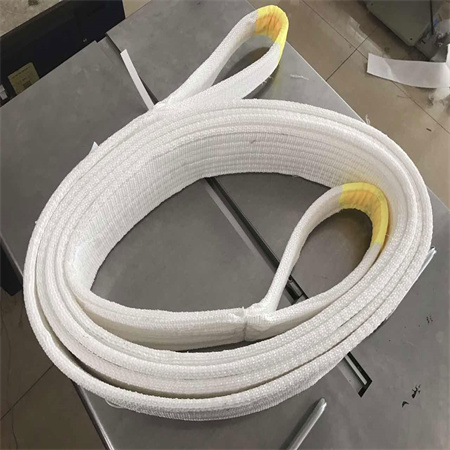
Lift Sling Rigging Co., Ltd. +8618066002268 produce Two end buckle flat lifting strap, thickened two end buckle flat white lifting strap
Circular Flat Lifting Belt — a Closed Loop in the Flat Family, Not a Roundsling
1. Four Names, and the One Word That Decides Which Standard Applies
This article is listed under four names — Circular flat lifting belt, circular flat sling, circular flat lifting belt again, and circular flat lifting rope. They describe one product, and the repetition is a fair reflection of how the trade talks: the same band is a belt, a sling or a rope depending on who is buying it. None of those three nouns carries a technical distinction.
The word that does carry one is flat, and it is the word that decides which of this site's two textile families the article belongs to. Circular describes the shape — the band is closed into a loop. Flat describes the construction — it is woven as a flat band, with two selvage edges and a rectangular section. Those are independent properties, and it is their combination that is worth understanding, because a closed loop is exactly what a roundsling is too, and the two are governed by different standards and behave differently in service.
The simplest way to hold the distinction is this: a loop can be made by closing a flat band, or by sleeving a core, and only one of those is a roundsling. Where the load path is a woven band sewn closed on itself, the article is an endless sewn flat woven webbing sling — a category the standard names in its own scope (§2) — and it is a flat sling in every respect that matters. Where the load path is a bundle of parallel yarn inside a woven tube, the article is a roundsling, and EN 1492-2 applies. This page's article is the first. The sleeved round form, and the contact-point rules that go with it, live on the circular lifting straps page and the endless round sling page.
| The question | A circular flat lifting belt | A roundsling |
|---|---|---|
| What is the load path? | A flat woven band, closed into a loop by sewing | Parallel yarn running inside a woven sleeve |
| Which standard? | EN 1492-1, whose scope names the endless sewn sling as a type | EN 1492-2, roundslings |
| Does it have edges? | Yes — two selvage edges, and the standard requires that they not be split from the webbing's width | No, in the sense that matters: the sleeve encloses the core |
| Is there a joining? | Yes — a sewn seam closes the band, and seam construction is one of the standard's own factors | No joining in the load path at all; the core is one continuous loop |
| Which capacity signal? | The same colour code, applied to the flat family's webbing | The same colour code, applied to a sleeved round article |
2. The Standard Names It: Where the Endless Sewn Sling Sits in EN 1492-1
The scope of EN 1492-1 is worth quoting, because it settles the naming question in §1 without any interpretation. The standard specifies the requirements related to safety, including methods of rating and testing single-, two-, three-, four-leg and endless sewn flat woven webbing slings, with or without fittings, made of polyamide, polyester and polypropylene man-made fibre webbing in the width range of 25 mm to 450 mm. An endless sewn sling is therefore not an oddity or a workaround; it is one of the types the standard exists for, sitting alongside the leg-count variants.
Two more parts of that scope matter to anyone ordering this article. The first is what the standard is for: general purpose lifting operations, where the lift requires no deviations from the requirements, safety factors or working load limits specified. The second is what it is not for, and the list is explicit — lifting of persons, and potentially dangerous materials such as molten metal and acids, glass sheets, fissile materials, nuclear reactors, and other cases where special conditions apply. An endless flat belt is a general purpose article, and a lift outside that description is not a lift this standard covers.
There are also three things the standard explicitly does not apply to, and one of them is worth naming here because this site lists such articles separately: slings such as bag slings and nets, adjustable slings containing intermediate buckles stitched along the webbing, slings woven from monofilament yarns, and slings designed for pre-slinging and intended not to be re-used. That last exclusion is why the disposable articles are their own listings rather than variants of this one — a single-use sling is outside the general purpose standard by its own definition, not by a difference in quality.
| What the standard says | The wording | What it means for this article |
|---|---|---|
| The types it covers | single-, two-, three-, four-leg and endless sewn flat woven webbing slings, with or without fittings | The endless sewn form is a named type, so the article has its own place in the standard rather than being derived from another |
| The materials and widths | polyamide, polyester and polypropylene webbing; 25 mm to 450 mm wide | Fibre and width are part of the specification, not incidental — and the fibre decides the chemical exclusions (§8) |
| What it is for | General purpose lifting, with no deviations from the requirements, safety factors or working load limits specified | A clean boundary: inside it the published figures apply, outside it they do not |
| What it is not for | Lifting of persons; molten metal and acids, glass sheets, fissile materials, nuclear reactors, and special conditions | These are exclusions of the standard, not cautions — the article is not rated for them at all |
| Three things it does not apply to | Bag slings and nets; adjustable slings with buckles stitched along the webbing; monofilament webbing; and slings for pre-slinging not intended to be re-used | A single-use sling is outside this standard by definition, which is why it is a separate article here |
3. How the Loop Is Closed: the Seam, and Why the Standard Cares About It
A flat band becomes a circular belt in exactly one place, and that place is a sewn seam. The standard's own summary of what it covers includes seam construction among the key factors it specifies, alongside effective working length and the safe use instructions — which is a plain statement that the join is not an incidental detail of the article but one of the things the standard is written around.
Why the family works this way is worth stating, because it explains a rule that otherwise reads as arbitrary. In flat woven slings, stitching is the only method used to attach end fittings to webbing and to form eyes, in an even pattern and with a sufficient number of stitches to develop the full breaking strength of the sling. Nothing else is permitted — no clamps, no rivets, no knots — and the reason is that a sewn joint spreads load across many threads in shear rather than concentrating it at a few hard points. An endless sling is the same principle applied to the band itself: the belt is closed by sewing, because sewing is the only joining the family allows.
Two practical consequences follow directly. The seam is part of the load path, so it has to be inspected like one — broken or worn stitching is a removal criterion in its own right, not a cosmetic defect (§6). And the seam is a place where the article is thicker and stiffer than the webbing beside it, which matters when the belt is bent around hardware: the transition from single thickness to lap thickness is where a bend is least even, and it is the reason the seam should not be positioned where the belt has to wrap tightly (§4).
| About the seam | What is true | What it means at the point of use |
|---|---|---|
| It is the only joining in the article | Stitching is the only method this family uses to form eyes and attach fittings | Everything the belt carries passes through this one place, however long the belt is |
| The standard specifies it | Seam construction is one of the factors the standard names, with an even stitch pattern and enough stitches for full breaking strength | A seam is a specification item to ask about, not something to take on trust |
| It is a doubled-thickness zone | The lap is thicker and stiffer than the webbing beside it | Keep it out of tight bends and away from the choke point; wrap with single thickness where the belt bends |
| It can be positioned | The maker decides where the join falls on the loop | Where a lift always bends the belt at the same point, a seam placed away from it will outlive one placed on it |
| It is not repairable by the user | Load-bearing stitching may not be repaired; repairs are the manufacturer's or a qualified person's work | A worn seam retires the belt. It is the one place where a small amount of visible damage is decisive |
4. No Free Ends: What a Closed Belt Makes Possible, and What It Does Not Excuse
The most obvious difference between this article and an eye-and-eye sling is that it has no ends. There is nothing to thread through a shackle and nothing to hook; the belt is already a loop, and a loop can be passed around or under a load and then hooked anywhere along its own length. That is a real advantage in tight geometry, and it is the same advantage the sleeved round form has.
Three practical points come with it, and each of them is a rule rather than a preference. The belt can be choked at any point along its length, which distributes wear if the user varies the point — an advantage a fixed-eye sling does not have. But the choke point should not be placed on the seam, which is this article's only splice, for the reason in §3: the seam is a doubled-thickness zone where a bend is least even, so choking down on it works the belt at the point it is least able to accommodate it. And a sling is never shortened or lengthened by knotting or twisting — with a closed loop there is nothing to adjust anyway, and a knot in the body is a removal criterion in this family, not an improvised size change.
There is one further duty that a closed loop imposes, and it is easy to miss because nothing about the article looks wrong. A loop cannot be inspected by laying it out flat and looking at it once: the same length of webbing passes through the same place repeatedly, so wear concentrates at the points the lift always uses while the rest of the belt stays new. The published practice for this family is a visual check before every use, and on an endless belt that check has to travel the whole loop rather than the section that is easiest to see (§6, §9).
| Property of a closed belt | The advantage | The rule that comes with it |
|---|---|---|
| No ends to thread | Can be passed around a load and hooked anywhere along its length; useful where a fitting will not fit | The capacity is the capacity of the loop as hitched — the belt has no end eye to read a figure from |
| The choke point can be moved | Wear can be spread around the loop instead of concentrated in one place | Keep the choke point off the seam: it is the article's only splice, and its stiffest zone (§3) |
| Nothing to adjust | No hardware and no loose end to work slack; the article is simple and has few failure sites | Never knot or twist a sling to shorten it; a knot in the body puts the article out of service |
| A long loop in one piece | The whole belt is available as spare surface; a worn section can be moved out of the contact | Inspection has to travel the whole loop, because wear sits where the lift always grips |
| No metal in the article | Nothing to corrode, nothing to distort, nothing with a sharp edge of its own | The hardware it is used on is then the only hardware in the lift, and it still has to be clean and free of sharp edges |
5. Capacity: the Same Colour Code, Read the Same Way
The belt carries the family's colour code, and the code is a shorthand for one figure: the straight single-leg vertical capacity. It says nothing about a basket, nothing about a choker, and nothing about a multi-leg arrangement, each of which has its own published figure. The colour is a field check; the label is the record, and it states the working load limit together with the material and the length (§8).
The reason this page does not reproduce the full colour table is that it is already set out in full — with the capacity each colour denotes and the important note that the code stops at orange, meaning ten tonnes and up — on the 30 ton flexible lifting belt page, which takes capacity bands and the effect of the horizontal angle as its own subject. What belongs on this page is the reminder that the code describes an article, and this article is a loop: the figure is the figure for the loop used vertically.
Two articles in this family are worth keeping apart when reading a colour, and both are listed on this site. A single-layer belt and a multi-layer or thickened one can carry the same colour at the same working load limit while being different articles to handle, wear and bend; the layer count is a construction choice within the standard's range, not a statement about capacity. And a belt whose webbing is coated is a durability variant of the same article, covered on the wear resistant flat sling page, where what a coating does and does not buy is worked through.
| Question about capacity | The answer |
|---|---|
| What does the colour mean? | The straight single-leg vertical capacity for the flat family; the full table is on the 30 ton page |
| Does the colour change with the hitch? | No. The hitch has its own figure, and the label states the rated load for the types of hitch the article is rated for |
| Does a thicker or multi-layer belt lift more? | Not because it is thicker. Layer count and thickness are construction within the standard's range; capacity is set by the rating |
| What is the factor? | Commonly 7:1 in this family, and worth having stated in writing rather than assumed |
| Where does the definitive number live? | On the label and in the documents, which is why §8 is about marking and not about colours |
6. Inspection: Reading a Loop Rather Than a Sling
The inspection regime for this article is the flat family's: a visual check before every use, with a documented periodic inspection at least annually, and the standard itself requires visual and manual inspections of all completed slings as part of manufacture. What is different about an endless belt is not the interval but the route the inspection takes, and the reasons are in §4: the same webbing returns to the same place, so wear concentrates where the lift always grips while the rest of the loop looks new.
So the check travels the whole belt. On a flat woven article the criteria are the family's own, and the ones to look for are missing or illegible identification, acid or caustic burns, melting or charring of any part of the sling, holes, tears, cuts or snags, broken or worn stitching in load-bearing splices, excessive abrasive wear, knots in any part of the sling, discolouration and brittle or stiff areas, and damaged fittings where the article has any. Where any such damage is present, the sling is removed from service immediately. On this article the seam is a load-bearing splice, so the fourth item is not an abstract one — it is the join in §3.
Two items deserve a sentence each because they are unique to the flat construction. The selvage edges must not be split from the webbing's width: a frayed or separating edge is a defect in the article, not surface wear, and it is the failure a flat band is naturally prone to because it presents edges to whatever it crosses. And a knot anywhere in the body is a removal criterion rather than a repair — on a closed belt there is no legitimate reason for one, since the article has no ends to adjust.
| Criterion | Where it shows on an endless flat belt | Action |
|---|---|---|
| Missing or illegible identification | The label is gone or unreadable, so the figure cannot be established | Remove from service; the colour is a field check and not a substitute (§8) |
| Broken or worn stitching in load-bearing splices | Disturbed thread at the seam that closes the loop (§3) | Remove from service; load-bearing stitching is not repairable by the user |
| Excessive abrasive wear | Usually at one contact point the lift always uses, not evenly around the loop | Remove from service; vary the contact point on the replacement if the geometry allows |
| Holes, tears, cuts or snags | Any break in the band, most likely where it crosses a load edge or a fitting | Remove from service; check whether protection was needed at that point (§4 in the linked pages) |
| A split selvage edge | An edge separating from the webbing's width — the flat construction's own failure mode | Remove from service; the standard requires edges not to be split from the width |
| Knots in any part of the sling | A knot in the body, which on a closed belt serves no purpose at all | Remove from service; never knot or twist a sling to shorten it |
| Acid or caustic burns; melting or charring; brittleness or discolouration | Stiff, glazed or discoloured areas, which often look like surface marks and are not | Remove from service and look at the environment, because the cause is still in the workshop (§7) |
7. Temperature and Chemicals: Two Published Sets of Figures, and Which to Work to
This is the section where a buyer who has compared two documents will have found what looks like a contradiction, and it is worth settling properly rather than quoting one number and hoping.
The standard sets a temperature range per fibre. Flat woven webbing slings conforming to EN 1492-1 are suitable for use and storage, in the standard's own words, from minus 40 °C to 100 °C for polyester and polyamide, and from minus 40 °C to 80 °C for polypropylene. United States rules set the limits the other way round. The general industry sling regulation puts synthetic web slings of polyester and nylon at not above 180 °F and polypropylene at not above 200 °F, and the occupational guidance for synthetic web slings states 194 °F (90 °C) for nylon and polyester with a lower bound of minus 40 °F (minus 40 °C).
Two things follow, and both are worth knowing before the enquiry is written. The two regimes rank polypropylene oppositely: under the standard it has the lower ceiling of the two fibres, and under the United States rule the higher one. And the numbers do not coincide at all — 100 °C against 180 °F, which is about 82 °C. Where a lift is governed by both, the answer is not to pick the document one prefers but to work to the lower of the figures that apply, which is also what a purchaser should expect to see stated rather than assumed.
Chemicals are handled as exclusions rather than as a scale, and they are fibre-specific in the same way: nylon web slings may not be used where fumes, vapours, sprays, mists or liquids of acids or phenolics are present, and polyester and polypropylene web slings may not be used where caustics are present. Note the practical consequence of the two rules together — the question "which fibre for a chemical plant?" has no general answer, only an answer for a named chemistry. And a further exclusion bears on the fittings rather than the webbing: web slings with aluminium fittings may not be used in the presence of caustics, which matters on an assembly even where the belt itself has no metal (§9). Storage belongs with these rules: slings are to be stored where they are not subjected to mechanical, chemical or ultra-violet damage or to extreme temperatures, and the standard's range above is a range for use and storage rather than for use alone.
| Exposure | The standard's figure | The United States figure |
|---|---|---|
| Polyester and polyamide or nylon | −40 °C to 100 °C | Not above 180 °F; the guidance states 194 °F (90 °C); not below −40 °F |
| Polypropylene | −40 °C to 80 °C — the lower ceiling of the two fibres | Not above 200 °F — the higher ceiling of the two fibres |
| Where both apply | Work to the lower of the applicable figures, and have the figure you are working to written into the order | |
| Acids and phenolics | Nylon web slings are excluded where fumes, vapours, sprays, mists or liquids are present | |
| Caustics | Polyester and polypropylene web slings are excluded, and so are web slings with aluminium fittings | |
| Sunlight and storage | Store where the sling is not subjected to mechanical, chemical or ultra-violet damage, or to extreme temperatures | |
8. Marking and Traceability: What Has to Be Legible on the Belt
The standard requires marking that a user can act on, and the list is worth having in front of you when an article arrives. Marking for this family includes the working load limit, the material, the fitting grade where fittings are used, the length, the manufacturer's identification and a traceability code, with the label colour-coded on the basis of the webbing material and the information required to be suitable and durable for the life of the article.
Where the same article is used under United States practice, the marking requirement is stated from the other direction and adds one item that matters here: slings are marked to show the rated capacities for each type of hitch and the type of synthetic web material. The difference between the two lists is the difference between a figure and a figure-with-its-conditions, and for a closed belt that distinction carries real weight — because a loop has no end eye to hint at which hitch the figure belongs to, the labelling is the only place that information can live (§5).
The traceability code deserves a sentence of its own, since it is the item most often treated as paperwork. On a belt that lasts for years and passes through several hands, the code is what connects the article to its batch and its test record — which is how a site answers the question "what is this and where did it come from" without relying on the memory of whoever bought it. It is also the thing that makes a claim about capacity checkable rather than asserted, which is the standard this site applies to every delivery in this family.
| Marked item | Where the requirement comes from | What it settles in service |
|---|---|---|
| Working load limit | Both the standard and the United States rule | The figure the colour only points at; without it the article cannot be used |
| Rated capacities for each type of hitch | The United States rule for this family | Which hitch the figure belongs to — the item a closed loop cannot communicate any other way |
| Material, and the material colour code | The standard, which colours the label by webbing material | Whether the article may go into a given environment at all (§7) |
| Length | The standard, along with effective working length | The geometry of the hitch, and whether two belts can be used as a matched pair |
| Manufacturer and traceability code | The standard | Who made it, which batch it came from, and where its test record sits |
| Fitting grade, where fittings are used | The standard | Whether the hardware matches the article — relevant if this belt is ordered with fittings rather than plain |
9. An Honest Note: This Site Lists This Article in Several Overlapping Names
A buyer comparing listings will notice something immediately, and it is better said here than discovered by accident. In the Lifting sling category on this site, twenty-four product listings carry both the word circular and the word flat in their titles — among them Flat circular sling, Circular flat sling, Single layer circular flat sling, Double layer circular flat sling, Circular flat double-layer sling, Colorful flat circular lifting belt, Polyester circular lifting belt, and a listing whose title is simply the phrase repeated five times. Three of the articles in that group are genuinely distinguished by construction — single layer, double layer, and thickened multi-layer are real differences in the product. The rest read as the same article described again in different words.
The same is true of a second group. The endless form of a webbing sling is covered on this site by a set of pages — endless webbing sling and a family of tonnage-specific pages from one tonne to eight tonnes — which together describe the endless article thoroughly. This page deliberately does not repeat that material: it takes the question those pages do not answer, which is which family a closed flat belt belongs to, and what its seam means (§1 to §4).
The practical advice is the same as it would be for any catalogue in this state. Buy on the specification, not on the listing: state the working load limit, the fibre, the width, the length, the hitch and the environment, and let the answer be one article with one figure. And where two listings turn out to describe one product, the right remedy is to have the site treat them as one — a set of near-identical pages competing for the same words divides its own ranking rather than adding to it, and the correct fix is a single page with the duplicates pointing at it. That is a site-level decision rather than a purchasing one, and it is raised here so that the person who can make it has the measurement in front of them.
| Group of listings | What genuinely separates members of it | Suggested treatment |
|---|---|---|
| Circular flat belts and slings | Layer count — single, double and thickened multi-layer are distinct articles; the rest are rewordings | Keep one listing per layer count and consolidate the rewordings onto them |
| Endless webbing slings | Capacity band, on the tonnage-specific pages that already carry content | Already written; this page links to them rather than duplicating them |
| Disposable and pre-slinging articles | They are outside this standard by definition, since pre-slinging slings not intended to be re-used are excluded from its scope (§2) | Keep separate from the general purpose family, and say why on the pages themselves |
10. Using a Closed Belt: the Practices That Apply to Every Lift
Some rules apply to this article not because it is a closed flat belt but because it is a sling, and they are worth keeping in one place for the person who reads only this page. They are short, and every one of them exists because the failure it prevents is common.
Do not use the sling with loads in excess of the rated load capacities. Do not allow shock loading, since taking up slack suddenly multiplies the load well beyond its static value. Do not drag a sling across the floor or over abrasive surfaces, and do not rest loads on it or pull it from under a load that is resting on it. Avoid twisting and kinking, keep personnel clear of the areas between the sling and the load and between the sling and the hook, and never let anyone stand in line with or next to a leg under tension or under a suspended load.
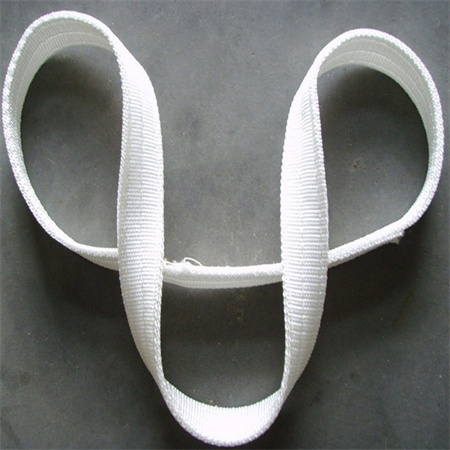
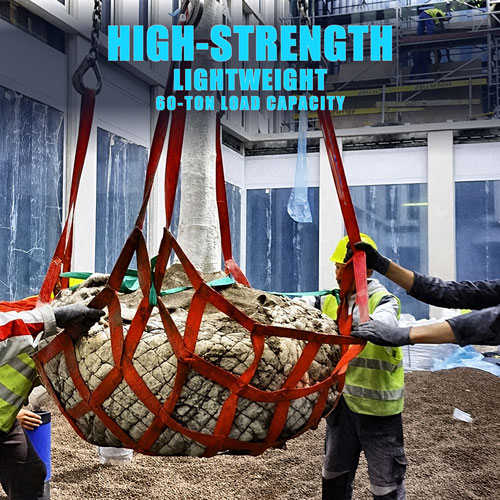
One loop, one seam, two edges. The article is a flat woven belt closed on itself, so its load path passes through the join in the middle of the picture and its edges face whatever it crosses (§1, §3).
Two of those rules deserve a sentence in the context of this article. Dragging is the single most common way a flat belt is consumed early, because a woven band has edges and a workshop floor is an abrasive surface. And standing in line with a leg under tension is the rule that matters most where a closed belt is chosen precisely because it can be rigged in tight geometry — the awkward rig is the one where people end up in the wrong place.
11. Ordering This Belt: What to Put in the Enquiry
The enquiry is a short specification, and every line in it changes either what is supplied or whether the article can be used. State the working load limit and the hitch, since those two together are what the label has to carry (§8). State the fibre — polyamide, polyester or polypropylene — because the fibre decides which environments the article is excluded from, and the standard's own temperature range is per fibre (§7). State the width, which the standard bounds at 25 mm to 450 mm, and the layer count — single, double or multi-layer — because those are the real differences inside this group of listings (§9). State the length and whether it is a working length or the overall circumference of the loop, since a closed belt has no ends and the two are not the same measurement. State the environment: chemistry, temperature and sunlight (§7). And state the documents and marking your site has to hold, so that the traceability code and the test record arrive with the article rather than being chased afterwards.
One line is worth adding that buyers often leave out: where the belt will bend. Because the seam is the only doubled-thickness zone in the article (§3), telling the maker which part of the loop takes the bend lets the join be placed away from it — a small piece of information that changes how long the belt lasts.
| What to state | What it decides |
|---|---|
| Working load limit and hitch | The figure on the label and the colour on the belt; a figure without its hitch is not a rating |
| Fibre, and the fitting material if any | Which chemical exclusions apply, and which temperature range governs (§7) |
| Width, within 25 mm to 450 mm | The range the standard covers, and how the belt sits in the hitch |
| Layer count: single, double or multi-layer | The real distinction among the overlapping listings, and the belt's stiffness in a bend (§9) |
| Length, and whether it is circumference or working length | The geometry of the rig on a loop that has no ends to take up slack |
| Where the belt will bend | Where the seam is placed, and therefore how long the article lasts (§3) |
| Environment and documents | The exclusions that apply, and the marking and test record that must travel with the belt (§7, §8) |
12. Frequently Asked Questions
Q1: Is a circular flat lifting belt the same thing as a round sling?
Q2: Which standard covers it, and what does that standard include?
Q3: How is the loop actually closed?
Q4: Why does the seam matter at the point of use?
Q5: Does having no ends make it stronger or weaker?
Q6: What does the colour tell me?
Q7: What temperatures can it take?
Q8: Which fibre for a chemical environment?
Q9: What retires the belt?
Q10: I have found several similar listings on this site. Which is this one?
Contact
Send the working load limit and the hitch, the fibre, the width, the length of the loop, the environment and where the belt has to bend — and we will confirm the article, the seam position and the marking that travels with it.
Telephone and WeChat — 18066002268
E-mail — 702461526@qq.com
Address — Lifute Industrial Park, Taizhou City, Jiangsu Province, China
- Previous:Flat sling, canvas lifting sling, lifting cloth sling, canvas flat sling
- Next:Circular flat lifting belt, circular flat sling, circular fl
-
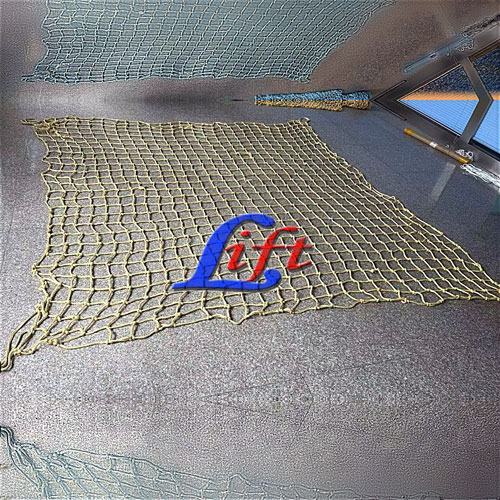
Drone Anti-collision Net
-
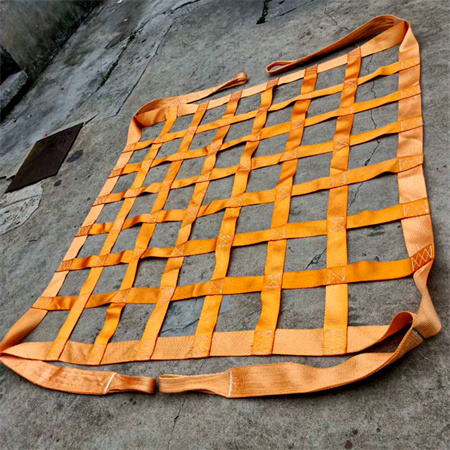
Extra Large Capacity Cargo Net
-
Cargo Webbing Net
-

Color changing nylon double buckle loop nylon braided rope
-

Two end buckle lifting rope, double buckle round lifting rope, double fork nylon lifting rope, non jointed nylon lifting rope
-

Emergency escape lifeline, fire escape rope, fire safety escape emergency rope, steel wire core fire rope

