 Language
 简体中文

- On the 2018 National Day holiday, Lifet completed six 100 ton large tonnage lifting belts as a gift
- The role of suspension net in the transportation of goods turnover
- Cargo soft lifting net, lifting net, lifting net, lifting net, bag, climbing net
- Precautions for using Lifutiden elevator
- How to make circular lifting straps
Contact: Wang Lili
E-mail:18066002268
Phone:702461526@qq.com
Address: Lifute Industrial Park, Taizhou City, Jiangsu Province
Lifute Hoisting Co., Ltd. 18066002268 produces lifting belts, lifting nets, nylon ropes, soft ladders, steel wire rope rigging, paper ropes, safety belts, safety nets, lifting chains, steel coil hoists, crossbeam hoists, flat lifting belts, circular lifting belts, electric traction ropes, high-altitude safety belts, and anti fall safety nets
Hits: ℃
Release time:2026-09-21 11:42
Lift Sling Rigging Co., Ltd. +8618066002268 produce Flat sling, flat lifting strap, canvas flat sling
Flat Sling and Canvas Lifting Sling — What the Fabric Words Mean, and What Actually Governs the Article
1. Four Names, Three of Them Fabric Words
This article is listed under four names — Flat sling, canvas lifting sling, lifting cloth sling and canvas flat sling. Read them together and the pattern is clear: flat describes the form of the article, and canvas and cloth describe the material it appears to be made of. None of the four tells a buyer the two things that decide whether the article will do the job.
That is not a quibble about vocabulary, because the words are not interchangeable in a specification, and each of them carries a different kind of information:
| The word | What kind of description it is | What it does not tell you |
|---|---|---|
| Flat | A shape: the article is a woven band with a rectangular section and two edges, as opposed to a sleeved round form | The fibre, the width, the length, the rating or the hitch |
| Canvas | A fabric: a heavy plain-weave cloth, historically of hemp or flax and today often cotton or a synthetic | Whether it is the load-bearing webbing, a cover over it, or a protective facing on the load side |
| Cloth | The same idea in the plainest word available: a woven material | Anything at all about rated capacity. It is a shopper's word, not a specification word |
| Sling | The function: an article rated for lifting | Which standard it was made to, which is what makes the rating meaningful |
So the four names describe one article from four directions and settle nothing between them. The sentence that does settle something is a short one: a flat sling is a band of man-made webbing with an eye formed at each end by sewing, rated for a stated load in a stated hitch. Everything else on this page elaborates that sentence, and §2 explains why the fibre in it is a standard-level question rather than a shopping preference.
2. What Actually Governs the Article: Fibre, Width, Construction, Rating
The standard for this family is specific about what it covers, and the specificity is the point. It applies to flat woven webbing slings made of polyamide, polyester and polypropylene man-made fibre webbing, in the 25 mm to 450 mm width range, and it rates and tests single-, two-, three-, four-leg and endless sewn slings, with or without fittings. Those are the four facts that define the article: fibre, width, construction and rating.
Two consequences follow for anyone reading an advertisement that says canvas. The first is that cotton canvas is not among the fibres the standard covers — so where an article is described as canvas, the buyer has not yet learned what the load-bearing webbing is, and the question to ask is direct: what is the webbing, and what standard was the sling made to? The second is that the answer may legitimately be that the canvas is a cover or facing over a webbing sling, in which case the webbing is still polyamide, polyester or polypropylene and the canvas is a protective layer working on the load side (§5). Both answers are perfectly good articles. They are just not the same article, and the difference is invisible from the name.
The standard is also explicit about where an article of this family must not be used, and that boundary is part of what a buyer is buying: it is for general purpose lifting, not for the lifting of persons, and not for potentially dangerous materials such as molten metal and acids, glass sheets, fissile materials or nuclear reactors. It also does not apply to bag slings and nets, to adjustable slings with buckles stitched along the webbing, or to slings made from monofilament yarns.
| What governs | The standard's position | Why a buyer should care |
|---|---|---|
| Fibre | Polyamide, polyester and polypropylene | The fibre decides the chemical and temperature exclusions, so it is not a preference but an exclusion list (§8) |
| Width | 25 mm to 450 mm | Width is part of the article being selected, and part of how it sits in a hitch or a fitting |
| Construction | Single, two, three and four-leg, and endless sewn slings; eyes formed by stitching | The construction decides how the article is hitched and where its load path runs (§3) |
| Rating | Working load limits with a typical factor of 7:1, stated per hitch on the label | The rating is the only number that matters, and it belongs on the label rather than in a title (§6) |
| Where it may not be used | Not for lifting persons; not for molten metal and acids, glass sheets, fissile materials or nuclear reactors | These are exclusions of the standard, not cautions: outside them the article is not rated at all |
3. The Anatomy of a Flat Sling: Four Parts, One Load Path
A flat woven sling is the simplest article in this site's textile range, and it is simple because it has almost nothing in it. There is a woven band, there is an eye at each end, there is the stitching that forms each eye, and there is the label. No core and sleeve, no hardware, no moving parts — which is also why the two places that decide its life are exactly the two places a user can see.
The band is the load path and the whole of it. Unlike a roundsling, where the load runs through enclosed parallel yarn, a flat sling's entire load path is the visible webbing between the two eyes. That has a practical consequence that surprises people new to the family: there is nothing hidden to fail. What you can see is the article, and the inspection criteria are therefore about the band and the sewing rather than about anything behind a cover (§7).
Each eye is formed by stitching, and stitching is the only method this family allows for attaching end fittings to webbing and for forming eyes — in an even pattern, with a sufficient number of stitches to develop the full breaking strength of the sling. No clamps, no rivets, no knotted ends. The reason is that a sewn joint spreads load across many threads in shear rather than concentrating it at a few hard points, and it is why the standard treats the construction of the join as a specified matter rather than a manufacturing detail.
Two edges run the whole length of the band, and the standard requires that the webbing be of uniform thickness and width and that its selvage edges not be split from the webbing's width — a frayed or separating edge is a defect in the article rather than cosmetic wear. This is the flat family's own structural feature, the thing the sleeved round form does not have, and it is why edge contact matters as much as load contact on these articles.
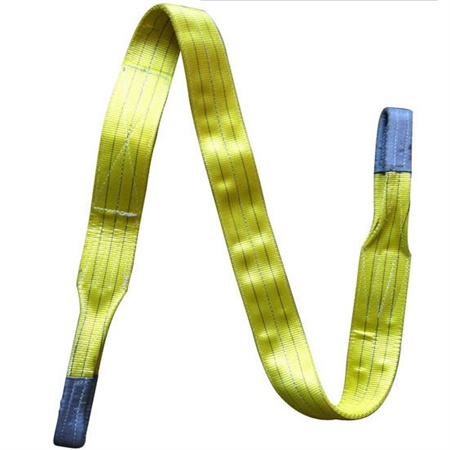
| The part | What it does | What to watch in service |
|---|---|---|
| The woven band | The entire load path, visible end to end; also the surface that meets the load and the hardware | Abrasion, cuts, snags, heat marks; wear concentrates where the lift always grips (§7) |
| The eyes | Receive the hook, shackle or load; the highest contact pressure in the lift | Wear inside the bend, and hardware whose edges the standard requires to be free of anything that could damage the webbing |
| The stitching | Forms each eye and carries the full breaking strength of the sling through a sewn joint | Broken or worn stitching in load-bearing splices is a removal criterion in its own right, not a repair job |
| The two selvage edges | Close the woven band; they are what the band presents to whatever it crosses | An edge splitting from the webbing's width is a defect; protection at the contact point is the remedy |
| The label | States the rated load for each type of hitch and the material — the only field-readable record | Missing or illegible identification puts the sling out of service whatever its condition (§6, §7) |
4. How a Flat Sling Is Made: Weaving, Cutting, Sewing, Test
The order of manufacture explains most of what the finished article looks like, and it is worth setting out because the sequence is also the sequence in which quality can go wrong.
First the webbing is woven, of polyamide, polyester or polypropylene, to a specified width and thickness — the standard's uniformity requirement is a weaving-stage requirement, since a band that varies in width or thickness cannot be rated consistently along its length. Then it is cut to length, and this is the step where the effective working length is fixed: too short and the article will not reach the rig, too long and it will not be the length the lift plan assumed. Then the eyes are formed by stitching, with the even pattern and the number of stitches the standard calls for, in a sewn joint that has to develop the full breaking strength of the sling. Then the completed sling is inspected — the standard requires visual and manual inspection of all completed slings — and the rate, the labelling and the test information are settled before the article leaves.
The reason this sequence matters to a buyer is that three of the four stages are invisible in the finished product. Nothing about a completed flat sling shows whether the webbing was woven to a uniform width, whether it was cut to the length that was ordered, or whether the stitching pattern is the one the standard specifies. All three live in the maker's process and in the documents. That is why a buyer in this family is buying provenance as much as product, and why the label and its traceability code carry as much weight here as the article's appearance (§6).
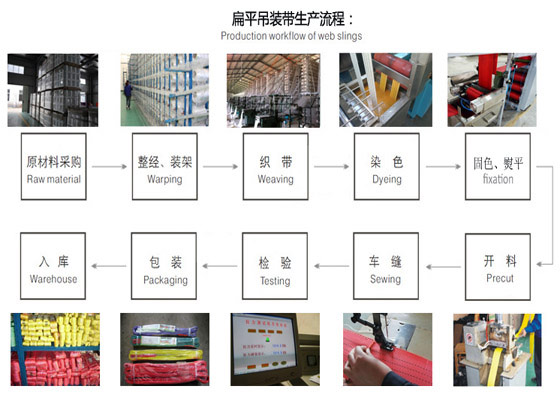
The flat sling production process flow: weaving, cutting to length, forming the eyes by stitching, then inspection and test (§4).
| Stage | What is fixed here | How a buyer can verify it afterwards |
|---|---|---|
| Weaving | Fibre, width, thickness; the uniformity the standard requires along the whole length | From the marking, which records the material, and from the certificate |
| Cutting to length | The effective working length, which the marking must state | By measuring the article against the length on its label |
| Forming the eyes | The stitch pattern and the number of stitches, which must develop the full breaking strength | Only by inspecting the sewing visibly, and by the maker's process record — which is why it is a supplier question |
| Inspection and test | That the completed sling is sound, and the marking and traceability record that go with it | From the certificate and from the traceability code, both of which should travel with the article |
5. What a Canvas or Cloth Surface Buys — and What It Does Not
Here is the part of the canvas question that is genuinely useful, because the answer is not about strength at all. A canvas surface on a lifting article is there to protect the load. Slings are often chosen by what they touch rather than by what they carry: stone with a dressed face, painted or powder-coated fabrications, furniture and finished joinery, glass in a frame, pre-finished panels. On those lifts the risk is not the sling but the surface, and a soft, thick, fabric facing spreads the contact and keeps the article's own weave and edges off the finish.
That is a real benefit, and it is worth being precise about its limits. A canvas or cloth facing does not change the working load limit, does not change the factor, does not change the rated load for a given hitch, and does not change the material's chemical and temperature exclusions. It also does not repair a band that has been cut, and it does not make an article suitable for a lift the standard excludes. Where the facing is a permanent part of the sling, it adds stiffness at the bend, exactly as the seam does in a closed belt.
There is a second use of the same idea that is easy to confuse with the first: a protective cover over the sling, rather than a soft facing against the load. That is the family of wear pads, corner protectors and sleeves, and what each of them does — and what none of them does — is worked through on the wear resistant flat sling page and on the circular lifting straps page. The distinction to hold on to is which side the protection is on: a facing protects the load, a cover protects the sling, and some articles carry both.
| The question | The answer |
|---|---|
| Does a canvas facing increase what the sling will lift? | No. The working load limit is set by the webbing and the rating, and the facing is not part of the load path |
| Does it make the sling more resistant to wear? | Only where it is interposed between the sling and an abrasive surface. Protection aimed at the load is not protection for the sling |
| What is it actually for? | Protecting a finished surface — stone, paint, joinery, panels — from the sling rather than the sling from the load |
| Does it change the inspection criteria? | No. The band, the stitching and the edges are still what is inspected, and the facing itself is a wear item to be replaced |
| Is "canvas" a grade I can ask for? | No. The standard defines no such grade; describe the webbing, the facing and the purpose instead (§2) |
6. Rating and the Label: the Only Two Places Capacity Lives
A flat sling carries its capacity in two places and nowhere else: the colour of the webbing, which is a field check, and the label, which is the record. The colour code gives one colour per capacity step within the flat family, and its limitation is the same one that runs through this whole site: the code stops at the last step and groups everything above it together, so beyond that point the colour identifies a class rather than a figure. The full table, with the capacity each colour denotes, is set out on the 30 ton flexible lifting belt page, which takes capacity bands as its subject.
What belongs on this page is the marking rule, because on a flat sling it carries more weight than the colour. New slings in this family are marked to show the rated load for each type of hitch and the type of synthetic web material, and the wider marking requirements for the family add the manufacturer's identification, the length and a traceability code, with the label colour-coded on the basis of the webbing material. Read the two together and the design intent is clear: the colour tells a rigger at a distance that this is, say, a five tonne article; the label tells them what it will carry in the hitch they are about to use, and what it is made of.
Which is why the single most useful discipline on this article is also the least glamorous: read the label before the lift, and treat an illegible label as a failed inspection. Missing or illegible identification is the first item on the removal list for this family (§7), and on a flat sling, where there is no hardware to record a grade and no core hidden behind a sleeve, the webbing and its label are the entire record of what the article is.
| Where capacity appears | What it states | What it cannot state |
|---|---|---|
| The webbing colour | The capacity step, within the range the code covers | The hitch, the material, the length, or any capacity above the last coded step |
| The rated load for each type of hitch | What the article will carry in each configuration it is rated for | Anything about a configuration the maker did not rate |
| The type of synthetic web material | The fibre, and therefore which chemical and temperature exclusions apply (§8) | Whether a canvas facing or cover is also present, which is a separate question (§5) |
| Length and traceability code | The geometry of the rig, and which batch the article came from | Nothing — these are the items that make every other claim checkable |
| The factor | Commonly 7:1 in this family, and worth having stated in writing | Nothing on its own — but a figure without a stated factor is a figure without a margin |
7. Inspection: Two Places Decide the Article
The regime is the family's: a visual check before every use, with a documented periodic inspection at least annually, and the standard itself requires visual and manual inspection of completed slings before they leave. On a flat sling the check is unusually direct, because — as §3 explains — there is nothing hidden. What you look at is the load path.
The published criteria to look for are missing or illegible sling identification, acid or caustic burns, melting or charring of any part of the sling, holes, tears, cuts or snags, broken or worn stitching in load-bearing splices, excessive abrasive wear, knots in any part of the sling, discolouration and brittle or stiff areas, and damaged fittings where the article carries any. Where any such damage is present the sling is removed from service immediately.
Two of those items are specific to this construction and deserve to be looked for deliberately. Broken or worn stitching is a criterion rather than a repairable defect: the eyes exist only because they are sewn, so the sewn joint carries the whole load and may not be repaired by a user — repairs in this family are the manufacturer's or a qualified person's work. And a knot anywhere in the body puts the article out of service, which matters on flat slings because they are the family most likely to be knotted by someone improvising a shorter leg. Finally, the two edges: the standard requires that the selvage edges not be split from the webbing's width, so an edge that has begun to separate is a finding rather than a fray.
The whole article is visible, and that is the whole point of inspecting it: there is no cover to lift and no core to imagine, so the question is never what is hidden but whether the band, the two stitched eyes and the two edges have been looked at properly (§3).
| Criterion | Where it shows on a flat sling | Action |
|---|---|---|
| Missing or illegible identification | The label is gone or unreadable, so capacity cannot be established | Remove from service; the colour is not a substitute for the label (§6) |
| Broken or worn stitching in load-bearing splices | Disturbed thread at either eye, where the load is transferred into the webbing | Remove from service; the sewn joint is not user-repairable |
| Holes, tears, cuts or snags | Any break in the band, most likely where it crosses an edge or a fitting | Remove from service, and re-check the contact point on the replacement (§5) |
| Excessive abrasive wear | Thinning or fuzzing, usually in one place the lift always uses | Remove from service; vary the contact if the geometry allows |
| A split selvage edge; knots; melting or charring; chemical burns | Edge separating from the width; a knot in the body; glazed, blackened or stiffened areas | Remove from service; for the last two, look at the environment, because the cause is still on site (§8) |
8. Fibre, Temperature and Chemicals: Why the Material Is on the Label
The reason this page has argued that the fibre is the first question to ask about a canvas sling is this section. In this family the material is not a preference; it is an exclusion list, and the exclusions are written per fibre and per chemistry.
On temperature, the standard gives a range per fibre for use and storage: minus 40 °C to 100 °C for polyester and polyamide, and minus 40 °C to 80 °C for polypropylene. Where the same article is used under United States practice, the figures differ and are stated the other way round — synthetic web slings of polyester and nylon are not to be used above 180 °F, and polypropylene ones not above 200 °F, with the occupational guidance for this family stating 194 °F (90 °C) for nylon and polyester and a lower bound of minus 40 °F. As on the other pages of this family, the two regimes do not agree and even rank polypropylene oppositely, so where both apply, work to the lower of the figures that apply.
On chemicals, the rules are exclusions rather than scales: nylon web slings may not be used where fumes, vapours, sprays, mists or liquids of acids or phenolics are present, and polyester and polypropylene web slings may not be used where caustics are present. Web slings with aluminium fittings are excluded from caustic service too, which matters on this site's assemblies even where the sling itself carries no metal. The practical consequence is one this page keeps returning to: the question "what material for a chemical plant?" has no general answer, only an answer for a named chemistry. Storage belongs with the same rules — slings are to be stored where they will not be subjected to mechanical, chemical or ultra-violet damage, or to extreme temperatures.
| Exposure | The standard's figure | The United States figure |
|---|---|---|
| Polyester and polyamide or nylon | −40 °C to 100 °C, for use and storage | Not above 180 °F; the guidance states 194 °F (90 °C); not below −40 °F |
| Polypropylene | −40 °C to 80 °C — the lower ceiling of the two fibres | Not above 200 °F — the higher ceiling of the two fibres |
| Where both apply | Work to the lower of the applicable figures, and have the figure written into the order | |
| Acids and phenolics | Nylon web slings are excluded where fumes, vapours, sprays, mists or liquids are present | |
| Caustics | Polyester and polypropylene web slings are excluded, and so are web slings with aluminium fittings | |
9. An Honest Note: Several Listings on This Site Carry the Name "Flat Sling"
A buyer searching this site for a flat sling will meet more than one page, and it is better to say so than to pretend otherwise. Alongside this article, the category carries listings titled Flat sling Price Flat sling Picture, Flat sling prices, Taizhou flat sling production factory, flat sling phone number, Flat sling with eyelets, and others in which the words appear inside longer names — together with the separate articles that are flat slings in construction but different products in purpose: the wear resistant flat sling, the circular flat belt, the flat sling assembly, and the various tonnage-specific flat woven slings.
Some of those are legitimately different articles and should stay separate. A sling with eyelets is a different article from a sling with sewn eyes; a coated sling differs from a plain one; an assembly is a system rather than a sling. Others read as the same article described again in different words, and where that is the case the right remedy is the one stated on the other pages of this series: one page per article, with the duplicates pointing at it, because near-identical pages competing for the same words divide their own ranking rather than adding to it.
The practical advice for a buyer is the same either way, and it is the thread running through this whole page: buy on the specification rather than on the listing. State the fibre, the width, the length, the working load limit and the hitch, say whether the canvas is the load-bearing webbing or a facing over it (§5), and let the answer be one article with one stated rating.
| Article | What genuinely separates it |
|---|---|
| This article: the flat sling | The base article of the family — woven band, two eyes formed by stitching, rated per hitch |
| A flat sling with eyelets | Metal eyelets in the ends rather than sewn eyes — a different end treatment, covered on its own listing |
| A wear resistant or coated flat sling | Durability pursued in the webbing itself; what that buys and does not buy is on the wear resistant flat sling page |
| A circular flat belt | The same woven band closed into a loop, so the load path runs through a seam; covered on the circular flat lifting belt page |
| A flat sling assembly | Several legs and a master link rated as one unit; covered on the web sling bridle assembly page |
| An endless woven sling by capacity band | The endless form with a stated tonnage; covered on the endless webbing sling pages |
10. Using a Flat Sling: the Rules That Apply to Every Lift
Some rules apply to this article not because it is flat but because it is a sling, and they are collected here for the reader who is looking only at this page. Do not use the sling with loads in excess of its rated load capacities. Do not knot or twist a sling to shorten or lengthen it — a knot in the body is a removal criterion in this family, and a flat sling is the article most likely to meet someone improvising a length. Avoid twisting and kinking, do not let the sling be constricted, bunched or pinched by the load, hook or fitting, and do not allow shock loading, since taking up slack suddenly multiplies the load well beyond its static value.
Handling matters as much as loading on a woven band. Do not drag a sling across the floor or over abrasive surfaces, do not rest loads on it, and do not pull it from under a load that is resting on it. Keep personnel clear of the areas between the sling and the load and between the sling and the hook; never let anyone stand in line with or next to the legs of a sling under tension; and never let anyone stand or pass under a suspended load. Where the article has been repaired, it may be used only if the repair was carried out by the manufacturer or a qualified person and the article is marked to show who did it.
One last point belongs with these rules because it is the one this article's own name raises. Because a flat sling can be described as canvas, cloth or flat — and because those words describe a fabric rather than a rating — the safe discipline is to read the label rather than the listing. The label states what the article will carry and in which hitch; the name on the page states only what it looks like.
11. Ordering: What to Put in the Enquiry
The enquiry is a short specification, and every line of it changes either what is supplied or whether the article can be used.
| What to state | What it decides |
|---|---|
| The fibre — polyamide, polyester or polypropylene | Which chemical and temperature exclusions apply; the material is the first line of the specification (§8) |
| Width, within 25 mm to 450 mm | Where the article sits in the standard's range, and how it sits in a hitch or fitting |
| Length, and whether it is overall or effective working length | The geometry of the rig, and the length the marking has to state (§4) |
| Working load limit and the hitch it applies to | The figure that goes on the label; a figure without its hitch is not a rating (§6) |
| Whether the "canvas" is the webbing or a facing over it | Whether the canvas is part of the load path or protection for the load — two different articles (§2, §5) |
| The environment: chemistry, temperature, sunlight | Whether either fibre is excluded outright, and which temperature figure governs (§8) |
| Documents and marking your site must hold | The rated load per hitch, the material, the length and the traceability code, plus the test record |
12. Frequently Asked Questions
Q1: Is a canvas lifting sling just a flat sling under another name?
Q2: Is canvas one of the fibres the standard covers?
Q3: What are the eyes made of, and how are they formed?
Q4: How is a flat sling actually made?
Q5: Does the canvas facing make the sling stronger?
Q6: Where do I find the capacity?
Q7: What retires a flat sling?
Q8: What temperature and chemicals can it take?
Q9: Can I shorten one by knotting it?
Q10: There are several listings called flat sling. Which is this one?
Contact
Send the fibre, the width, the length, the working load limit and the hitch, and say whether the canvas is the webbing or a facing over it — and we will confirm the article and the marking that travels with it.
Telephone and WeChat — 18066002268
E-mail — 702461526@qq.com
Address — Lifute Industrial Park, Taizhou City, Jiangsu Province, China
- Previous:Circular eye shaped lifting belt, circular eye shaped lifting belt with buckles at both ends, cylindrical sling
- Next:Two end buckle flat lifting strap, thickened two end buckle
-
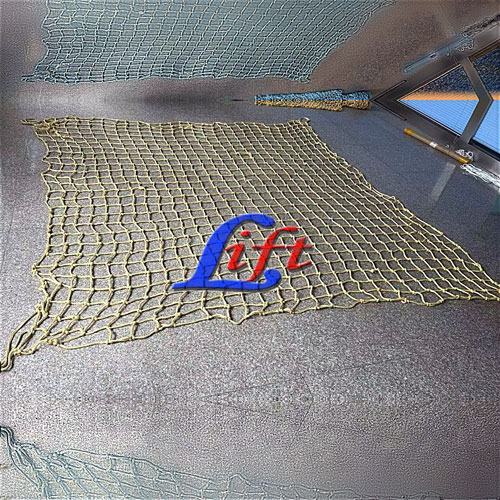
Drone Anti-collision Net
-
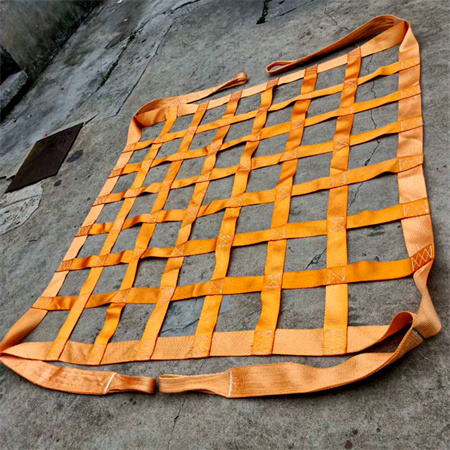
Extra Large Capacity Cargo Net
-
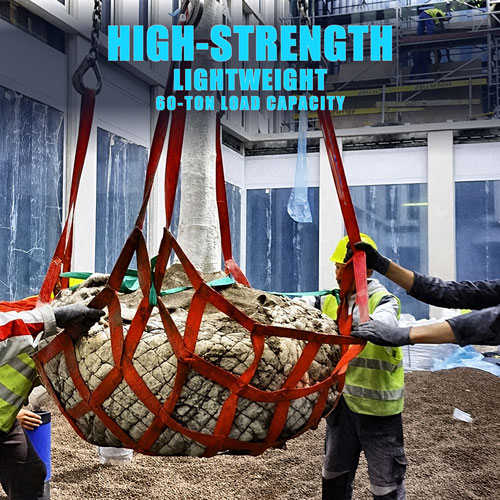
Cargo Webbing Net
-

Color changing nylon double buckle loop nylon braided rope
-

Two end buckle lifting rope, double buckle round lifting rope, double fork nylon lifting rope, non jointed nylon lifting rope
-

Emergency escape lifeline, fire escape rope, fire safety escape emergency rope, steel wire core fire rope

