 Language
 简体中文
简体中文
- On the 2018 National Day holiday, Lifet completed six 100 ton large tonnage lifting belts as a gift
- The role of suspension net in the transportation of goods turnover
- Cargo soft lifting net, lifting net, lifting net, lifting net, bag, climbing net
- Precautions for using Lifutiden elevator
- How to make circular lifting straps
Contact: Wang Lili
E-mail:18066002268
Phone:702461526@qq.com
Address: Lifute Industrial Park, Taizhou City, Jiangsu Province
Lifute Hoisting Co., Ltd. 18066002268 produces lifting belts, lifting nets, nylon ropes, soft ladders, steel wire rope rigging, paper ropes, safety belts, safety nets, lifting chains, steel coil hoists, crossbeam hoists, flat lifting belts, circular lifting belts, electric traction ropes, high-altitude safety belts, and anti fall safety nets These four phrases are the four ways a buyer looks for this kind of product, and they are neither four products nor even four kinds of product. Lifting straps names the webbing itself; lifting slings names the finished article; nylon lifting slings adds a fibre; and flat lifting slings adds a cross-section.
Hits: ℃
Release time:2026-09-27 15:31
Lifting straps, lifting slings, nylon lifting slings, flat lifting slings
Lifting Straps, Lifting Slings, Nylon Lifting Slings and Flat Lifting Slings — One Catalogue, Four Dimensions
The four phrases in this page's name are the four ways a buyer looks for this kind of product, and they are neither four products nor even four kinds of product. Lifting straps names the webbing itself. Lifting slings names the finished article. Nylon lifting slings adds a fibre to it. Flat lifting slings adds a cross-section. A catalogue sea rched by any one of those words returns a slice of itself, and a buyer who does not know that will decide the slice before they know what decides their lift.
So this page is the site's entry point. It is the only page here that takes the whole catalogue and sorts it by the four dimensions that actually decide an article: the fibre, the form, the ends, and the duty. Every count on it was taken from the live site rather than from a plan. At the time of writing the catalogue holds 100 product pages, of which 77 carry full write-ups and the rest are still thin pages being filled in one at a time — this page being one of them.
And the map exists to deliver one piece of advice. Choose in the order duty, then form, then fibre — not the other way round. The two words buyers reach for first, nylon and flat, are the two that decide the least on their own: a nylon sling still has to be flat or round, with ends or without, and rated for a hitch. Starting from the fibre is how a buyer ends up with the right material in the wrong article.
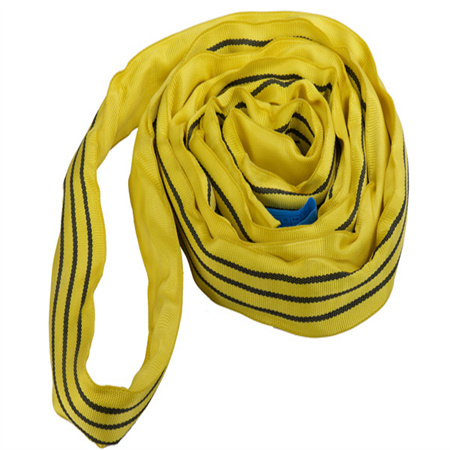
This page's own photograph, and a fair picture of the catalogue this page maps. One article, coiled into a roll: a woven band wi th the centre stripes running along it and a small blue patch caught inside the coil. Four separate facts about it are visible, and they belong to four different dimensions. The stripes are the form o f the weave. The patch is the identification. The colour is the capacity code for this family. And the material itself — whether this is nylon, polyester or polypropylene — cannot be told from the pho tograph at all. That is the argument of the sections that follow: a word like nylon, flat or strap fixes one dimension and leaves the other three open.
1. Four Words, Four Different Questions
The first thing a map has to do is put things at the same level or say plainly that they are not. These four words are not at the same level, and the table below sets out what each one actually nam es and, more usefully, what it leaves unanswered.
| The word | What it actually names | What it does not tell you |
|---|---|---|
| Lifting straps | The webbing itself: the woven band, considered as a material with a width, a thickness and a weave. In this trade strap, belt and band are used interchangeably for the fabric, and the same word is also used loosely for a finished article. | Nothing about how it is finished at the ends, how it is rated, or what fibre it is made from. A strap is a material, not a spe cification. |
| Lifting slings | The finished article: webbing with ends formed or joined, marked with what it will carry, and rated for the hitches it can mak e. This is the level at which a lift is actually planned. | Nothing about fibre or form. It is the widest word of the four and the most useful to a buyer who has not yet decided anything . |
| Nylon lifting slings | A fibre. Of the three commodity fibres this group works with, nylon stretches furthest before it breaks, which is why it is ch osen for shock and for loads that have to give a little. | Nothing about form, ends or rating, and one important negative: naming the fibre says nothing at all about the article's shape . A nylon sling is still flat or round, endless or eye-ended. |
| Flat lifting slings | A cross-section. The band is woven flat and wide, which spreads the load over a face rather than concentrating it on a line, a nd which is what makes it the family that protects finished surfaces. | Nothing about fibre. A flat sling is made in every fibre in the catalogue, and the flatness looks the same in all of them. |
The consequence is practical rather than academic. A buyer who searches on one of these words gets a slice of the catalogue, and the slice is decided by whichever dimension they happened to type. W orse, the two head words are genuinely used interchangeably in this trade: on this site the phrase lifting sling appears in the title or keyword field of 44 product pages and lifting strap in 17, whil e the more specific webbing sling appears in 40 and flat in 32. Nobody enforces the distinction, which is exactly why a buyer has to.
One more thing belongs at this point, because it is the reason this page can be useful at all. Each of the four words, on its own, is unfalsifiable: there is no such thing as a wrong answer to the question what is a flat sling. There is only a right article for a lift. The four dimensions below are what turn the words into a choice.
2. The Shape of This Catalogue, Counted
Before the four maps, the catalogue as a whole. Each figure below is the number of product pages on this site whose title or keyword field carries that word, taken from a survey of all 100 product pages. They are published here because a buyer comparing suppliers is usually shown a brochure rather than a count.
| Dimension | What the catalogue holds | So what |
|---|---|---|
| Fibre | Polyester on 17 pages, nylon on 9, polypropylene on 7, aramid and Kevlar on 4 and 3, UHMWPE and Dyneema on 2 each, and the DuP ont-named route on 3. | Six fibres are in production. The three commodity ones cover most lifting; the other three exist for heat, cut resistance and the very high strength-to-weight work. |
| Form | Webbing on 40 pages, flat on 32, round on 22, circular on 19, endless on 18, eye on 16 and sleeved on 9. | The form is the busiest dimension in the catalogue and the one buyers most often leave to the supplier. |
| Ends and fittings | Ring on 12 pages, buckle on 9, double buckle on 6, eye and eye on 4, hook on 3, ratchet on 2, sewn on 2, double ear on 1 and a nchor on 1. | Nine end types are named in the catalogue. None of them is a shackle-ended article, which is worth knowing before an enquiry a ssumes one. |
| Duty | Steel pipe and cargo on 6 pages each, export and alkali on 5, acid on 4, and pre-slung, crane and container on 1 each. | Ten duties are written up. The list is shorter than the form list, which is a fair picture of any catalogue: most articles are sold for the general case. |
| One-trip work | Disposable on 11 pages, one way on 3, single use on 2 and one trip on 2. | Four words, and they are not synonyms on this site. Section 8 deals with the difference, because buying on the wrong one chang es the article. |
Two observations from the counts are worth stating plainly, because they are the kind of thing a brochure hides. The first is that the form dimension is written up four times more heavily t han the duty dimension, which reflects what buyers search for rather than what lifts actually need. The second is that the catalogue has 22 pages that are still thin, listed in the delivery note accompanying this text, and a buyer who lands on one of them should not read the thinness as an absence of product.
3. The Fibre Map
The fibre decides four things and no others: how much load a given width will carry, how far the article stretches under that load, what temperature it will tolerate, and what chemistry it will sur vive. It decides nothing about shape. The table below says which pages carry each fibre, what the fibre is actually chosen for, and where the full argument is.
| Fibre | Pages | Chosen for | Read it here |
|---|---|---|---|
| Polyester | 17 | The general-purpose choice: low stretch for its strength, good value, and the fibre most of the standard ladder is published in. | The fibre comparison on the flat sling page, and the round sling family. |
| Nylon | 9 | Shock and give: it stretches further than polyester before it breaks, so it absorbs energy rather than passing it on. It is the wrong choice wher e acids or phenolics are present. | Nylon woven flat sling, and the disposal circular sling page for the side-by-side comparison with polyester. |
| Polypropylene | 7 | Lightness and chemicals: it floats, it is the lightest of the three, it resists acids well, and it has the lowest temperature ceiling of the thre e. | Polypropylene flat lifting strap and polypropylene flat sling.< /td> |
| Aramid | 4 | Heat and cut, with very little stretch. Also the fibre where substituting it changes the lift itself rather than simply improving it. | Aramid round sling, high temperature ar amid webbing sling and flame resistant aramid webbing belt. |
| UHMWPE and Dyneema | 2 and 2 | Strength per kilogram: the highest of anything in the catalogue, with almost no stretch. Chosen where the weight of the sling is itself a problem . | Lightweight UHMWPE webbing sling and the UHMWPE round sling. |
Two cautions belong with this map, and both of them are about the difference between a fibre name and a specification. The first is that the fibre does not decide the width: at any given capacity t he band has to be wider in the weaker fibre, so naming a fibre without naming a capacity says nothing about the article's size. The second is that the four properties move together rather than separat ely. The fibre that stretches furthest is chosen precisely for stretching, and the buyer who wants no stretch at all is choosing against that property rather than choosing the same fibre at a higher r ating.
4. The Form Map
The form decides where the load enters the article and, just as importantly, where anybody can inspect it afterwards. On this site the form dimension is the busiest of the four, and it is the one b uyers most often leave open.
| Form | Pages | Where the load enters, and what can be checked | Read it here |
|---|---|---|---|
| Flat woven, with ends | 32 | At the ends, through formed loops or fittings. The construction sits on the outside, so the ends are the inspection surface. | Eye and eye sling, and the eye type lifting belt. |
| Endless or round | 18 and 22 | By passing the band around the article and back through itself. There are no ends, so there is no obvious place for an inspection to begin. | Endless round sling and endless sling. |
| Sleeved | 9 | As above, but the load-bearing core is inside a cover, which changes what the outside of the article can tell you. | Heavy duty round sling and the round sling family. |
| Circular | 19 | The closed belt, in the woven or sewn construction. Chosen where the article has to lie against a curved face. | Circular flat lifting belt, circular flexible lifting belt and circular lifting straps. |
| Multi-layer | 1 to 2 each | Single ply, duplex and double ply construction: the same width, built up in layers. The least-visited corner of the catalogue and often the answe r to a tight width. | 8 ton endless webbing sling, for the single and double ply discussion. |
The reason form matters more than buyers expect is the second column: it decides what is inspectable. An article with ends puts its construction where a person standing at the load can reach it, an d an article without ends puts it nowhere in particular. Neither is better; they are suited to different lifts. But a buyer who chooses on capacity alone has silently chosen the inspection question as well, and that is the kind of decision better taken deliberately.
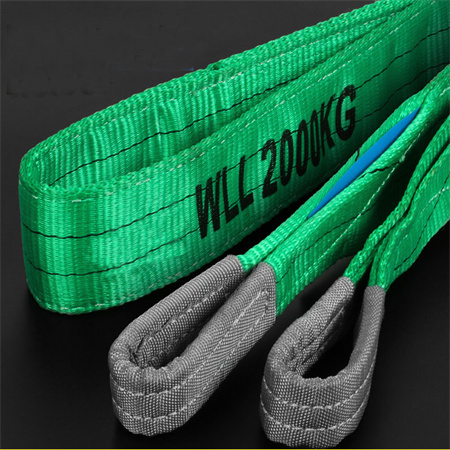
One article doing three of the four jobs at once, and the picture most of this page's argument can be read off. The green is the capacity code for this family. The figure printed on the band is the rating, and it is legible without a catalogue. The band is flat and wide, which is the form. What the photograph cannot tell you i s the fourth dimension, the fibre: polyester, nylon and polypropylene all look like this when they are dyed and woven. That is why the four maps are separate maps rather than one list, and why a buyer who names only one of the four has named a quarter of an article.
5. The End and Fitting Map
The ends are where the load enters a flat article, and where a ratchet or a buckle becomes a working part rather than a detail. Nine end types are named in this catalogue, and each of them has been argued out on a page of its own. This section lists them and points; the arguments are not repeated here.
| End or fitting | Pages | The question it raises | Read it here |
|---|---|---|---|
| Ring | 12 | Is the ring woven into the band, sewn on, or a separate fitting? On a closed article the ring is often the band itself turned back rather than ha rdware added. | Ring buckle circular lifting belt, and the disposal circular sling. |
| Buckle and double buckle | 9 and 6 | Whether the word means a metal fitting or a folded and stitched end. In this trade it usually means the fold, and that single misreading is the m ost common one in the whole family. | Double buckle flat wear-resistant sling and the white flat sling for crane duty. |
| Eye and eye | 4 | A formed loop at each end, so the load enters at two defined places instead of all along a ring. | Eye and eye sling and eye and eye type webbing sling. |
| Double ear | 1 | Two reinforced ears at one end rather than one loop each end. The narrowest speciality in the catalogue. | Acid-alkali flat double-ear lifting belt. |
| Anchor ring | 1 | A ring intended to be anchored rather than hooked: a fixing point for a strap rather than a means of hanging one. | Anchor ring and flat lifting strap. |
| Hook | 3 | Whether the hook is part of the sling or part of the lifting machine, which decides who owns its inspection. | The white flat sling for crane duty, which deals with hooks and their removal criteria. |
| Ratchet | 2 | Tension. A ratchet makes the article a lashing rather than a lifting sling, and the two have different rules. | Ratchet cargo lashing belt and ratchet tie down strap< /a>. |
| Sewn end | 2 | The end formed by the band folded back and stitched: no metal anywhere on the load path, and no fitting that can be distorted. | Circular flat lifting belt and the double ring disposable lifting strap. |
The list is also an honest answer to a question buyers ask by implication: there is no shackle-ended article in this catalogue. A shackle is a lifting accessory in its own right, w ith its own rating and its own inspection, and on this site it appears only as something a sling's end goes over. If a job is specified with a shackle on the sling itself, that is an assembly to be di scussed rather than a page to be found.
6. The Duty Map
Duty is the dimension a buyer usually starts from without naming it: what the article will meet. Heat, acid, a finished surface, a load that has to be protected, salt water, a single trip. This cat alogue writes up ten duties, and they are the shortest list of the four — which is worth noticing, because it means most articles here are sold for the general case and the special cases are the ones a buyer has to ask about.
| Duty | Pages | What it asks of an article | Read it here |
|---|---|---|---|
| Steel pipe and tube | 6 | A round load, so the contact is a line unless the band is wide; and an end that may be bevelled or coated. | One way slings for steel pipe and tube and the export steel pipe page. |
| Export and packing | 5 | An article that travels with the goods, is inspected once, and is often abandoned at the far end. | One way lifting sling for export steel. |
| Acid and alkali | 4 and 5 | A chemical attack on the fibre rather than a mechanical one, and a choice of fibre that has to be made against the wrong default. | Alkali resistant sling and the acid-alkali flat double-ear belt. |
| Cargo and containers | 6 and 1 | Restraint rather than lifting: the article holds a load that is already carried by something else. | The cable sling page and the ratchet lashing pages. |
| Pre-slung cargo | 1 | The article fitted at the packing station rather than at the load, which moves the decision about the ends to a different place. | Disposable pre-slung cargo sling. |
Three duties that are absent from the list are worth naming, because their absence is information. There is no page for shipyard work, none for wind-turbine components and none for foundry or molte n-metal duty: none of those appears in any title or keyword field in the catalogue. A buyer in one of those trades is not looking at a short page; they are looking at a catalogue that has not written that duty up, and the useful thing to do is to say so in the enquiry rather than to choose the nearest general article.
7. The Capacity Ladder, One Tonne to Four Hundred
Capacity is the filter buyers apply first and the one that decides the least, because a tonne is not a shape. It is still worth publishing, because the ladder in a catalogue is a fact about what ca n be made and where the gaps in a standard range fall.
| Band | Where it is covered | What changes at this level |
|---|---|---|
| 1 t to 5 t | The 1 tonne round webbing sling and the 2, 3, 4 and 5 ton endless webbing pages. | The narrowest bands, the lightest articles, and the only part of the ladder where a one-person carry is normal at full length. |
| 6 t to 10 t | 8 ton endless webbing sling and the acid-alkali double-ear belt at 10 t. | Widths from about 75 mm upwards, and the first level at which the band stops being something you can fold into a pocket. |
| 30 t | 30 ton flexible lifting belt. | A single large step, and the point where the article is usually specified with its form rather than by its capacity. |
| 100 t to 150 t | 100 T heavy duty round slings with eyes and the 150 T polyester round sling. | Sleeved construction, and eye-ended versions of the round form so that a very heavy lift can still be hung on a hook. |
| 200 t to 400 t | 200 tonne round sling, the 300 ton lifting belt and the 400 T endless polyester round sling. | Weight becomes the design problem rather than the load: at this level the article itself needs planning to move. |
The ladder as the catalogue publishes it runs 1, 2, 3, 4, 5, 8, 10, 30, 100, 150, 200, 300 and 400 tonnes. Two gaps sit in that sequence, and both are wide: nothing between 10 and 30 tonnes , and nothing between 30 and 100. A requirement inside either gap is met by taking the next capacity up, and the useful thing to know is that going up a step changes the width and the weight of the article at the same time as its rating — which is the same arithmetic that runs through every ordered range on this site.
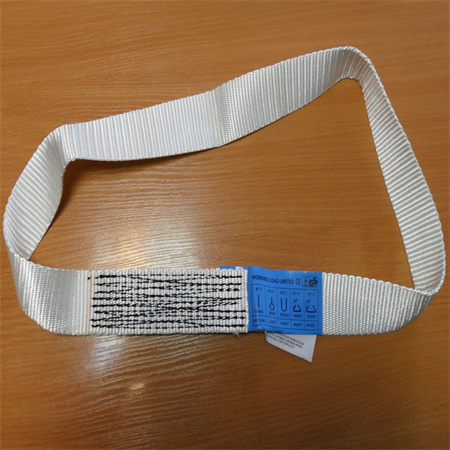
Identification, which is the one dimension the photograph can carry and the catalogue cannot avoid. The band is white because th e fibre was left un-dyed; the label is sewn into the face of the weave rather than threaded onto it, so it cannot be moved to another article. Everything else a buyer needs — the capacity, the factor, the length and how that length was measured — is on the label or in the delivery paperwork, and none of it can be inferred from the picture. It is the same point the coiled article at the top of this page made in a different way, and it is why the four dimensions on this page are four different questions rather than one detailed one.
8. The Disposable Family, and Four Words That Are Not Synonyms
Eleven pages in the catalogue carry the word disposable, three carry one way, two carry single use and two carry one trip. They are not the same thing, and on this site the difference is drawn deli berately.
The word disposable describes the trip rather than the article: it says the buyer has decided not to bring the article back, and it says nothing about the fibre, the form or the rating.
Two consequences follow for a buyer searching on one of the four. The first is that the four words return four different sets of pages, so a search on the wrong one looks like a smaller catalogue t han it is. The second is that a single-trip article is still a rated article: the trip changes how often it is inspected, not what it has to be. The pages above set that out at length, and the two pag es that carry it furthest into practice are the single use endless webbing sling page, on storing, issuing and counti ng a consumable, and the double ring disposable page, on what the two ends of such an article have to be.
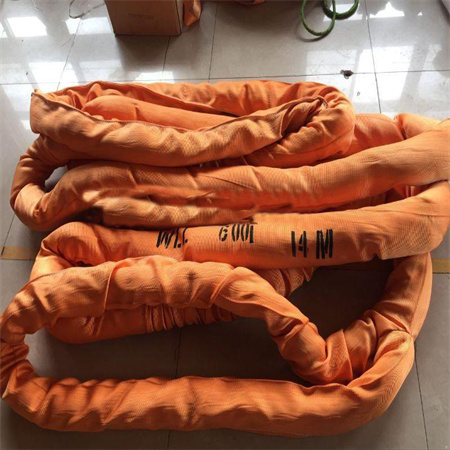
The sleeved construction at the top of the capacity ladder, and the clearest example on this site of what the form dimension cha nges. The load-bearing core is inside the cover, so the outside of the article is a cover rather than the working part, and the two figures a person at the load actually needs are printed on it: the r ating and the length. Nothing about the weave, the fibre or the number of plies can be read from the photograph, which is the point. A buyer who chooses this article has chosen a form; the other three dimensions are still on the order form.
9. How to Use This Page: Three Steps, in This Order
The four maps are only worth having if they are read in a useful order. They are, and it is the order a lift is actually planned in rather than the order buyers usually shop in.
| Step | The question | Why it comes first |
|---|---|---|
| 1. Duty | What will the article meet? A finished surface, a chemical, heat, salt, a load that has to be protected from the band, or a si ngle journey. | Because duty is the only dimension that can rule an article out completely. A fibre that fails in acid cannot be rescued by a better shape or a wider band. |
| 2. Form | Where does the load enter, and where will anybody inspect it? Ends, a closed ring, a sleeved ring, a flat band, a multi-layer band. | Because the form decides whether the article can be used at all on the load in front of you, and it decides the inspection sur face as a side effect. |
| 3. Fibre, factor and length | Which of the surviving fibres, at which margin, in which length and how measured. | Because these three are refinements of an article that already works. They decide the width, the weight and the price, not whe ther the lift is possible. |
| Capacity, checked last | The tonne figure, against the article the first three steps produced. | Because capacity is a filter, not a design. Applied first it silently chooses the form and the fibre for you, and those are th e two choices that are hardest to see afterwards. |
The reason for warning against the reverse order is not pedantry. It is that the two words buyers reach for first, nylon and flat, are the two that decide the least on their own. A buyer who begins with the fibre has fixed nothing about the shape, and a buyer who begins with flatness has fixed nothing about the material. Both words feel decisive because they are specific, and s pecific is not the same as decisive. The four dimensions are all equally specific; only one of them can eliminate an article.
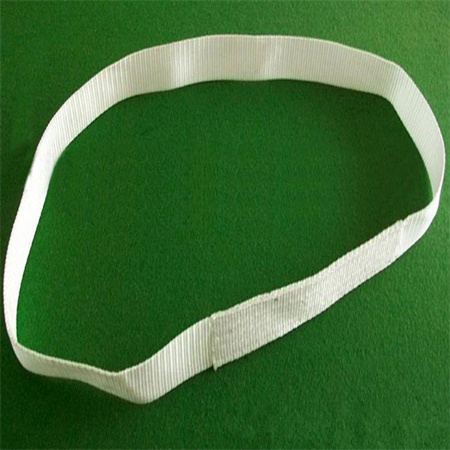
The form decision in one photograph. This band has been closed into a ring, so the load will enter by the band being passed arou nd the article and back through itself. There is no end to hook and no eye to place, which rules out some lifts and makes others possible, and it changes what an inspection can look at. The same weave , in the same fibre, would be a different article entirely if its two ends had been formed into eyes instead. That is the whole of step two: the form decides the lift before the capacity gets a say.
10. What This Catalogue Does Not Offer
A map that only shows what exists is half a map. Five things are absent from this catalogue as it stands, and they are listed here so that a buyer can tell the difference between a page they have n ot found and an article that is not made.
| Absent | Evidence | What to do instead |
|---|---|---|
| Cotton or natural-fibre slings | No page carries cotton in its title or keywords. Every fibre in production here is man-made. | Say what the natural fibre was for. In almost every case one of the six man-made fibres is specified instead, and the reason it was wanted is usu ally stretch or feel rather than strength. |
| Basalt and mineral fibres | No page names one. The heat-resistant range here is aramid. | State the temperature and the exposure, and let the aramid pages answer it. Basalt is a different supply chain and not a substitution this catalo gue can make silently. |
| Shackle-ended slings | No page carries shackle in its title or keywords. Fittings named here are rings, buckles, hooks and ratchets. | Treat it as an assembly. A shackle has its own rating and its own inspection, and combining one with a sling is a specification decision rather t han a catalogue line. |
| Shipyard, wind and foundry duty pages | None of the three appears in any title or keyword field in the catalogue. | Send the duty rather than the nearest product name. The article is very likely makeable; it is the write-up that does not exist yet. |
| Full write-ups for every page | 22 of the 100 product pages are still thin, this one included until recently. | Read the thin page as a stub, not as a range that is not made. The product exists; only the writing does not. |
The fifth line is the one worth taking seriously as a buyer. A thin page is a page nobody has finished writing, and it is indistinguishable from a page nobody cares about until you ask. The rule th is catalogue would like to be judged by is that a missing page means a missing write-up rather than a missing product — and if it turns out to be the other way, the answer comes back on the enquiry ra ther than after the order.
11. Where Each Question Goes
This page is the index. Everything below is a single entry, and each entry is a page that answers its question in full rather than a sentence that summarises it.
| If your question is about | Go to | Dimension |
|---|---|---|
| The fibre itself, and which to choose | Polypropylene flat sling, nylon woven flat sling | Fibre |
| A flat band with ends, in the general case | Eye and eye sling, flat sling and canvas lifting sling | Form |
| A closed ring, and what having no ends means | Endless round sling, circular flat lifting belt | Form |
| A very heavy lift, 100 tonnes and above | 100 T heavy duty round slings with eyes, 400 T endless polyester round sling | Capacity |
| Heat, and what a temperature figure really asks | High temperature resistant ring eye type belt, the fireproof range | Duty |
| Acid, alkali and chemical attack | Alkali resistant sling, acid-alkali double-ear belt | Duty |
| Round loads, pipe and tube | Slings for steel pipe and tube, export steel pipe sling | Duty |
| Restraint rather than lifting | Ratchet cargo lashing belt, cable sling | Duty |
| One trip, and buying a consumable | Disposable sling, single use lifting sling | One-trip |
| The factor, the marking and the tolerances | One way sling | All four |
| Reading a parameter table column by column | Circular lifting belt, circular disposable sling | All four |

The general case, which is most of the catalogue: white woven bands with a formed loop at each end, lying together in a heap. No thing about this heap is unusual or special, and that is what makes it the right picture to end the map on. The four dimensions of this page exist for the lifts that are not in a heap like this. When a buyer cannot say which dimension their job turns on, the answer is usually that the job is ordinary, and an ordinary article chosen deliberately is still better than an ordinary article chosen by de fault.
12. Frequently Asked Questions
Q1: Are lifting straps and lifting slings the same thing?
Q2: Is a nylon lifting sling better than a polyester one?
Q3: What does flat mean, and does it rule anything out?
Q4: Which dimension should I decide first?
Q5: Why is capacity checked last?
Q6: What does the catalogue hold, in numbers?
Q7: Are there gaps in the capacity ladder?
Q8: Are the four single-trip words interchangeable?
Q9: Is anything in this catalogue not made?
Q10: A page looks empty. Is the product discontinued?
Q11: What is the shortest enquiry this page can help with?
Contact
Lift Sling Rigging Co., Ltd makes everything mapped on this page: flat bands and closed rings, sleeved and unsleeved, in six man-made fibres, from one tonne to four hundred, with ends formed by sti tching or fitted with rings, buckles, hooks and ratchets. If your job does not look like any of the four words you arrived with, describe the job instead and we will tell you which dimension it turns on.
Telephone and WeChat: 18066002268
E-mail: 702461526@qq.com
Address: Lifute Industrial Park, Taizhou City, Jiangsu Province, China
HS code: 630790
- Previous:Mining reflective lifting belt, single pillar, reflective sling, single hydraulic pillar, anti fall rope
- Next:Fireproof lifting belt, fireproof circular sling, fireproof
-
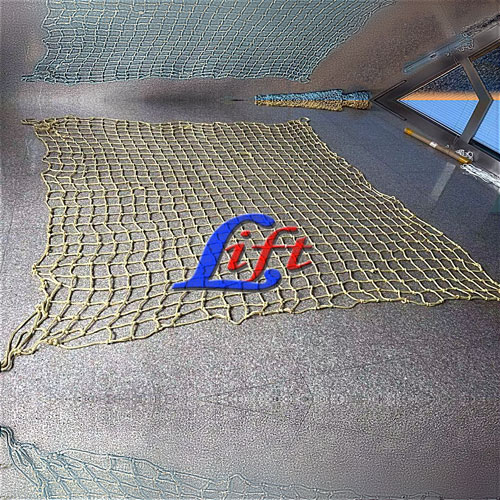
Drone Anti-collision Net
-
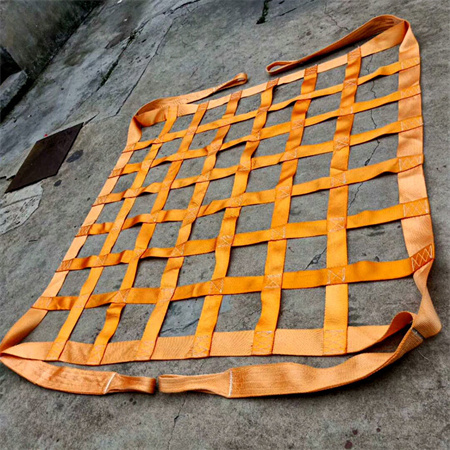
Extra Large Capacity Cargo Net
-
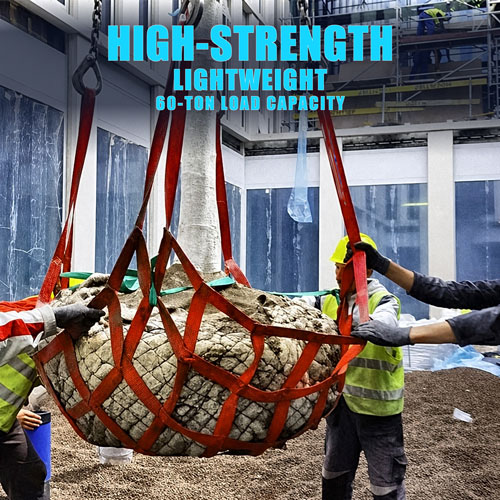
Cargo Webbing Net
-

Color changing nylon double buckle loop nylon braided rope
-

Two end buckle lifting rope, double buckle round lifting rope, double fork nylon lifting rope, non jointed nylon lifting rope
-

Emergency escape lifeline, fire escape rope, fire safety escape emergency rope, steel wire core fire rope

