Language
 简体中文

- On the 2018 National Day holiday, Lifet completed six 100 ton large tonnage lifting belts as a gift
- The role of suspension net in the transportation of goods turnover
- Cargo soft lifting net, lifting net, lifting net, lifting net, bag, climbing net
- Precautions for using Lifutiden elevator
- How to make circular lifting straps
Contact: Wang Lili
E-mail:18066002268
Phone:702461526@qq.com
Address: Lifute Industrial Park, Taizhou City, Jiangsu Province
Lifute Hoisting Co., Ltd. 18066002268 produces lifting belts, lifting nets, nylon ropes, soft ladders, steel wire rope rigging, paper ropes, safety belts, safety nets, lifting chains, steel coil hoists, crossbeam hoists, flat lifting belts, circular lifting belts, electric traction ropes, high-altitude safety belts, and anti fall safety nets
Hits: ℃
Release time:2026-09-24 10:05
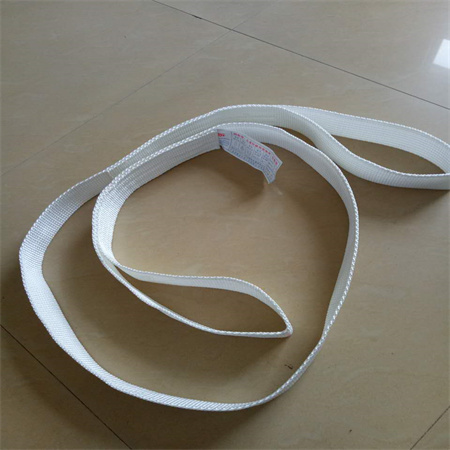
Lift Sling Rigging Co., Ltd manufactures Disposable sling, disposable lifting sling, disposable lifting sling with cargo, disposable sling.
Disposable sling — The One-Way Trip, and What Still Applies On It
A disposable sling is not an unrated article and it is not a cheap one: it is a rated article bought for one trip. That single fact changes the purchase. The article is brought to the load, used once, and it either travels on with the load or it ends its life at the far end - which means the questions to settle before the order are where it will be left behind, whether it can come back clean, and what happens to it when the trip is over. This page is about that side of the article, and about the rules that still apply to something used only once. HS code 630790; telephone 18066002268.
1. Disposable Describes the Trip, Not the Article
The word is used as though it described a grade of article, and it does not. It describes the service the article is bought for: one lift, or one journey, after which it is not coming back into service. Everything that makes it a lifting article still has to be true of it on that one occasion.
| The assumption | What is actually true | Why it changes the order |
|---|---|---|
| Disposable means unrated | It is a rated article with the rated capacities for each type of hitch and the material marked on it | The figure has to be established before the order, exactly as for an article intended for years of use |
| Disposable means it can be treated roughly | It is inspected before use like any other sling: the one trip is the trip that matters | A damaged article on the only trip it will ever make is a load in the air |
| Disposable means cheap webbing | It means the article is specified for a single trip, which is a specification and not a price | Where a cheap article is used, the risk is not the cost of the article but the load it is carrying |
| Disposable means it cannot be reused, so it does not matter where it ends up | Where it ends up is the reason many disposable orders exist: it leaves with the load | The destination, the contamination and the paperwork all belong in the enquiry |
2. What Makes an Article Disposable in the Order
An article becomes disposable because the buyer says so, and the ways of saying so are limited. The one that matters is that the specification, the marking and the paperwork agree with each other, so that a rigger at the far end of a journey knows what the article is and what it will hold.
| What to settle | What it means on the article | What it prevents |
|---|---|---|
| The figure, per hitch and per angle | A rated capacity marked for each type of hitch | An article that is disposable and unusable at the same time |
| The material and the construction | The type of synthetic web material in the marking | A short service life turning into a failed lift on the one occasion it is used |
| The length and the ends | The geometry the trip needs, including what it will be attached to or left on | An article that arrives at the load and cannot be rigged |
| The protection the environment demands | The sleeve and any cover that travels with the article | A single trip through grit, chemicals or a hot surface |
| The documents | The certificate that names the article, sent with it or with the shipment | A receiving site that cannot use what has arrived |
3. The Jobs That Justify a One-Way Trip
Four kinds of job turn a returnable sling into a disposable one, and they are all about the journey rather than the lift.
| The job | Why the article does not come back | What to settle before the order |
|---|---|---|
| A one-way shipment, including an export | Returning the article costs more than the article, and the return leg has its own customs and freight | That the receiving site has the documents it needs, and the figure it will use |
| A load that is left with the article on it | The article is part of the delivered package, and it is removed at the far end by whoever unloads | That the article will be removed from service there rather than put back into a store |
| A contaminated or hostile environment | Nothing that has been through the environment comes back clean enough to inspect and store | The material, the cover and the disposal route, because the article may not be returnable at all |
| A one-off lift where no store exists | There is nowhere to keep it, nothing to inspect it back into, and no regime to hold it | That the article is retired deliberately at the end, rather than left lying about as a sling |

4. The Arithmetic of One Way
The comparison that decides a disposable order is not the price of the article against the price of another article. It is the cost of the whole trip against the cost of bringing the article home, and several terms of that comparison are easy to forget on the day.
| The term | Why it belongs in the comparison | Where it is easy to go wrong |
|---|---|---|
| The return leg | Freight, handling and paperwork in the opposite direction, for an article that has no value at the far end | Counting only the outward leg |
| The mass of the article | An article that has to be freighted is bought partly for what it weighs, which is a reason to look at a lighter construction | Choosing on capacity alone and paying for the article twice |
| The condition it returns in | An article that comes back contaminated cannot simply be stored: it becomes a disposal problem with a shipping document | Assuming that a return is free of cost and of risk |
| The store at the far end | Where there is no store, there is no inspection regime, so the article cannot legitimately be reused there | Treating a returnable article as though it were disposable |
| The number of trips | A disposable order is usually a batch, and a batch has to be consistent in figure, material and marking | One prototype tested, and the batch assumed to match it |
5. The Rules That Still Apply to Something Used Once
A disposable article is used once, and it is used under the same rules as an article used for a decade. The rules are worth stating here in the terms that a one-trip order has to answer for, rather than as a list of prohibitions.
| The rule | What it requires of a disposable order | What it does not excuse |
|---|---|---|
| Marking | The rated capacities for each type of hitch and the type of synthetic web material, affixed and legible | Slings without affixed and legible identification are not to be used at all, once or otherwise |
| Inspection before use | The article is inspected on the day it is used, as it would be on any other day | A one-trip article still gets a pre-use inspection: that trip is the whole of its service |
| Application | Padding and protection where the load's edges demand it | A disposable article is not exempt from protecting the load or itself |
| Removal from service | Immediately for acid or caustic burns, melting or charring, snags, punctures, tears or cuts, broken or worn stitching and distortion of fittings | These conditions do not become acceptable because the article was cheap |
| Repair | A manufacturer's repair followed by a proof test to twice the rated capacity; load-bearing splices are not repaired and temporary repairs are prohibited | Repairing a disposable article defeats the purpose of having bought one |
6. The End of the Trip
Where a returnable article goes back to a store and a shelf, a disposable article goes somewhere else, and the destination should be decided before the order rather than at the quayside. The class page, heavy duty round sling, sets out the end-of-life line for this family as a whole: the article is retired rather than rebuilt.
| What happens at the end | What it requires | What it prevents |
|---|---|---|
| The article is retired deliberately | A decision taken at the end of the trip, by whoever is responsible for the load at that point | An article that was bought for one trip drifting into service as an unrecorded sling |
| A contaminated article does not go back into a store | A disposal or quarantine route, and the knowledge that a contaminated article is not a stock item | A contaminated article being stored with clean ones and issued later |
| The disposal route is known in advance | Who takes it, where it goes, and what it is recorded as | An article that is used again because nobody decided what else to do with it |
| The record survives the article | The certificate and the record of the trip, kept for the period the lift requires | An inspection or an incident investigation with nothing to look at |
7. The Cargo Variant, Which Is About What Travels With the Load
The name also covers the case where the sling travels with cargo rather than with a rigging team. The difference is not the article; it is who is at the other end. That changes two things: the marking has to speak for itself without a store to explain it, and where the cargo has to remain restrained on the journey, the restraint is a different duty from the lift and is rated for it, as the ratchet cargo lashing belt page sets out.
| The situation | What the article has to do | What it must not be asked to do |
|---|---|---|
| The sling travels with the cargo | Carry the figures for the hitches it may be used in, legibly | Be relied on for a hitch whose figure is not on its marking |
| The cargo is restrained in transit | That duty belongs to a lashing, which is rated for restraint | A lifting sling used as a restraint, or a lashing used to lift |
| The far end has no rigging store | The marking and the certificate have to be enough on their own | A figure that depends on a store record that is not travelling with the load |
| The article is left with the load | It should be removed from lifting service where it is unloaded | Being returned to a lifting role later without an inspection it never had |
8. What the Enquiry Has to Carry
| Line | What to state | What it fixes |
|---|---|---|
| 1 | The figure you need, per hitch and per angle | The rated capacity, which is required whether the article is used once or a thousand times |
| 2 | That the trip is one way, and what happens at the far end | The construction, the marking and the documents, and whether a return is even possible |
| 3 | The environment the article will pass through | The material and the cover, including the temperature and chemistry envelope |
| 4 | How the article will be attached, or what it will be left on | The ends and the length the trip needs |
| 5 | How many trips, and whether they must be identical | Whether the order is a batch, and how the batch is tested and marked |
| 6 | What has to arrive with the load: marking, certificate, packing list | Whether a receiving site can use what has arrived |
9. Frequently Asked Questions
Q1: Is a disposable sling rated?
Q2: What makes it disposable?
Q3: Is a disposable sling cheaper?
Q4: Does it still have to be inspected?
Q5: Can a disposable sling be repaired and used again?
Q6: Can it be used for a load that is left on it?
Q7: Can a lifting sling restrain cargo in transit?
Q8: Does the marking matter as much on a one-trip article?
Q9: What should I do with a contaminated article?
Q10: What is the difference between disposable and single use?
Contact
Send the six lines in section 8, and say what happens at the far end of the trip, because that answer decides the marking, the packing and the documents. Articles are batch tested, marked per hitch and supplied with a certificate that names the article.
Telephone and WeChat — 18066002268
E-mail — 702461526@qq.com
Address — Lifute Industrial Park, Taizhou City, Jiangsu Province, China
- Previous:Steel plant lifting threaded steel disposable export lifting belt lifting sling
- Next:Circular sling, cylindrical sling, cylindrical lifting sling