 Language
 简体中文

- On the 2018 National Day holiday, Lifet completed six 100 ton large tonnage lifting belts as a gift
- The role of suspension net in the transportation of goods turnover
- Cargo soft lifting net, lifting net, lifting net, lifting net, bag, climbing net
- Precautions for using Lifutiden elevator
- How to make circular lifting straps
Contact: Wang Lili
E-mail:18066002268
Phone:702461526@qq.com
Address: Lifute Industrial Park, Taizhou City, Jiangsu Province
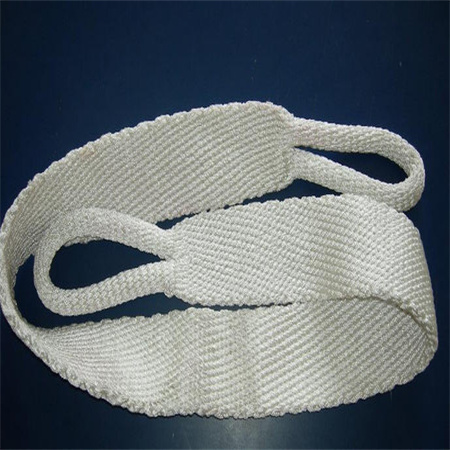
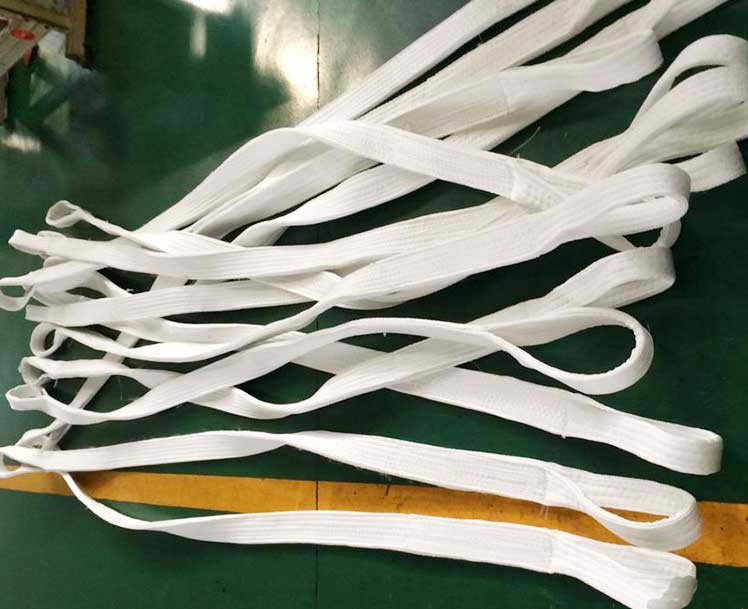
Lift Sling Rigging Co., Ltd. manufactures the nylon woven flat sling - a polyamide flat woven webbing sling to EN 1492-1, made to order from 1 t to 10 t. Nylon is the fibre to specify where alkalis are present: polyamide is essentially immune to alkali attack, where polyester is not, so it is the flat woven sling for cement, mortar, lime, concrete washdown and caustic cleaning. It is attacked by acids and it loses up to 15% of its dry rating while wet, which decide where it must not be used. Green polyamide label, 7:1 safety factor and a minimum breaking load of seven times the working load limit, EN 1492-1 colour code with one black capacity stripe per tonne, 25 mm to 250 mm webbing, single or double ply, any length from 1 m to 12 m. HS code 630790. Phone 18066002268.
Hits: ℃
Release time:2026-09-17 07:51
Lift Sling Rigging Co., Ltd. +8618066002268 Nylon woven flat sling, nylon woven sling, nylon braided sling, synthetic fiber flat woven sling, woven soft sling, flat woven sling。
Nylon Woven Flat Sling

Nylon Woven Flat Sling — polyamide webbing to EN 1492-1, 1 t to 10 t, single or double ply, any length from 1 m to 12 m
What is on this page. This page covers the nylon (polyamide) flat woven webbing sling as a material choice: what the product is and what it is not, the band range, what polyamide does that polyester and polypropylene do not, which duty points to nylon, how a nylon band behaves wet, hot and in contact with chemicals, which form to order, how to inspect and retire it, and how to order it.
What the product is, and the terms that get confused with it — section 1
The nylon band range and the nylon specification sheet — section 2
Three fibres side by side, property by property — section 3
Choosing the fibre and the band from the duty in front of you — section 4
Nylon under wet, hot and chemically loaded conditions — section 5
Chemical resistance in detail, by class of chemical — section 6
Endless or eye-and-eye — section 7
Inspection and retirement criteria for a nylon band — section 8
Standards, marking and duties a nylon sling is not rated for — section 9
Ordering, packaging, HS code and export — section 10
1. What Is a Nylon Woven Flat Sling?
A nylon woven flat sling is a flat woven webbing sling woven from polyamide and sewn into either an endless loop or an eye-and-eye form. EN 1492-1 — the European standard for these products — covers flat woven webbing slings in Type A (endless), Type B, Type C and Type D (eye-and-eye, with or without fittings), made of polyamide, polyester or polypropylene, across webbing widths of 25 mm to 450 mm, and it sets out the requirements for design, testing and marking. It is the same standard the rest of our flat woven range is built to, with a safety factor of 7:1.
Nylon and polyamide mean the same fibre on this page. Polyamide is the fibre family; nylon is the trade name it is sold under, and PA is the abbreviation used on labels and in standards. The colour that identifies it is green on the label — the webbing colour is a separate signal, and section 2 explains the difference.
What it is not. Three products sit close to each other in the market and are routinely quoted as if they were the same thing. They are not, and the difference decides whether the sling you are offered can do the job:
Nylon woven flat sling — flat woven polyamide webbing, sewn, Type A to D under EN 1492-1. This page.
Nylon round sling — a different product: a load-bearing core of parallel yarn inside a woven tubular cover, covered by EN 1492-2. Different standard, different construction, and not interchangeable with a flat woven sling.
Nylon webbing with fittings — still a flat woven webbing sling under EN 1492-1, but Type D: eyes with metal end fittings, or a sling built as an assembly with a master link and hooks.
Terminology: what the term in the quotation actually means
| Term you may be offered | What it actually is | Standard | Covered on this page? |
|---|---|---|---|
| Nylon woven flat sling, nylon flat webbing sling | Flat woven polyamide webbing, sewn into a loop or with eyes | EN 1492-1 | Yes — this page |
| Nylon webbing sling, polyamide sling, PA sling | The same product, named by fibre rather than by construction | EN 1492-1 | Yes — this page |
| Endless nylon sling, nylon ring sling | Flat woven polyamide webbing closed into a continuous loop, no end fittings (Type A) | EN 1492-1 | Yes — section 7 |
| Eye-and-eye nylon sling, two-eye nylon sling | Flat woven polyamide webbing with a reinforced eye at each end (Type B, C or D) | EN 1492-1 | Yes — section 7 |
| Nylon braided sling, braided lifting sling | A round sling: load-bearing yarn core inside a woven tubular cover. Not a flat woven sling, and not covered by this page | EN 1492-2 | No — a different product |
| Rond sling, round sling | The same round sling as above; rond is a frequent misspelling of round | EN 1492-2 | No — a different product |
| One-way sling, single-trip sling | A lower-rated consumable flat woven sling for one known lift, where a re-usable sling is not economic | EN 1492-1, consumable grade | On request |
2. The Nylon Band Range, 1 t to 10 t
Nylon bands are made in the same band structure as the rest of the flat woven range, because the band is set by the standard and not by the fibre. The webbing colour is the working load limit code for a straight lift, the black transverse stripes repeat that capacity one stripe per tonne, and the width grows with the band. What changes with the fibre is not the colour code but the label: the label colour states the material, and a polyamide band carries a green label at every band from 1 t to 10 t.
Two colour signals therefore travel on the same sling, and it is worth separating them once:
Two colours, two different messages
| The colour you are looking at | What it tells you | Set by | The values |
|---|---|---|---|
| Webbing colour (the band itself) | The working load limit for a straight lift | EN 1492-1 band colour code | Violet 1 t, green 2 t, yellow 3 t, grey 4 t, red 5 t, brown 6 t, blue 8 t, orange 10 t |
| Black transverse stripes | The same capacity, repeated as a physical mark you can count when the colour is faded or dirty | EN 1492-1 | One stripe per tonne of working load limit |
| Label colour | The fibre the sling is woven from — not the capacity | EN 1492-1 fibre identification | Blue polyester (PES), green polyamide (PA / nylon), brown polypropylene (PP) |
| Customer colour or printed logo | Nothing about capacity | The buyer | May be added alongside the band colour, never instead of it |
Read together, a 3 t nylon band is therefore yellow webbing with three black stripes and a green label. Any two of those three marks agreeing and the third disagreeing is a reason to take the sling out of service, not to guess.
The table below is the nylon band specification as we build it. Capacity figures for hitches other than a straight lift are calculated with the standard mode factors, which are explained in section 4.
Nylon woven flat sling: band specification, 1 t to 10 t
| Band | Webbing colour and stripes | Typical single-ply webbing width | Working load limit, straight lift | Minimum breaking load at 7:1 | Choked hitch (0.8) | Basket, parts parallel (2.0) | Two-leg assembly (1.4) |
|---|---|---|---|---|---|---|---|
| 1 t | Violet, 1 black stripe | 25 mm | 1 t / 1,000 kg / 2,205 lb | 7 t | 0.8 t | 2 t | 1.4 t |
| 2 t | Green, 2 black stripes | 50 mm | 2 t / 2,000 kg / 4,409 lb | 14 t | 1.6 t | 4 t | 2.8 t |
| 3 t | Yellow, 3 black stripes | 75 mm | 3 t / 3,000 kg / 6,614 lb | 21 t | 2.4 t | 6 t | 4.2 t |
| 4 t | Grey, 4 black stripes | 100 mm | 4 t / 4,000 kg / 8,818 lb | 28 t | 3.2 t | 8 t | 5.6 t |
| 5 t | Red, 5 black stripes | 125 mm | 5 t / 5,000 kg / 11,023 lb | 35 t | 4.0 t | 10 t | 7.0 t |
| 6 t | Brown, 6 black stripes | 150 mm | 6 t / 6,000 kg / 13,228 lb | 42 t | 4.8 t | 12 t | 8.4 t |
| 8 t | Blue, 8 black stripes | 200 mm | 8 t / 8,000 kg / 17,637 lb | 56 t | 6.4 t | 16 t | 11.2 t |
| 10 t | Orange, 10 black stripes | 250 mm | 10 t / 10,000 kg / 22,046 lb | 70 t | 8.0 t | 20 t | 14.0 t |
How to read the nylon band table.
The width column is a construction figure, not a rating. A duplex band reaches the same band on a narrower webbing, so confirm width against ply on the quotation rather than assuming a width from this table. What width really decides is the bearing surface — whether the band marks, scuffs or crushes a finished load.
The breaking load is a destruction figure. 7 t at the 1 t band and 70 t at the 10 t band are minimum breaking loads at the EN 1492-1 factor of 7:1. They are never working capacities, and they are not a margin to be spent.
Above 10 t. Heavier flat woven webbing slings are made to order, and for very heavy lifts we would normally quote a different product — a round sling, a wire rope sling or a lifting beam. Tell us the load and we will say which one the number points to.
Order by band, fibre and length together. A band on its own does not describe a deliverable product: 2 t tells you the colour and the rating, but the fibre, the ply and the length still have to be specified, and on a nylon band the fibre also decides what the sling must be kept away from.
3. Three Fibres Side by Side: What Polyamide Does That the Others Do Not
EN 1492-1 covers three man-made fibres, and the choice between them is decided by the environment rather than by capacity. The table below puts published fibre data for the three side by side. Where a figure is a range rather than a single number, that is because it is a range in the fibre data itself.
Polyamide, polyester and polypropylene compared, property by property
| Property | Polyamide (PA / nylon) | Polyester (PES) | Polypropylene (PP) |
|---|---|---|---|
| EN 1492-1 label colour | Green | Blue | Brown |
| Behaviour in alkalis (caustic, lime, cement slurry) | Essentially immune to alkali damage | Attacked by alkalis | Unaffected by alkalis |
| Behaviour in acids (pickling, plating, mineral acids) | Attacked. Dilute hydrochloric or sulfuric acid at 10% concentration at room temperature causes significant strength loss in 10 hours | Resists most mineral acids | Unaffected by acids |
| Oxidising agents and bleaching | Not suitable — bleaching agents degrade polyamide | Resists the oxidising agents and bleaching treatments ordinarily used on textiles | Attacked by some oxidising agents |
| Organic solvents (alcohols, ketones, dry-cleaning solvents) | Not significantly affected | Not significantly affected | Attacked by solvents — this is the fibre's real weakness |
| Phenolic compounds and concentrated formic acid | Dissolve or attack polyamide; also calcium chloride in methanol, hot zinc chloride in methanol and benzyl alcohol at the boil | Concentrated sulfuric acid at 95% at room temperature disintegrates polyester | Solvent sensitivity as above |
| Oils, greases, hydrocarbon fuel | Unaffected by common grease and oil; good resistance to hydrocarbons and ethers | Not significantly affected | Affected by tars and many paints |
| Moisture absorbency, published fibre data | About 9% of its own weight | About 1% of its own weight | A non-polar polyolefin; it does not take up water, so solvents rather than moisture set its limit |
| Strength while wet | Up to 15% below its dry rating while wet; the strength returns once the sling dries completely | Does not lose strength as a result of moisture absorption | Not a moisture-sensitive fibre |
| Elongation at the working load limit, published values | 6% to 10% | 3% to 4% | Ask us for the measured figure against your specification |
| Elongation at break, published values | 16% to 20% | 10% to 12% | Ask us for the measured figure against your specification |
| Temperature range for use and storage under EN 1492-1 | −40 °C to +100 °C | −40 °C to +100 °C | −40 °C to +80 °C |
| Sunlight and UV | The most UV-sensitive of the three; published guidance recommends annual proof load and inspection for nylon slings exposed to UV | The more UV-stable of the two, which is why polyester is the default fibre for outdoor and yard duty | Must be supplied UV-stabilised; unstabilised polypropylene degrades in sunlight |
| Where it is the right choice | Alkaline and wet-alkaline duty: cement, mortar, lime, concrete washdown, caustic cleaning, plus lifts where extra stretch is wanted | General purpose, outdoor and yard duty, and any lift where a stable, low-stretch sling matters | Acid duty: pickling lines, plating, acid tanks, and any duty where both acids and alkalis are present |
| Where it must not be used | Acid, bleach and phenolic contact; a maximum-capacity lift on a permanently wet sling | Caustic and strongly alkaline duty; it is the fibre alkalis attack | Solvent, tar and paint contact; and heavy-duty work where its lower strength against the other two fibres matters |
Read the elongation row honestly. A nylon band stretches roughly twice as far as a polyester band at the same working load limit. That is not advertising: it means a nylon sling absorbs shock better, settles further before it takes the load, needs more headroom in the rig, and can let a load shift if the pick is not symmetric. Where the lift is delicate, low-stretch polyester is usually the better answer; where the pick is dynamic, nylon's stretch is doing useful work. We do not publish a single headline elongation number for a nylon band — measured elongation is available against your specification on request.
4. Choosing the Fibre and the Band from the Duty in Front of You
Two decisions are being made at once when a flat woven sling is specified: which fibre, which is decided by the environment, and which band, which is decided by the load and the hitch. The table below is organised the way enquiries actually arrive — by the process, not by the chemistry.
Fibre selection by the duty in front of you
| The duty in front of you | What the sling meets | Fibre we would quote | Why that fibre | Where to go |
|---|---|---|---|---|
| Cement, mortar and concrete handling | Alkaline slurry, fine abrasive dust | Polyamide (nylon) | Essentially immune to alkali attack, where polyester degrades; the dust is abrasive, so surface yarn damage matters as much as chemistry | This page, sections 5 and 8 |
| Concrete washdown, formwork and plant cleaning | Alkaline water, caustic cleaners | Polyamide (nylon) | Alkali resistance is the deciding property, not capacity | This page, section 6 |
| Lime, hydrated lime, soda ash and alkaline bulk powders | Strong alkali, abrasive fill | Polyamide (nylon) | A polyester sling is the wrong fibre here, whatever its band | This page, section 6 |
| Caustic cleaning-in-place (CIP), tank and vessel work | Caustic soda solutions, hot washes | Polyamide (nylon) | Alkali tolerance; keep the sling clear of any acid rinse stage in the same cycle | This page, section 5 |
| Food and beverage plants | Caustic wash followed by an acid rinse | Polyamide (nylon) | A single sling may see both halves of the cycle — tell us the cycle, not just the chemical, and we will confirm the fibre rather than assume it | This page, section 5 |
| Wet, steam-washed or hose-down duty | Water, steam, condensation | Polyamide with a wet-capacity check, or polyester | A wet nylon sling carries up to 15% less than its dry rating, so a wet duty has to be specified on the wet figure; a polyester sling does not lose strength to moisture | Sections 3 and 5 |
| Steel pipe pickling, acid tanks, plating and anodising | Mineral acids | Polypropylene | Unaffected by acids. A nylon sling is attacked by them, so it is the wrong fibre here whatever the band | Polypropylene flat sling |
| Pickling or processing lines that also run an alkali stage | Acid and alkali in one line | The white acid- and alkali-resistant sling | Built for the whole pickling line cycle rather than for one tank | White acid-resistant and alkali-resistant sling |
| General purpose lifting, outdoor yards, plant installation | Weather, sunlight, no specific chemistry | Polyester | The lower elongation and better UV stability of polyester suit general duty better | Endless webbing sling range |
| Mixed chemical exposure you are not certain about | Unknown, or more than one chemical | Ask before you order | Chemical resistance is not a property of the product; it is a property of a fibre against a named chemical at a named concentration and temperature | This page, section 6 |
Four rules that decide the band, once the fibre is settled.
Choking costs you 20% of the rating. A choked lift uses a mode factor of 0.8, so a 3 t band gives 2.4 t choked — that is 20% below its 3 t straight-lift figure, not roughly the same. Choose the band on the choked figure when the load has to be choked.
An assembly is never the sum of its slings. Two legs within 45 degrees of vertical are rated at 1.4 times the single rating — a pair of 3 t slings gives 4.2 t, which is 40% more than one sling, not 100% more. A four-leg assembly uses a factor of 2.1, because a four-leg assembly is rated as if only three legs carry the load.
An off-centre load puts more on one sling. Two slings share equally only when the centre of gravity sits exactly halfway between the pick points. Move it a third of the way towards one pick point and that sling carries 67% of the load.
What the load will tolerate can overrule the capacity. On a finished, painted or easily marked load, the width of the band is the binding constraint rather than its rating, and the answer is more pick points or a sleeve, not a heavier band.
5. Nylon Under Load: Wet, Hot and Chemically Loaded Conditions
This is the section that decides whether a nylon sling is right for a particular job, because polyamide's weaknesses are the ordinary conditions of industrial work: water, heat, sunlight and splashes. Each one has a practical answer, and the answer is rarely a heavier band.
Nylon in service: what the condition does, and what to do about it
| Condition | What it does to a polyamide band | What we recommend |
|---|---|---|
| Wet: rain, hose-down, steam wash | A wet nylon sling carries up to 15% less than its dry rating. Published fibre data also shows the strength returns once the sling dries completely, so this is a condition effect and not cumulative damage | Treat a wet nylon band as an 85% band for the lift in front of you, dry it naturally before it goes back on the rack, and do not sign off a maximum-capacity lift on a sling that is wet every day of its life |
| Stored wet, or returned to the rack wet | Moisture held in the weave with no airflow is a storage failure rather than a lifting failure, and it masks the chemical contamination you would otherwise see | Dry naturally, away from direct heat, before storage. Do not machine dry, heat dry or store a damp sling in a closed bag |
| Continuous immersion or permanent wet duty | Polyamide absorbs water — published absorbency is about 9% of its own weight against about 1% for polyester | Specify the duty as a permanent wet duty on the enquiry. For permanent immersion we would normally discuss polyester or a different product instead |
| Heat and hot loads | EN 1492-1 gives polyamide a use and storage range of −40 °C to +100 °C | Keep the band clear of heat sources, welding spatter and hot surfaces. Above +100 °C the sling is outside its range and out of its rating, whatever it looks like |
| Cold and frost | Polyamide remains serviceable down to the low end of the range, but cold stiffens any webbing | −40 °C is the lower bound. Inspect a frozen or frosted sling for stiffness and surface cracking rather than assuming it is unchanged |
| Sunlight and UV | Polyamide is the most UV-sensitive of the three fibres. Published guidance recommends annual proof load and inspection for nylon slings exposed to UV | Store and park slings out of direct sun, and put UV-exposed nylon into a documented periodic inspection and proof-load programme rather than relying on a visual check |
| Acid splash, drip or tank mist | Acids attack polyamide directly, and there is no field repair for a chemically damaged sling | Withdraw the sling immediately, and check the whole assembly — a splash does not respect the leg it landed on. For acid duty, quote polypropylene or the acid-and-alkali sling, not nylon |
| Alkali splash, cement and lime slurry | The fibre is essentially immune to alkali attack, but slurry dries hard and abrasive and then acts as a grinding paste inside the weave | Wash and dry after contact, and inspect for dried slurry and damaged surface yarns rather than for chemical attack. This is the duty nylon is chosen for |
| Solvent, tar and paint | Not the documented weakness of polyamide, but paint solvents degrade all three fibres and a contaminated sling cannot be cleaned with solvent | Keep the sling away from paint, tar and solvent. Clean with mild soap and water only, and never with a solvent |
| Shock loading | Nylon stretches 6% to 10% at the working load limit and absorbs shock better than polyester, which is why it is chosen for dynamic picks — but a shock load also hides the damage it does | A sling that has taken a shock load goes into inspection, not straight back on the rack. Inspect for stretched or distorted stitching and for a permanently elongated section of webbing |
6. Chemical Resistance in Detail, by Class of Chemical
Chemical resistance is quoted three different ways in this industry, and only one of them is useful: a named fibre, against a named chemical, at a named concentration and temperature. The grid below is by class of chemical, which is enough to choose a fibre and not enough to sign off a lift — for that, send us the tank chemistry.
Chemical class against fibre: the working grid
| Class of chemical | Polyamide (PA / nylon) | Polyester (PES) | Polypropylene (PP) | Practical note |
|---|---|---|---|---|
| Alkalis: caustic soda, lime, cement and mortar slurry, soda ash, seawater | Essentially immune | Attacked | Unaffected | This row is the reason the page exists. Where the plant talks about caustic, lime or cement, quote nylon |
| Acids: hydrochloric, sulfuric, phosphoric, pickling and plating baths | Attacked | Resists most mineral acids | Unaffected | Quote polypropylene. A nylon sling in an acid tank is a consumable mistake, not a saving |
| Oxidising agents and bleaching agents | Not suitable | Resists textile bleaching and oxidising treatments | Attacked by some oxidising agents | Chlorine-based washdown and bleach are as damaging to nylon as acid is |
| Organic solvents: alcohols, ketones, dry-cleaning solvents, halogenated hydrocarbons | Not significantly affected | Not significantly affected | Attacked | Polypropylene's weakness. Solvent vapour in a closed workshop counts as exposure |
| Phenolic compounds, cresol, concentrated formic acid | Dissolve or attack polyamide | Not the documented sensitivity | Solvent sensitivity as above | Used in resin, foundry and some paint work — a nylon sling should not be in that area |
| Oils, greases and hydrocarbon fuels | Unaffected by common grease and oil; good resistance to hydrocarbons and ethers | Not significantly affected | Affected by tars and many paints | Oily environments are not the reason to reject nylon. Tars are |
| Sea water, salt spray and road salt | Essentially immune to the alkaline fraction, but salt is abrasive once it dries | Not significantly affected | Unaffected | On marine duty the inspection interval, not the fibre, is usually the issue |
| Sunlight and UV, which is exposure rather than a chemical | The most UV-sensitive of the three | The more UV-stable of the two | Must be UV-stabilised when supplied | Put UV-exposed nylon into a proof-load and inspection programme rather than a longer visual interval |
7. Endless or Eye-and-Eye: Which Form to Order
The fibre decides what the sling can be used near; the form decides how it is used. Both forms are flat woven slings under EN 1492-1, and both are made in nylon.
Endless (Type A) against eye-and-eye (Type B, C or D)
| Endless nylon sling (Type A) | Eye-and-eye nylon sling (Type B, C or D) | |
|---|---|---|
| End fittings | None, by definition | None in Type B and C; metal fittings in Type D |
| Where the hook contacts | Any point on the loop | The eyes, at each end, every time |
| Wear | The loop can be rotated after each lift, so the wear, the splice and the hook contact point keep moving round the webbing | The same two eyes take every lift, so wear concentrates at the reinforcement |
| Length basis | Stated as a loop circumference | Stated bearing point to bearing point, laid flat |
| Best for | Choked, basket and multi-point picks; slings that are repositioned during the job; and duty where a contaminated or worn section needs to be moved out of the load path | Lifts that need a fixed, hookable end; assemblies with a master link and hooks; and work where the rigger needs a definite end to attach to |
| On alkaline duty specifically | Usually the better answer: on cement and caustic work a sling is repositioned often, and rotatability spreads the abrasive wear that dried slurry causes | Where the plant standard or the rig design calls for a sling with eyes |
| On wet duty specifically | Both forms behave identically wet: the 15% wet loss is a property of the dry rating, not of the form of the sling | As for endless |
A note on the word endless. An endless sling is closed by a stitched lap splice, so it is a sewn product rather than a jointless one, and the splice is a real joint that has to be inspected. What the form genuinely gives you is a long overlap instead of a short reinforced eye, a loop that can be rotated, a usable bearing area all the way round, and one sling that covers straight, choked and basket hitches.
8. Inspection and Retirement Criteria for a Nylon Band
Every sling should be inspected before every use, with a documented periodic inspection on top of that. On a nylon band there are two extra things to look for that do not apply to the other two fibres: chemical damage from the acid side of the plant and UV degradation, which shows up as a dry, faded, brittle feel rather than as a cut. The table below is the withdrawal list we work to.
Nylon flat woven sling: what to check, and when to withdraw
| What to look at | Withdraw the sling if | Why it matters on polyamide specifically |
|---|---|---|
| Webbing body | Any cut, snag, fraying or exposed load-bearing yarn, or damage reaching about 10% of the webbing width in any transverse section | Abrasion of surface yarns gives an unpredictable loss of strength. On a 25 mm band, 10% is only 2.5 mm — measure it rather than judging by eye |
| Colour and stripe count | The webbing colour and the black stripe count disagree | Same code as the rest of the range: one of the two capacity marks has been lost or altered, and the band can no longer be trusted |
| Stitching, eyes or lap splice | Broken or pulled stitches, loose stitching, or an open lap | The stitch is the joint that carries the whole load, and it cannot be repaired on site |
| Stiffness and feel | A noticeable stiffening, a hard or brittle feel, or a powdery surface | Stiffening is the classic signature of chemical or heat exposure and is the damage a visual check is most likely to miss |
| Discoloration | Bleaching, fading beyond normal soiling, or a colour that no longer matches its band | Bleached colour is a documented withdrawal criterion on textile slings |
| Chemical contact | Known acid, bleach or solvent contact, or a swollen, softened, tacky or stiff band | Polyamide is attacked by acids and by bleaching agents, and there is no field repair |
| Heat contact | Glazing, melting, scorch marks or weld spatter | Outside the −40 °C to +100 °C range the sling is outside its rating, regardless of appearance |
| Labels and marks | The label is missing or illegible — the working load limit, fibre, standard reference, length or traceability code | The label is what certifies the sling, whatever the webbing looks like |
| UV exposure | Fading together with a dry, brittle feel after long outdoor service | Polyamide is the most UV-sensitive of the three fibres, and published guidance puts UV-exposed nylon slings into an annual proof-load and inspection programme |
| Loading history | A known shock load, an overrun, or a lift taken on the wrong hitch figure | Nylon stretches 6% to 10% at the working load limit and absorbs shock, which also hides the damage a shock load leaves behind |
| Wet storage | The sling is stored wet or was returned to the rack wet | Drying is part of the care routine for nylon, not an optional step |
| Whole assembly | Any one sling in the set fails, or the legs are of mixed fibre, mixed band or mixed length | An assembly is only as strong as its weakest leg, and mixing fibres mixes their limitations as well as their strengths |
Care rules for a nylon flat woven sling.
Never use a polyamide webbing sling below −40 °C or above +100 °C.
Rotate the loop between lifts on an endless sling, and alternate the eyes on an eye-and-eye sling. It is the single habit that gets the most service life out of the product.
Do not drag a sling on the floor or across abrasive surfaces, and never pull a sling out from under a load resting on it — lift the load clear first.
Do not twist, knot, shorten or lengthen a sling, and never repair one.
Fit edge protection wherever the band crosses a sharp or finished edge, at any load.
Wash with mild soap and water and dry naturally. Do not machine wash nylon — it damages the surface yarns and gives an unpredictable loss of strength — and do not machine dry or heat dry.
Wash off cement, lime and mortar slurry after contact: the chemistry is harmless to the fibre, the dried abrasive is not.
Store dry and dark, off the floor, away from oil, chemicals and sharp edges. Nylon absorbs moisture, so a nylon sling goes back on the rack dry.
Keep the sling clear of acid, bleach, phenolic compounds and solvent. A nylon sling is not the sling to leave hanging beside a pickling tank.
In an assembly, inspect every sling in the set and keep the set together.
Cut a retired sling through before disposal so that it cannot be put back into service by mistake.
9. Standards, Marking and Duties a Nylon Sling Is Not Rated For
What the product is built to. Nylon flat woven slings are made to EN 1492-1, Textile slings — Safety — Flat woven webbing slings made of man-made fibres for general purpose use. That standard covers single-leg, two-leg, three-leg, four-leg and endless sewn flat woven webbing slings, with or without fittings, made of polyamide, polyester or polypropylene, across webbing widths of 25 mm to 450 mm, and it sets out the requirements for design, testing and marking.
Why the standard reference on the label matters as much as the number beside it. A “1 t” marking means a 7 t minimum breaking load only if the sling was built to EN 1492-1 at its 7:1 factor. Under ASME B30.9, where the design factor for these slings is commonly 5:1, the same 1 t marking corresponds to 5 t. Under AS 1353 at 8:1 it corresponds to 8 t. Three slings, all marked 1 t, built to materially different margins — which is why our quotation asks for the destination market and the standard you need, not just the band.
What every nylon sling has to carry. The marking is part of the product, not a finishing touch. The visible working load limit code is the webbing colour plus the black stripe count; the label carries the working load limit for the straight lift, the fibre — green for polyamide —, the standard reference, the manufacturer, the length and a traceability code.
The colour and the stripe count are mandatory under EN 1492-1 for the band, and they say nothing about the fibre. A nylon sling supplied in a colour that does not match its rating, or described as available in any colour, is not being marked to the standard.
The label is the second half of the same message. Colour tells you the band; the label tells you the fibre and the traceability. If the label is missing or illegible, the sling is out of service regardless of the condition of the webbing.
The traceability code is what makes a batch certificate possible. Keep it: it is what links a sling in service back to the batch it was tested with.
Duties a nylon flat woven sling is not rated for, at any band.
Lifting or suspending a person.
Towing, recovery or vehicle pulling — the rating is a lifting rating and tow loads are shock loads.
Staying in place permanently as a tie, guy or restraint.
Being knotted or twisted to shorten it.
Lifting over an unprotected sharp edge without a sleeve.
Contact with acids, bleaching agents or phenolic compounds — this is the polyamide limitation, and it is the one that catches buyers out when a nylon sling is bought for a pickling shop.
Working on or near live electrical conductors.
Service above +100 °C.
10. Ordering, Packaging, HS Code and Export
Almost every nylon woven flat sling we ship is made to order, so the fastest route to a firm price is a complete enquiry rather than a band number. The eight points below are what we need.
The duty and the chemistry — what the sling will be near: cement, lime, caustic wash, acid, solvent, or nothing in particular. This is what fixes the fibre, and on this page it is the first question rather than the last.
Wet or dry — whether the sling will be working wet. A wet nylon sling carries up to 15% less than its dry rating, so a permanently wet duty is specified on the wet figure from the start.
The band and the ply, or the load and the hitch — we will do the arithmetic with you if you send the load, the hitch and the pick points.
The form — endless (Type A) or eye-and-eye (Type B, C or D), and the length basis: a loop circumference for an endless sling, bearing point to bearing point for an eye-and-eye sling. These are different numbers and confusing them is the most common reason a sling arrives and does not fit.
Eye protection and edge protection — whether any edge the band crosses is sharp or finished, so a sleeve, a corner or a reinforced eye is quoted in the price rather than added later.
Quantity, destination market and standard — the quantity, the market the sling is going to, and the standard the buyer's specification names, so the safety factor behind the marking is the one the market expects.
Marking, labels and branding — customer colour, logo, part numbers and label language, all added alongside the mandatory items and never in place of them.
Certificates and inspection — whether a batch test certificate, third-party witnessing or a particular certificate format is required. Ask at enquiry stage rather than after production.
The rest of the order, as standard.
Ply — single ply as standard, double ply on request, with the band and the ply ordered together rather than trying to uprate a sling on site.
Width — 25 mm to 250 mm across this range, sized on the band, the ply and the bearing surface the load will tolerate. EN 1492-1 covers up to 450 mm.
Length — made to order, 1 m to 12 m as standard and longer on request.
Colour and marking — the EN 1492-1 band colour and the black stripe count are mandatory; a customer colour or logo is added alongside them.
Packaging — cartons, woven bags or pallets, with customer labels and shipping marks on request.
HS code — 630790, other made-up textile articles. If your customs broker wants a different subheading declared for your destination, tell us and we will declare the shipment accordingly.
Trade terms — EXW, FOB or CIF, with other terms on request.
Samples — available for evaluation against a stated specification.
Lead time and minimum order — confirmed per order, because both depend on the band, the length and the quantity. Tell us the date you need it and we will quote against that date rather than in the abstract.
OEM and private label — available, with the mandatory marking items retained.
Three things worth specifying even if you have bought webbing slings before. The fibre, because it decides what the sling must be kept away from. The wet or dry duty, because a wet nylon sling is an 85% sling and the wet figure has to be in the calculation rather than discovered on site. And the standard the destination market expects, because the safety factor behind any rating is set by the standard, not by the number printed on the band.
11. Frequently Asked Questions
Q1: What is a nylon woven flat sling?
Q2: Is a nylon woven flat sling the same as a round sling or a braided sling?
Q3: Why choose nylon instead of polyester?
Q4: Can a nylon sling be used in acid?
Q5: Does a nylon sling lose capacity when it is wet?
Q6: What is the temperature range of a nylon webbing sling?
Q7: What does the green label on the sling mean?
Q8: How much does a nylon flat woven sling stretch?
Q9: What is the HS code for a nylon webbing sling?
Q10: What do you need from me to quote a nylon woven flat sling?
Contact us — nylon woven flat slings direct from the manufacturer
Tell us the load, the rigging and the chemistry the sling will meet, and we will come back with the specification and price for your nylon woven flat sling — band, fibre, ply, width, length and marking all on one sheet. Volume discounts apply. We build to order in single or double ply, in polyamide, polyester or polypropylene, in any length from 1 m to 12 m and beyond, with the EN 1492-1 colour code, one black capacity stripe per tonne and the green polyamide label as standard. Matching sets for two-leg and four-leg assemblies are supplied on request.
Contact: Wang Lili
Phone: 18066002268
E-mail: 702461526@qq.com
Address: Lifute Industrial Park, Taizhou City, Jiangsu Province, China
- Previous:Polypropylene flat sling,lifting rope,acid-washed sling,lifting sling,lifting belt
- Next:Endless Webbing Sling
-
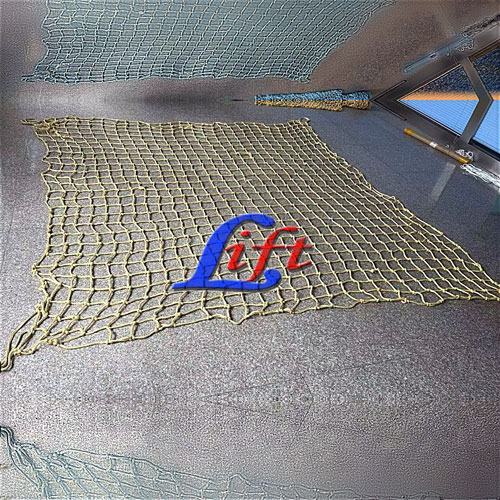
Drone Anti-collision Net
-
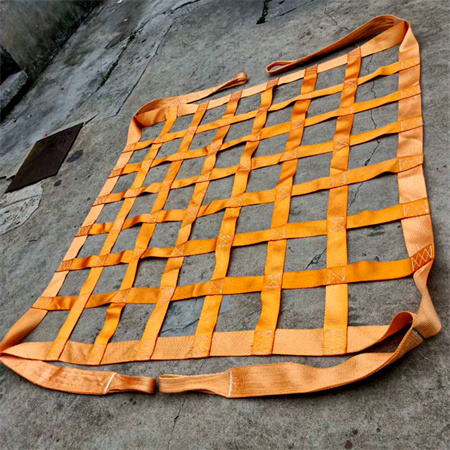
Extra Large Capacity Cargo Net
-
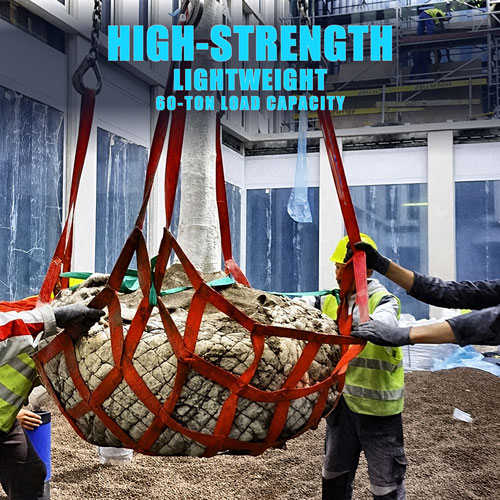
Cargo Webbing Net
-

Color changing nylon double buckle loop nylon braided rope
-

Two end buckle lifting rope, double buckle round lifting rope, double fork nylon lifting rope, non jointed nylon lifting rope
-

Emergency escape lifeline, fire escape rope, fire safety escape emergency rope, steel wire core fire rope

